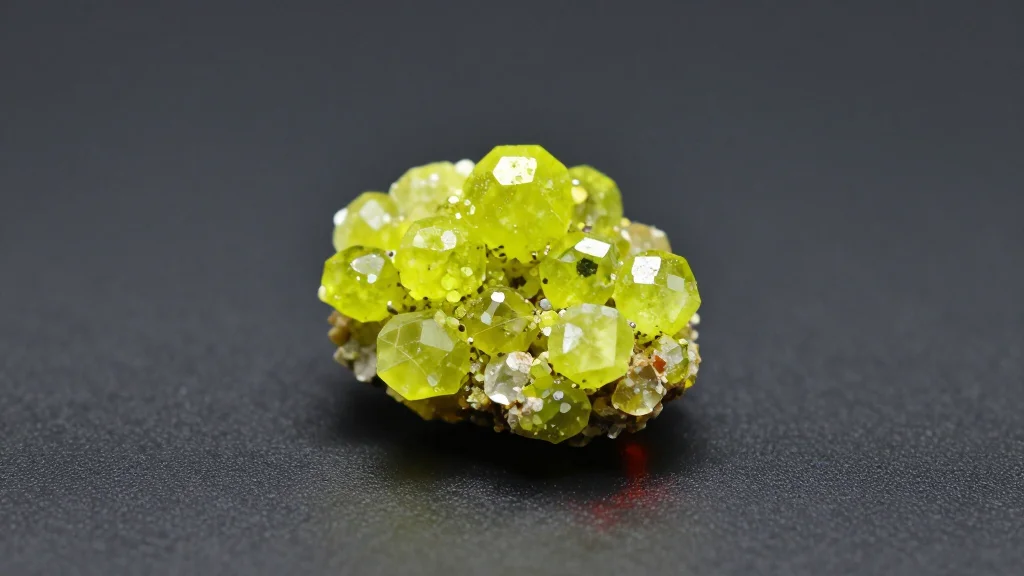
China Tightens Rare‑Earth Export Controls, Prompting Global Supply‑Chain Realignment

Why It Matters
Rare‑earth elements are essential for electric‑vehicle batteries, wind‑turbine generators, AI hardware, and advanced defense systems. China's export controls threaten to choke the supply of these critical inputs, potentially slowing the rollout of clean‑energy technologies and undermining defense readiness in the West. The diplomatic signal after the Xi‑Trump summit underscores how geopolitical maneuvering can directly affect industrial capacity and investment decisions across multiple sectors. A prolonged period of constrained Chinese exports would accelerate the push for a diversified supply chain, prompting significant capital flows into mining projects in the United States, Australia, and Africa. However, building a resilient alternative network requires years of permitting, technology development, and environmental compliance, meaning short‑term disruptions could have outsized economic consequences. The situation also highlights the broader strategic rivalry between Beijing and Washington, where control over critical minerals becomes a lever in trade negotiations and national security calculations. How quickly the West can reduce its dependence on Chinese rare‑earths will influence the balance of power in emerging technologies for the next decade.
Key Takeaways
- •April 2025: China imposed export controls on seven rare‑earth elements.
- •Nikkei analysis shows a measurable drop in Chinese rare‑earth and magnet shipments over the past year.
- •Guo Jiakun, Chinese Foreign Ministry spokesperson, reaffirmed China’s commitment to global supply‑chain stability without confirming a new agreement.
- •Western governments are fast‑tracking domestic rare‑earth projects to reduce reliance on China.
- •Supply‑chain uncertainty persists, prompting manufacturers to diversify sources and invest in recycling.
Pulse Analysis
The rare‑earth export controls represent a calculated lever in China’s broader geopolitical toolkit. By throttling shipments just enough to create discomfort, Beijing forces its competitors to allocate resources toward supply‑chain resilience, effectively turning a market instrument into a strategic bargaining chip. Historically, similar tactics have been used in energy markets, where supply constraints drive price spikes and policy shifts. In the rare‑earth arena, the stakes are higher because the materials are irreplaceable in many high‑tech applications.
From a market perspective, the immediate effect is a modest price premium for Chinese‑sourced rare‑earths, which benefits domestic producers but raises costs for downstream manufacturers. The longer‑term implication is a structural re‑allocation of capital toward non‑Chinese projects. This reallocation is not merely financial; it involves building expertise in separation chemistry, magnet fabrication, and recycling—areas where China currently enjoys a steep learning curve. The West’s ability to close these gaps will determine whether the current diplomatic ambiguity translates into a durable shift in global supply dynamics.
Looking ahead, the Xi‑Trump summit could serve as a pivot point. If a tacit understanding emerges—perhaps a limited quota increase or a joint research initiative—it could stabilize prices and give Western firms breathing room to scale up domestic capacity. Conversely, a hardening of Chinese policy would likely trigger a rapid acceleration of state‑backed rare‑earth projects, mirroring the post‑Sputnik defense industrial mobilization. In either scenario, the rare‑earth market will remain a barometer of Sino‑U.S. strategic relations, and investors should monitor diplomatic signals as closely as they track production data.
China Tightens Rare‑Earth Export Controls, Prompting Global Supply‑Chain Realignment
Comments
Want to join the conversation?
Loading comments...