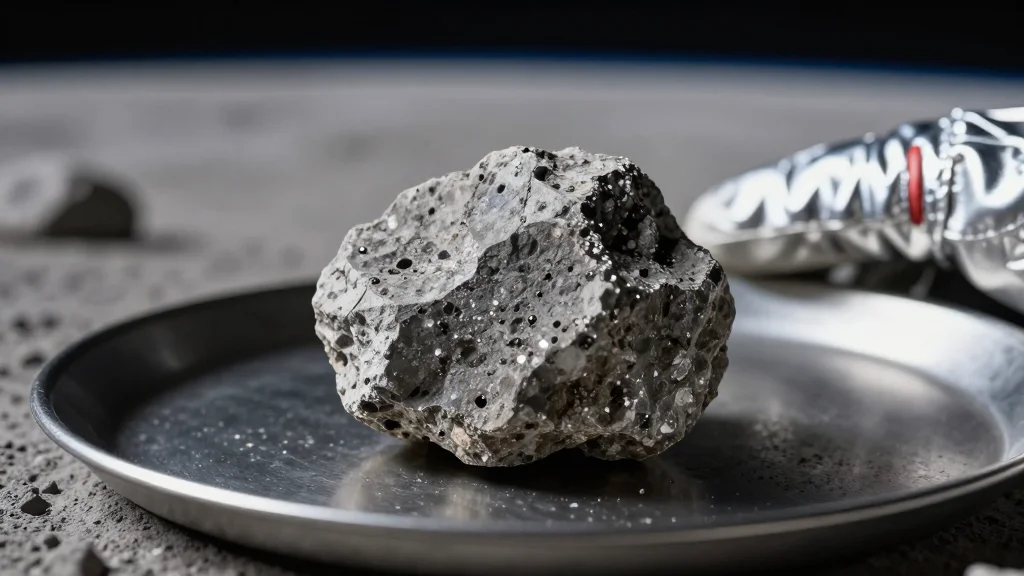
Chinese Team Unveils Two New Lunar Minerals, Boosting Space‑mining Prospects

Why It Matters
The identification of magnesiochangesite-(Y) and changesite-(Ce) expands the catalog of lunar minerals, providing concrete evidence that the Moon harbors rare‑earth elements essential for high‑tech applications on Earth. By establishing a mineralogical baseline, the discovery reduces scientific uncertainty, a major barrier to investment in space‑mining ventures. Moreover, the find underscores China's growing capability in lunar sample analysis, positioning it as a leader in the nascent extraterrestrial mining sector. As nations negotiate the legal framework for off‑world resource extraction, scientific breakthroughs like this will shape policy debates and commercial strategies worldwide.
Key Takeaways
- •Chinese researchers announced two new lunar minerals: magnesiochangesite-(Y) and changesite-(Ce).
- •Both minerals were extracted from Chang'e‑5 basaltic samples returned in 2020.
- •Magnesiochangesite-(Y) is a calcium rare‑earth phosphate; changesite-(Ce) is cerium‑rich merrillite.
- •The discoveries bring the total known lunar minerals to eight worldwide.
- •Findings could accelerate plans for lunar resource extraction and in‑situ utilization.
Pulse Analysis
The latest lunar mineral discoveries arrive at a pivotal moment for the space‑mining ecosystem. Historically, the scarcity of confirmed lunar ore bodies has hampered private sector confidence; now, with eight distinct mineral species documented, the Moon's geological diversity is becoming quantifiable. This shift mirrors the early days of terrestrial mining, when the identification of new ore deposits spurred investment and technological innovation.
China’s methodical approach—leveraging high‑resolution ion‑beam microscopy and painstaking grain‑by‑grain analysis—demonstrates a level of analytical rigor that rivals leading Earth‑based mineral labs. If the country can translate this laboratory success into scalable extraction techniques, it could set a benchmark for the industry. Competitors such as the United States and Europe will likely intensify their own sample‑return missions to validate and expand the lunar mineral database.
In the broader context, the presence of rare‑earth elements like cerium on the Moon could reshape global supply chains. Earth’s REE market is dominated by a few producers, creating geopolitical vulnerabilities. Lunar REEs, once economically viable to harvest, could diversify sources and mitigate supply risks. However, the technical challenges of mining sub‑micron crystals remain formidable, and the path from discovery to commercial extraction will require breakthroughs in robotics, autonomous processing, and in‑situ resource utilization. Stakeholders should monitor upcoming lunar lander contracts and international policy discussions, as these will determine whether the scientific excitement translates into a sustainable mining industry.
Chinese team unveils two new lunar minerals, boosting space‑mining prospects
Comments
Want to join the conversation?
Loading comments...