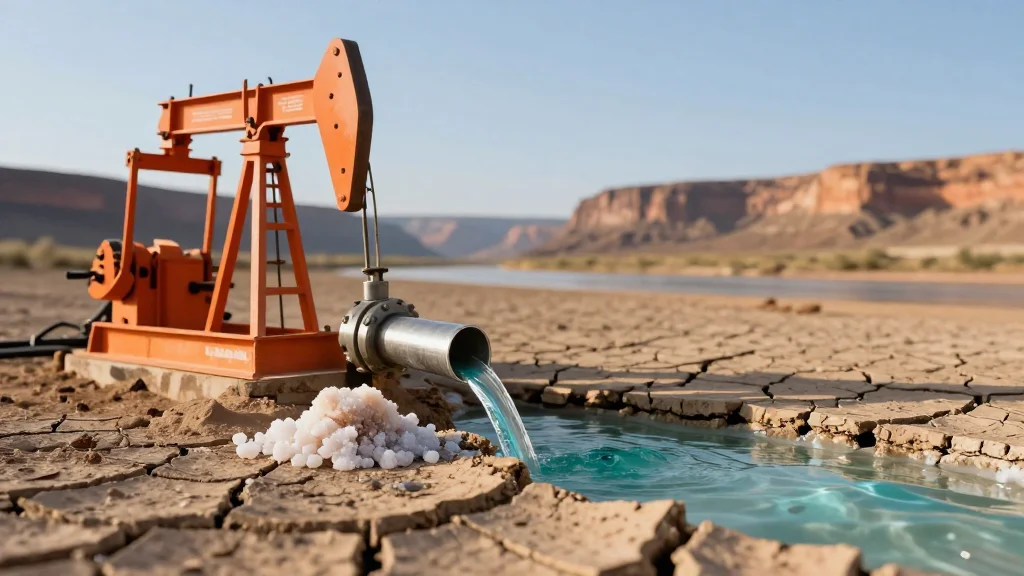
Colorado River Drought Endangers Lithium Mining and Farming in Imperial Valley

Why It Matters
The Colorado River’s decline threatens the United States’ ability to secure domestic sources of lithium, a metal essential for the clean‑energy transition. If water scarcity forces mining projects to stall, the country could remain dependent on foreign lithium supplies, undermining energy security and climate goals. Simultaneously, the valley’s agriculture supplies a significant portion of the nation’s winter produce; reduced output would raise food prices and impact food‑insecure communities. The conflict illustrates how climate‑driven water stress can simultaneously jeopardize food production and the minerals needed for a low‑carbon economy. Beyond the immediate region, the situation serves as a bellwether for other arid mining districts worldwide. As climate change intensifies droughts, water‑intensive extractive industries will face mounting regulatory and social pressures, prompting a shift toward water‑efficient technologies or alternative locations. The Imperial Valley case therefore offers early insight into how resource‑scarcity could reshape global mining investment patterns.
Key Takeaways
- •Colorado River flow down ~33% over the past century, risking water supply for Imperial Valley.
- •IID manages >3,000 miles of canals delivering >1 million gallons/minute to 180,000 residents.
- •Agriculture consumes 97% of the district’s 3.1 million acre‑feet of water annually.
- •Emerging lithium extraction projects depend on the same water, crucial for U.S. battery supply.
- •Federal deadline missed; water‑allocation rules expire this year, creating regulatory uncertainty.
Pulse Analysis
The Imperial Valley dilemma is a microcosm of a broader clash between climate resilience and strategic mineral security. Historically, the region’s water infrastructure—built in the early 1900s—was designed for a river that flowed reliably. Today, that assumption is eroding, and the economic calculus for investors is shifting. Lithium developers, who once saw the valley as a low‑cost, water‑rich site, must now factor in the cost of water‑saving technologies, such as closed‑loop brine recycling, or risk project delays.
From a market perspective, the uncertainty could depress the valuation of junior mining firms with permits in the area, while boosting interest in alternative domestic sources like Nevada’s lithium‑rich clay deposits, which are less water‑dependent. Moreover, the water‑scarcity narrative may accelerate policy incentives for water‑efficient mining, akin to the recent EPA guidance on water use in mineral processing. Companies that proactively adopt such measures could gain a competitive edge and secure financing from ESG‑focused investors.
Looking ahead, the outcome of the upcoming water‑rights negotiations will set a precedent for how the U.S. balances agricultural heritage with the urgent need for domestic critical minerals. If a compromise is reached that safeguards a baseline water allocation for mining while preserving agricultural output, the Imperial Valley could become a model for sustainable resource development in arid regions. Failure to do so, however, could push mining investment offshore, undermining the United States’ clean‑energy ambitions and exposing the economy to geopolitical supply risks.
Colorado River Drought Endangers Lithium Mining and Farming in Imperial Valley
Comments
Want to join the conversation?
Loading comments...