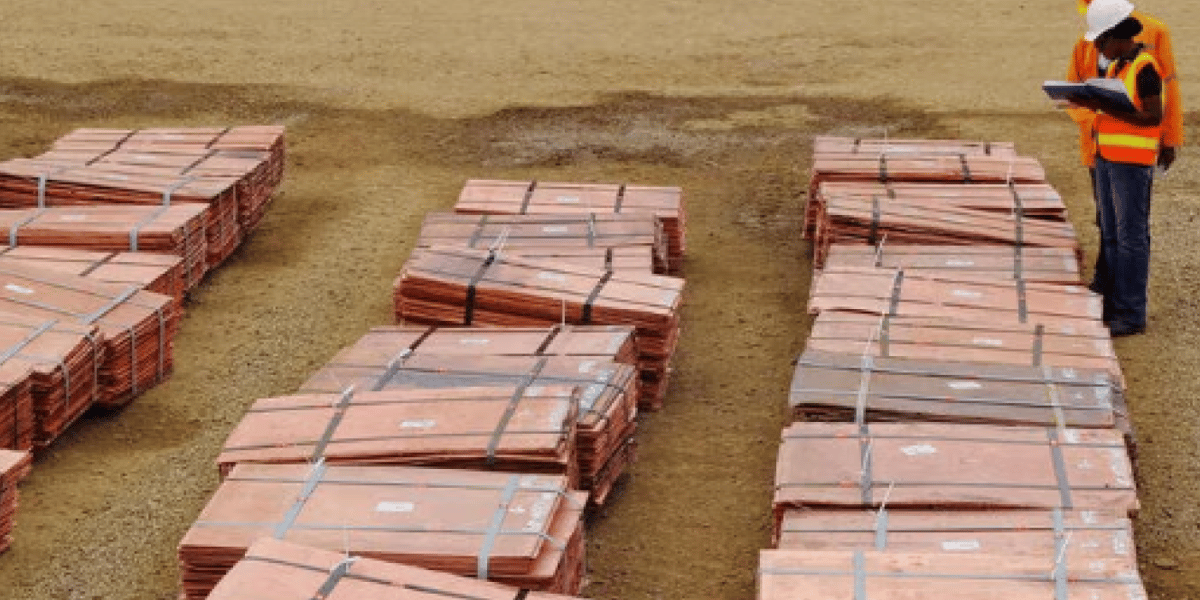
Copper Leads Weekly Surge in Global Commodity Prices as DRC Mining Products Show Mixed Trends
Why It Matters
Higher copper and precious‑metal prices signal robust demand from renewable‑energy and technology sectors, while declines in cobalt and tantalum highlight selective market corrections that could affect investment strategies and supply‑chain planning.
Key Takeaways
- •Copper up $688/ton, reaching $12,836, signaling strong demand.
- •Gold and tin also post weekly gains, reinforcing commodity rally.
- •Cobalt and tantalum prices slip, indicating selective market correction.
- •DRC export basket shows mixed trends, reflecting global industrial cycles.
- •Price moves highlight supply chain sensitivities amid economic uncertainty.
Pulse Analysis
Copper’s surge to $12,836 per ton reflects the metal’s pivotal role in the energy transition. Battery manufacturers and renewable‑energy developers are locking in higher prices as they scale production, tightening the balance between supply constraints in the DRC and soaring demand in Europe and Asia. Analysts note that copper’s price elasticity is now more pronounced, with each incremental increase feeding back into project economics for electric‑vehicle infrastructure and grid upgrades.
The broader commodity landscape in the DRC paints a nuanced picture. Gold, tin, wolframite and silver ore all posted weekly gains, buoyed by safe‑haven buying and steady industrial consumption. Conversely, cobalt—a critical component for high‑performance batteries—experienced a marginal dip, suggesting that short‑term inventory adjustments are tempering its rally. Tantalum’s decline points to shifting demand in electronics manufacturing, where manufacturers are diversifying material inputs amid supply‑chain disruptions. These divergent trends illustrate how specific market segments react differently to macro‑economic signals, trade policies, and geopolitical risk.
For investors and policymakers, the mixed signals carry strategic implications. Elevated copper and gold prices may encourage further capital inflows into DRC mining projects, but the volatility also raises financing costs and risk assessments. Countries dependent on mineral exports must balance short‑term revenue gains with long‑term sustainability, especially as global regulators push for greener extraction practices. Monitoring price trajectories across the mineral spectrum will be essential for forecasting economic health in the DRC and for aligning global supply chains with evolving demand patterns.
Copper Leads Weekly Surge in Global Commodity Prices as DRC Mining Products Show Mixed Trends
Comments
Want to join the conversation?
Loading comments...