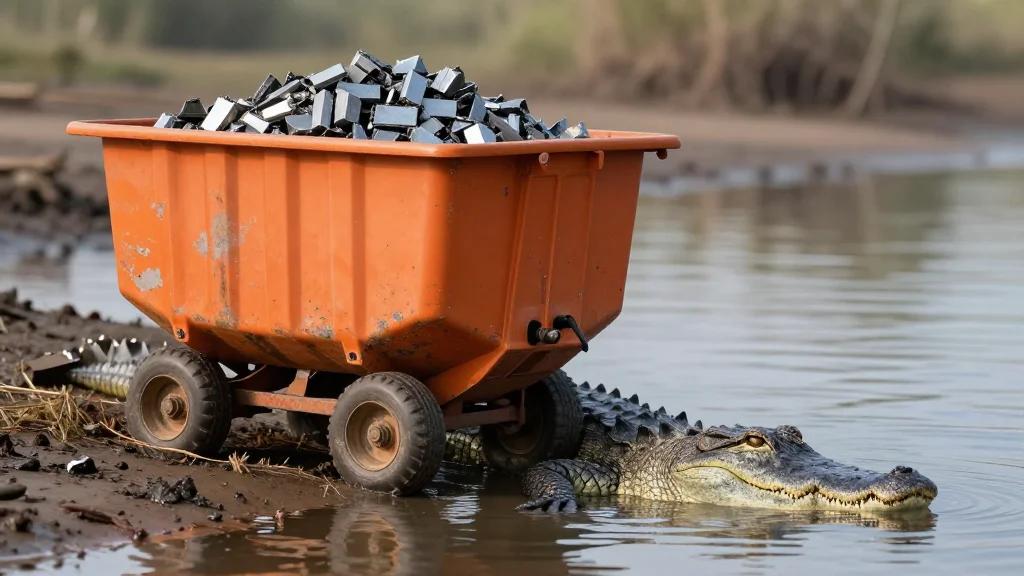
Crocodile Deaths Surge on Bangka Island as Illegal Tin Mining Destroys Wetlands

Why It Matters
The Bangka case illustrates how extractive industries can trigger cascading social and ecological crises. Habitat loss not only endangers biodiversity but also creates direct safety threats for local populations, turning environmental degradation into a public‑health emergency. Moreover, the $18 billion corruption scandal highlights the fiscal risks of unchecked mining, underscoring the need for transparent supply‑chain governance in the global tin market. If left unaddressed, the convergence of illegal mining, palm‑oil expansion, and climate‑driven behavioral changes could set a precedent for similar conflicts across Southeast Asia’s mineral‑rich wetlands, jeopardizing both regional food security and the livelihoods of millions who depend on these ecosystems.
Key Takeaways
- •21 fatal crocodile attacks recorded on Bangka Island in the past five years, latest victim was 40‑year‑old fisherman Jauhari.
- •Approximately 1,000 hectares of wetlands and 250 illegal tin mining sites have been cleared for oil‑palm plantations along the Menduk River.
- •Indonesia accounts for the most crocodile attacks worldwide, with 665 incidents reported between 2017‑2019.
- •Corruption probe linked to state miner PT Timah estimates $18 billion in public losses due to illegal mining on Bangka.
- •Community groups and researchers call for immediate habitat restoration and stricter enforcement to curb human‑crocodile conflict.
Pulse Analysis
The Bangka incident is a textbook example of how resource extraction can destabilize human‑wildlife equilibria. Historically, tin mining on the island has been a cornerstone of Indonesia’s export economy, but the shift toward unregulated, small‑scale operations has eroded the very wetlands that once buffered communities from crocodile aggression. The data suggest a clear causal chain: habitat fragmentation forces apex predators into closer contact with people, while climate warming amplifies both predator activity and human water use.
From a market perspective, the $18 billion loss figure is a stark reminder that environmental externalities are not abstract—they translate into tangible fiscal damage and reputational risk for companies tied to the tin supply chain. As major electronics manufacturers tighten conflict‑free sourcing standards, the Bangka crisis could become a litmus test for the industry’s ability to police downstream impacts. Investors may soon demand verifiable remediation plans, pushing firms like PT Timah to adopt stricter environmental, social, and governance (ESG) protocols.
Policy‑wise, the situation calls for a multi‑pronged response: robust enforcement against illegal mining, strategic reforestation of mangroves, and community‑led monitoring of crocodile populations. International development agencies could leverage funding to support wetland restoration, turning a tragedy into a catalyst for sustainable land‑use planning. If coordinated action materializes, Bangka could shift from a cautionary tale to a model for reconciling mineral extraction with ecological resilience.
Crocodile Deaths Surge on Bangka Island as Illegal Tin Mining Destroys Wetlands
Comments
Want to join the conversation?
Loading comments...