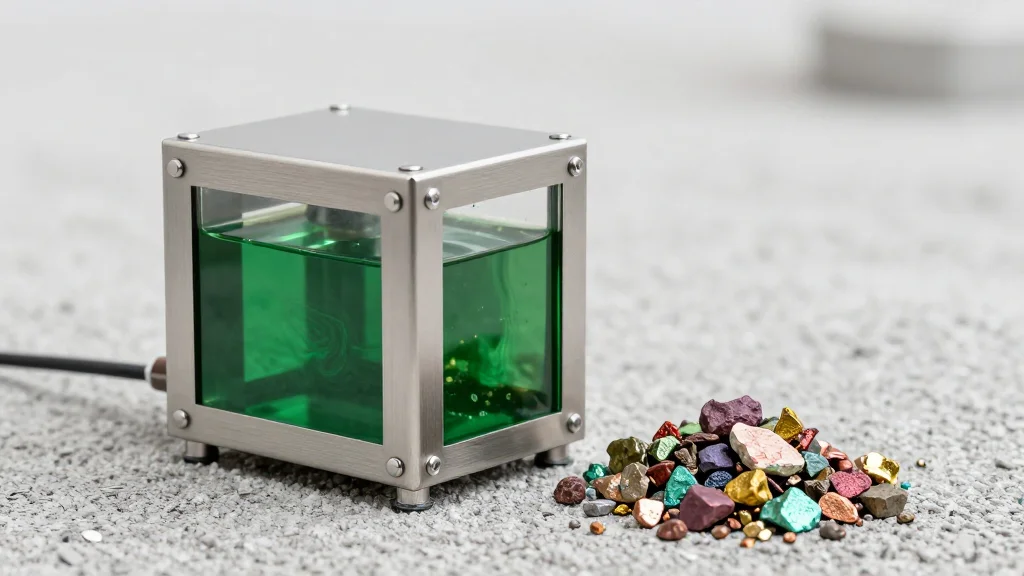
DARPA's Smash Program Targets Rare‑earth Processing Bottleneck with Distributed Model

Why It Matters
The Smash program tackles a core weakness in the U.S. rare‑earth supply chain: the processing bottleneck that forces dependence on foreign refining capacity, chiefly in China. By developing a domestic, low‑waste processing technology, the United States can reduce strategic exposure and create new economic opportunities in regions with existing ore deposits but limited refining infrastructure. Moreover, the environmental benefits of near‑zero‑waste extraction align with increasing regulatory pressure and public demand for greener mining practices. Beyond rare earths, the ability to recover a broad suite of elements from waste streams could transform the materials economy, fostering circular‑economy models and reducing the need for new mining ventures. This shift could also stimulate job growth in high‑tech manufacturing and advanced materials sectors, reinforcing the United States' competitive edge in emerging technologies such as electric vehicles, renewable energy, and defense systems.
Key Takeaways
- •DARPA launches the 48‑month Smash program to develop near‑zero‑waste separation for rare earths and up to 80 other elements.
- •Program manager Julian McMorrow emphasizes the shift from mining to processing as the primary challenge.
- •Smash aims to replace centralized refining sites like Mountain Pass with a distributed processing model.
- •Two‑phase approach: proof‑of‑concept experiments followed by industrial‑scale prototypes.
- •Success could lower environmental waste, improve supply‑chain security, and create new domestic refining capacity.
Pulse Analysis
DARPA’s entry into the rare‑earth processing arena marks a rare instance of a defense agency directly addressing a commercial supply‑chain issue. Historically, the U.S. has relied on private sector initiatives and subsidies to rebuild its rare‑earth capabilities, but those efforts have stalled at the processing stage. By injecting high‑risk, high‑reward research funding, DARPA can accelerate technology maturation beyond what market forces alone would achieve, especially given the long lead times and capital intensity of building new refineries.
The distributed processing concept mirrors trends in other sectors where decentralization reduces single‑point failures—think of micro‑grids in energy or edge computing in IT. If Smash can demonstrate economically viable extraction from low‑grade ores and waste, it could unlock previously uneconomic deposits across the western United States, revitalizing mining towns while mitigating environmental concerns. However, the program must navigate the classic commercialization gap: laboratory success does not guarantee scale‑up profitability, especially under stringent U.S. labor and environmental regulations.
Strategically, reducing reliance on Chinese refining aligns with broader national security objectives. A domestic processing capability would give the Pentagon and other critical industries greater assurance of material availability during geopolitical tensions. In the longer term, the technology could be adapted for other strategic minerals, creating a modular platform that strengthens the entire critical materials ecosystem. The next 12 months will be a litmus test for whether DARPA’s high‑tech approach can translate into a viable industrial pathway, potentially reshaping the global rare‑earth market.
DARPA's Smash program targets rare‑earth processing bottleneck with distributed model
Comments
Want to join the conversation?
Loading comments...