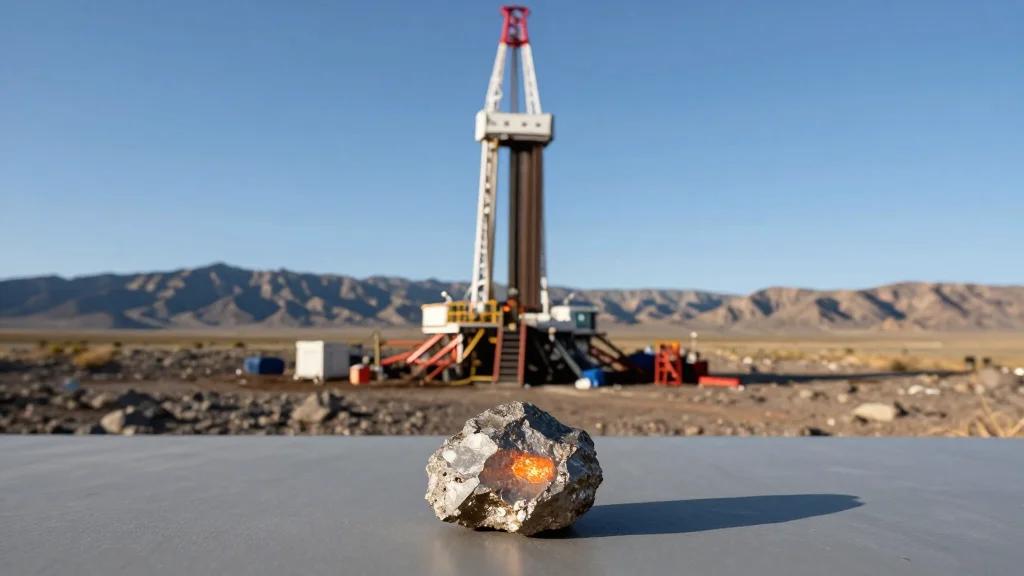
Eagle Nuclear Energy Launches $27,000-Foot Drill Program at Aurora Uranium Project

Companies Mentioned
Why It Matters
The Aurora project sits at the intersection of national security, energy policy, and market dynamics. A successful pre‑feasibility study would not only validate Eagle’s claim of holding the largest conventional uranium deposit in the U.S., but also provide a domestic source of fuel for reactors at a time when geopolitical tensions threaten import reliability. This could accelerate the United States’ goal of achieving greater energy independence and support the broader clean‑energy transition that relies on nuclear power as a low‑carbon baseload. Investor sentiment toward Eagle reflects a broader tension in the mining sector: the lure of policy‑driven demand versus the practical challenges of bringing a new mine to production. The outcome of Eagle’s drill program will serve as a bellwether for other junior miners seeking to capitalize on the same policy tailwinds, influencing capital allocation across the domestic uranium space.
Key Takeaways
- •Eagle Nuclear signs a drilling services agreement with Harris Exploration Drilling for a 27,000‑foot, 47‑hole program at Aurora.
- •Aurora holds 32.75 million pounds of indicated and 4.98 million pounds of inferred uranium resources.
- •Drilling is scheduled to start in July 2026 and finish within 3‑4 months, with a PFS targeted for H2 2027.
- •U.S. imports 98% of its uranium; spot price reached $84.25 per pound in March 2026.
- •Investor skepticism centers on capital intensity and the path to cash‑flow despite strong policy support.
Pulse Analysis
Eagle Nuclear’s aggressive field schedule underscores a classic high‑risk, high‑reward play common among junior miners operating under favorable policy regimes. The company is leveraging a rare confluence of factors—government backing for domestic nuclear fuel, rising uranium prices, and a clear resource advantage—to attract capital. However, the capital‑intensive nature of underground drilling and the need for a robust PFS mean that any shortfall in assay results could quickly erode investor confidence.
Historically, U.S. uranium projects have struggled to move from discovery to production, often hampered by permitting delays and financing gaps. Eagle’s early engagement with experienced contractors and its use of above‑ground mud systems suggest a proactive approach to environmental and community concerns, which could smooth the permitting process. Yet, the company’s reliance on a single large deposit makes it vulnerable; diversification across multiple projects would mitigate risk but also dilute focus.
Looking ahead, the success of Aurora could catalyze a wave of domestic uranium development, encouraging both private and public investors to fund similar projects. Conversely, a disappointing drill outcome may reinforce the perception that policy incentives alone cannot overcome the geological and economic challenges inherent in uranium mining. Eagle’s next 12 months will therefore be a litmus test for the viability of the United States’ broader strategy to secure a home‑grown nuclear fuel supply chain.
Eagle Nuclear Energy launches $27,000-foot drill program at Aurora uranium project
Comments
Want to join the conversation?
Loading comments...