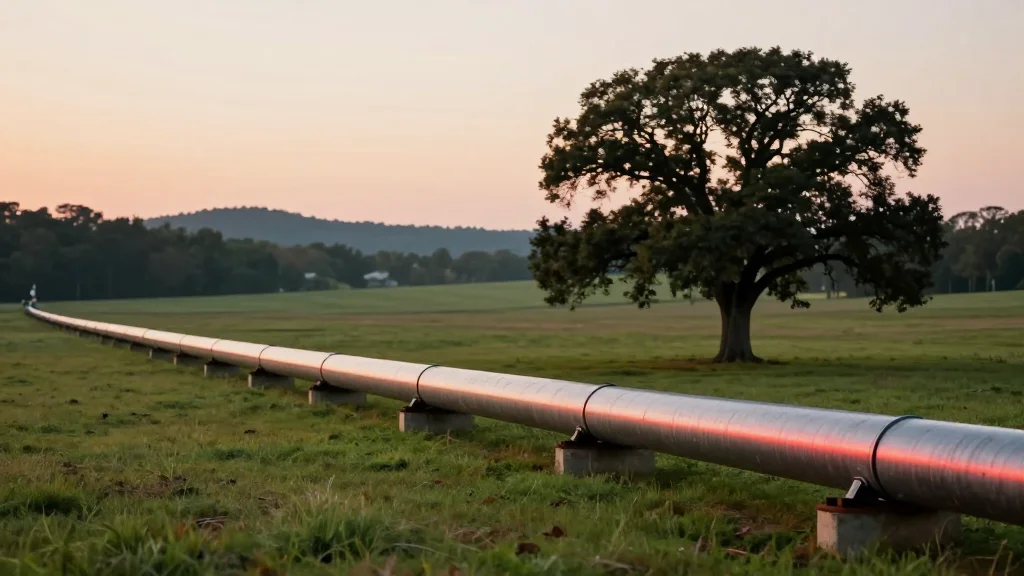
Enbridge’s 28‑Mile North Carolina Gas Pipeline Faces Fierce Local Opposition

Companies Mentioned
Why It Matters
The Enbridge pipeline proposal spotlights a broader tension in the U.S. Southeast: expanding natural‑gas infrastructure to satisfy projected electricity demand while confronting escalating climate‑action demands from local communities. If approved, the line could lock in decades of fossil‑fuel use, complicating state and regional decarbonization pathways. Conversely, successful opposition could embolden other landowners and environmental groups to challenge similar projects, potentially reshaping the regulatory calculus for future pipelines. Moreover, the project’s proximity to sensitive waterways raises questions about water‑resource management and biodiversity protection in a region already stressed by agricultural runoff and industrial development. The outcome will influence investor confidence in fossil‑fuel assets, utility planning for data‑center power, and the political calculus surrounding climate‑related permitting in North Carolina.
Key Takeaways
- •Enbridge proposes a 28‑mile natural gas pipeline from Siler City to Moncure, NC.
- •Construction could start in fall 2027; service expected spring 2028.
- •Landowner John Alderman, a self‑described carbon‑negative farmer, publicly opposes the route.
- •Pipeline would cross creeks feeding the Deep River and other waterways, requiring state and federal permits.
- •Enbridge’s second NC project after the 45‑mile T15 pipeline, reflecting a broader state gas buildout.
Pulse Analysis
Enbridge’s push into North Carolina reflects a strategic bet that natural gas will remain a bridge fuel for the region’s growing data‑center and industrial load. The company’s acquisition of Dominion’s gas assets in 2024 gave it a foothold, and the new 28‑mile line is designed to integrate that footprint with existing infrastructure. However, the timing is precarious. Federal and state regulators are increasingly scrutinizing greenhouse‑gas emissions, and the Biden administration’s emphasis on clean‑energy incentives could tilt the cost‑benefit analysis against new fossil projects.
From a market perspective, the pipeline could secure long‑term take‑or‑pay contracts for Enbridge, stabilizing cash flows in a sector where volatility has risen due to fluctuating natural‑gas prices and the rapid expansion of renewables. Yet the local opposition, anchored by Alderman’s personal narrative of carbon sequestration and off‑grid living, provides a compelling counter‑story that resonates with broader public sentiment. If legal challenges delay permitting, Enbridge may face higher financing costs and potential write‑downs, especially if investors begin to factor climate‑risk premiums into asset valuations.
Looking ahead, the outcome of this project will likely influence how other pipeline developers approach community engagement in the Southeast. A win for Enbridge could reinforce a model of top‑down infrastructure rollout, while a setback could accelerate a shift toward more collaborative, climate‑aligned planning processes. Either way, the case underscores the growing importance of aligning energy infrastructure with local environmental values and the evolving regulatory landscape.
Enbridge’s 28‑Mile North Carolina Gas Pipeline Faces Fierce Local Opposition
Comments
Want to join the conversation?
Loading comments...