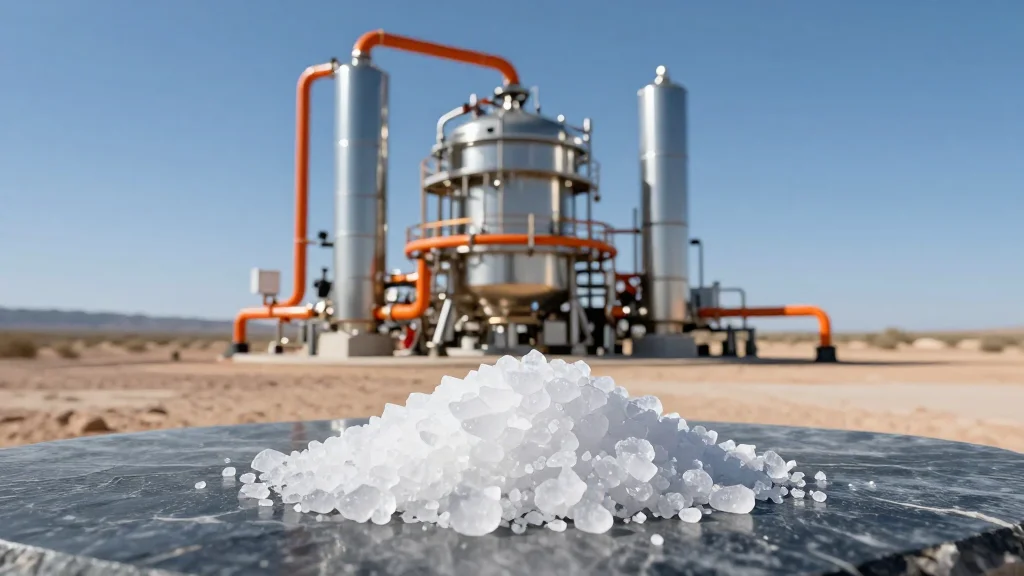
EnergyX Starts First U.S. Direct Lithium Extraction Plant in Texas

Why It Matters
Domestic lithium production is a strategic priority for the United States as electric‑vehicle sales and grid‑scale storage projects surge. By demonstrating a water‑efficient, lower‑impact extraction method, EnergyX's Texas plant could reduce the nation's dependence on South American lithium imports, which are subject to geopolitical risk and supply bottlenecks. A successful DLE rollout would also lower the overall cost of battery raw materials, helping to keep EV prices competitive and supporting the broader clean‑energy transition. Beyond cost and security, the technology could reshape the environmental calculus of lithium mining. Traditional evaporation ponds consume vast quantities of water in arid regions, raising concerns among local communities and regulators. Direct extraction, if proven at scale, offers a pathway to meet growing demand while preserving water resources and minimizing land disturbance, aligning with increasingly stringent ESG expectations from investors and consumers alike.
Key Takeaways
- •EnergyX commissioned the first U.S. direct lithium extraction plant in Texas.
- •The pilot processes several thousand gallons of brine daily to produce battery‑grade lithium carbonate.
- •DLE technology aims to cut water use and land footprint compared with traditional evaporation ponds.
- •The plant supports U.S. policy goals of securing domestic critical mineral supply chains.
- •EnergyX plans to expand capacity within two years, pending performance data.
Pulse Analysis
EnergyX's Texas DLE plant arrives at a moment when the United States is scrambling to close a critical minerals gap that could constrain EV rollout. Historically, the U.S. has relied on imports from Chile, Australia, and China, exposing manufacturers to supply volatility. By proving that lithium can be extracted directly from brine with a smaller environmental footprint, EnergyX challenges the status quo and offers a model that could be replicated in other brine‑rich basins, such as the Permian and Gulf Coast.
The competitive landscape is still nascent. Companies like Lilac Solutions and Standard Lithium are also field‑testing DLE processes, but most pilots are located in Nevada or Arizona. EnergyX's choice of Texas leverages existing oil‑field infrastructure, potentially lowering capital expenditures and accelerating time‑to‑revenue. If the plant demonstrates superior recovery rates—targeting 80%+ versus the 50‑60% typical of evaporation methods—it could attract strategic partnerships with battery makers eager to lock in domestic supply.
However, scaling DLE remains fraught with technical and regulatory challenges. Brine composition varies widely, and the chemistry of ion‑selective membranes or sorbents must be robust enough for continuous operation. Moreover, the U.S. permitting process for new mineral projects, while improving, can still be a bottleneck. EnergyX's ability to navigate these hurdles will determine whether the Texas pilot becomes a blueprint for a national DLE network or remains an isolated proof‑of‑concept. Investors and policymakers should monitor the plant's first‑year performance metrics closely, as they will set the tone for future capital flows into the emerging DLE sector.
EnergyX Starts First U.S. Direct Lithium Extraction Plant in Texas
Comments
Want to join the conversation?
Loading comments...