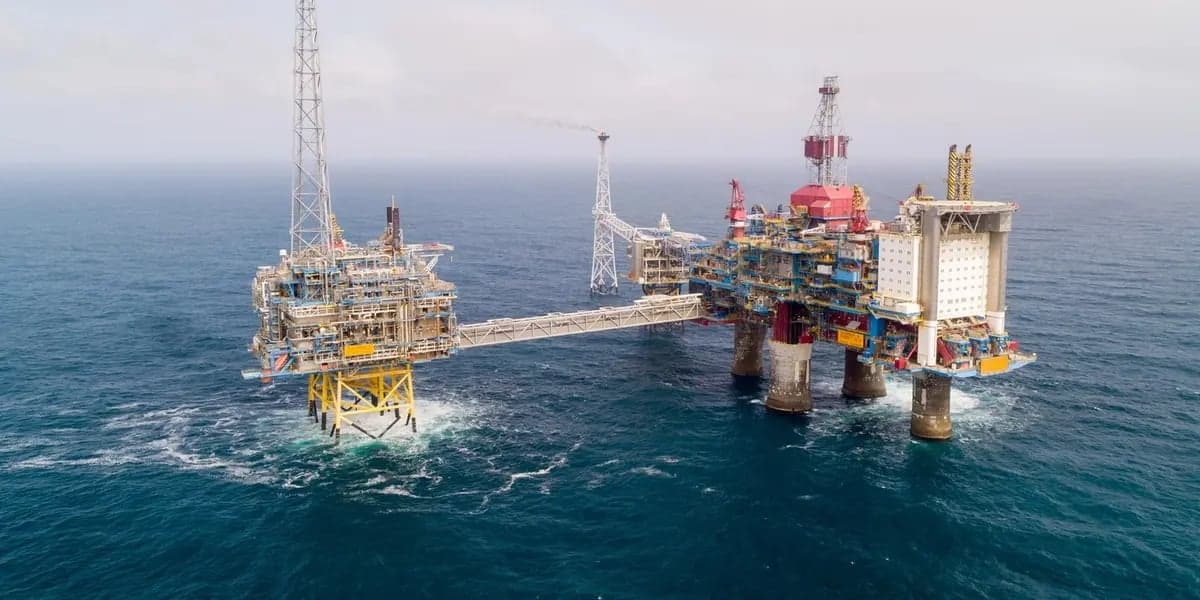
Equinor Hits the Jackpot Twice in North Sea with New Oil, Gas & Condensate Finds
•March 10, 2026
0
Why It Matters
These discoveries bolster Norway’s role as a reliable European gas supplier and offset declining output from mature fields, supporting Equinor’s long‑term production portfolio and shareholder returns.
Key Takeaways
- •Byrding C holds 4‑8 M barrels recoverable oil
- •Frida Kahlo yields 5‑9 M barrels oil‑equivalent
- •Discovery rate exceeds 70% across 26 Troll wells
- •Sleipner area wells add 55‑140 M boe resources
- •New finds enable subsea tie‑backs to existing infrastructure
Pulse Analysis
Advanced seismic techniques have reignited exploration optimism on the Norwegian continental shelf. By leveraging ocean‑bottom‑node and 4D seismic data, Equinor refined its subsurface models, pinpointing high‑potential reservoirs in the mature Troll and Sleipner complexes. This data‑driven approach reduced geological uncertainty, allowing the company to drill fewer wells while achieving a discovery success rate exceeding 70%, a benchmark that underscores the value of modern geophysical tools in a region where new acreage is scarce.
The newly identified resources are strategically positioned near existing export infrastructure, meaning they can be tied back to platforms such as Sleipner B and Troll C with minimal additional capital outlay. This proximity accelerates the path to first gas, reinforcing Norway’s capacity to deliver steady dry gas volumes to Europe amid shifting supply dynamics. Moreover, the ability to monetize condensate alongside gas enhances revenue diversification, providing a buffer against volatile oil prices while supporting the continent’s energy transition goals.
For Equinor, the twin discoveries represent more than just added barrels; they signal a sustainable growth model that blends high‑impact exploration with cost‑effective development. By integrating new fields into established hubs, the firm can extend the productive life of legacy assets, improve overall field economics, and maintain a robust dividend pipeline. Looking ahead, the company’s plan to drill additional exploration and production wells in Sleipner this year suggests a continued focus on leveraging technology to unlock residual upside, positioning Equinor as a key player in Europe’s future energy landscape.
Equinor hits the jackpot twice in North Sea with new oil, gas & condensate finds
0
Comments
Want to join the conversation?
Loading comments...