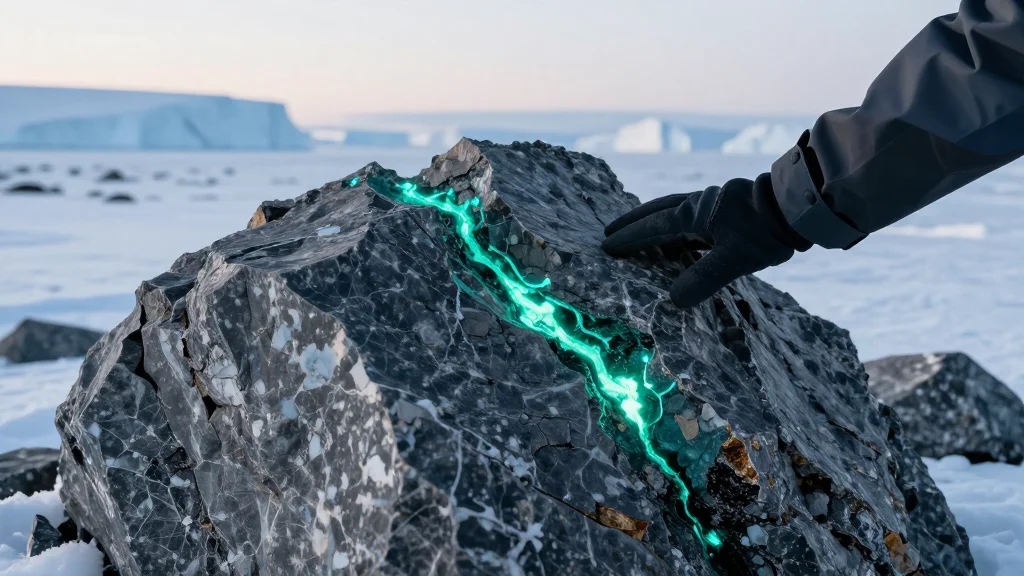
ETM Unlocks Low-Uranium Rare Earth Opportunity at Kvanefjeld
Companies Mentioned
Why It Matters
The find removes a key regulatory barrier, opening a path to develop a world‑class, low‑uranium REE deposit that could supply critical magnets for clean‑energy technologies. It positions ETM as a potential major player in the global heavy‑REE market.
Key Takeaways
- •10 new REE zones identified across Kvanefjeld.
- •1.8‑km zone holds heavy REEs with uranium <100 ppm.
- •Dysprosium peaks at 1,112 ppm, terbium at 161 ppm.
- •Sample KS‑25‑329 shows 1,989 ppm HREO within legal uranium limits.
Pulse Analysis
Greenland’s Kvanefjeld deposit has long been a focal point for rare‑earth investors because it hosts both light and heavy REEs essential for wind turbines, electric‑vehicle motors, and defense applications. However, the presence of uranium above the 100 ppm ceiling set by the 2021 Uranium Act has stalled large‑scale development, creating uncertainty for miners and downstream manufacturers alike. By pinpointing mineralised zones that stay under this threshold, Energy Transition Minerals not only sidesteps a major compliance hurdle but also demonstrates that high‑grade heavy REEs can coexist with low‑uranium host rocks, a scenario that could reshape exploration strategies in other jurisdictions with similar restrictions.
The newly mapped 1.8‑kilometre trend delivers dysprosium oxide concentrations of 1,112 ppm and terbium oxide of 161 ppm, both critical for high‑performance permanent magnets. These grades far exceed the average 10,900 ppm total rare‑earth oxide (TREO) of the broader Kvanefjeld resource and rival the best‑in‑class deposits worldwide. Moreover, the standout sample KS‑25‑329, with 1,989 ppm heavy REOs and uranium well under 100 ppm, suggests that the high‑grade mineralisation may be more extensive than surface sampling alone reveals, bolstering the case for a sizable, economically viable heavy‑REE reserve.
For ETM, the discovery unlocks a clear development pathway and strengthens its position in a market where supply security for heavy REEs is increasingly prized. The company’s next steps—helicopter‑supported drilling, airborne magnetic and radiometric surveys—aim to delineate the depth and continuity of these compliant zones. If successful, ETM could attract strategic investors seeking exposure to the clean‑energy supply chain, while also providing Greenland with a low‑impact, high‑value mining project that aligns with its environmental and regulatory framework. The outcome may set a precedent for other projects constrained by uranium regulations, highlighting the commercial upside of targeted, low‑uranium REE exploration.
ETM unlocks low-uranium rare earth opportunity at Kvanefjeld
Comments
Want to join the conversation?
Loading comments...