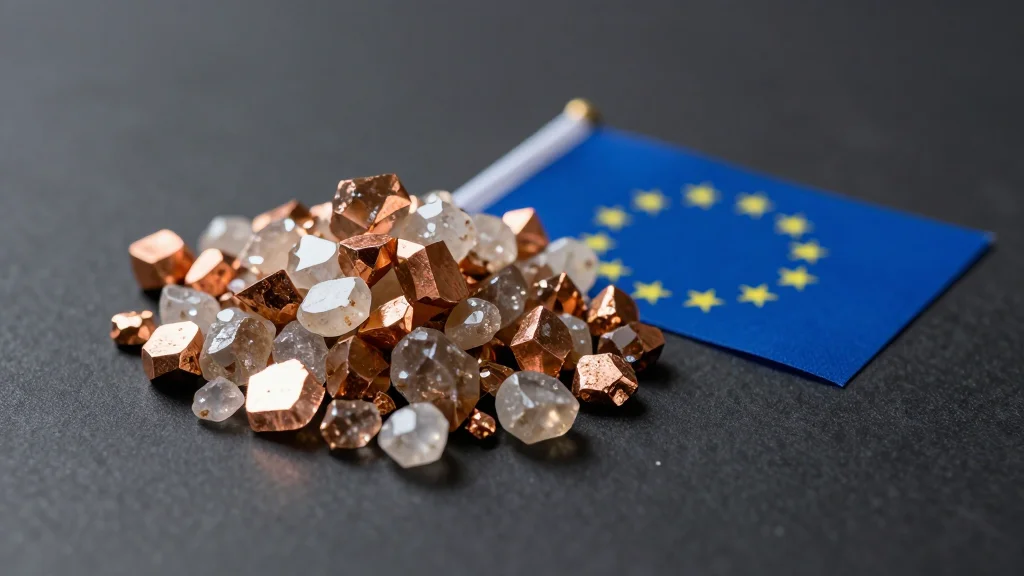
Europe Allocates €3 Bn to Critical‑Mineral Financing, Plans Strategic Stockpiles

Why It Matters
Securing financing and strategic reserves for critical minerals is essential for Europe’s energy transition, defense autonomy and high‑tech manufacturing. Without a reliable supply of lithium, rare earths and other key inputs, the EU risks lagging in electric‑vehicle production, renewable‑energy deployment and semiconductor fabrication, all of which are pillars of its climate and security strategies. A successful financing and stockpiling regime would also signal to global investors that Europe is a viable market for upstream mining and downstream processing projects, potentially attracting the private capital needed to close the estimated $30‑$40 bn gap. Conversely, failure to act could deepen dependence on external suppliers, exposing the bloc to geopolitical leverage and price volatility.
Key Takeaways
- •EU pledges up to €3 bn ($3.2 bn) via ReSourceEU for critical‑mineral supply‑chain projects in 2026.
- •Industry estimates a financing need of tens of billions of euros ($30‑$40 bn) to build first‑wave mining and refining infrastructure.
- •France promotes the Lacq hub to develop rare‑earth processing and magnet manufacturing within Europe.
- •Strategic stockpiles of lithium, cobalt, rare earths and other minerals are being drafted as economic‑security assets.
- •European Court of Auditors warns current sustainable‑finance frameworks are insufficient to unlock needed capital.
Pulse Analysis
Europe’s dual strategy of financing injection and strategic stockpiling reflects a recognition that raw‑material security is now a geopolitical imperative, not just an industrial concern. The €3 bn ReSourceEU commitment is a symbolic first step, but the real test will be the EU’s ability to mobilise the additional $30‑$40 bn required to build a full‑scale value chain. Historically, the continent has relied on external processing hubs, especially in China, to add value to its modest domestic deposits. By investing in downstream capabilities such as the Lacq hub, Europe hopes to capture more of the margin and reduce exposure to export controls.
The stockpiling initiative could also reshape market dynamics by creating a sovereign demand floor. State‑backed purchases may lower financing costs for projects that otherwise struggle to attract private equity, but they risk crowding out commercial actors if the reserves are managed without clear, market‑aligned rules. Transparency will be crucial to avoid distorting price signals that guide efficient allocation of capital across the sector.
Looking ahead, the EU’s success will hinge on three interlocking factors: the speed of policy implementation, the clarity of sustainable‑finance criteria, and the ability to forge public‑private partnerships that can deliver the required infrastructure. If these elements align, Europe could emerge as a credible competitor to the United States and China in the critical‑mineral arena, securing the supply chains that underpin its green‑energy and defense ambitions. If not, the financing gap will widen, and Europe’s strategic autonomy will remain an aspirational goal rather than an operational reality.
Europe Allocates €3 bn to Critical‑Mineral Financing, Plans Strategic Stockpiles
Comments
Want to join the conversation?
Loading comments...