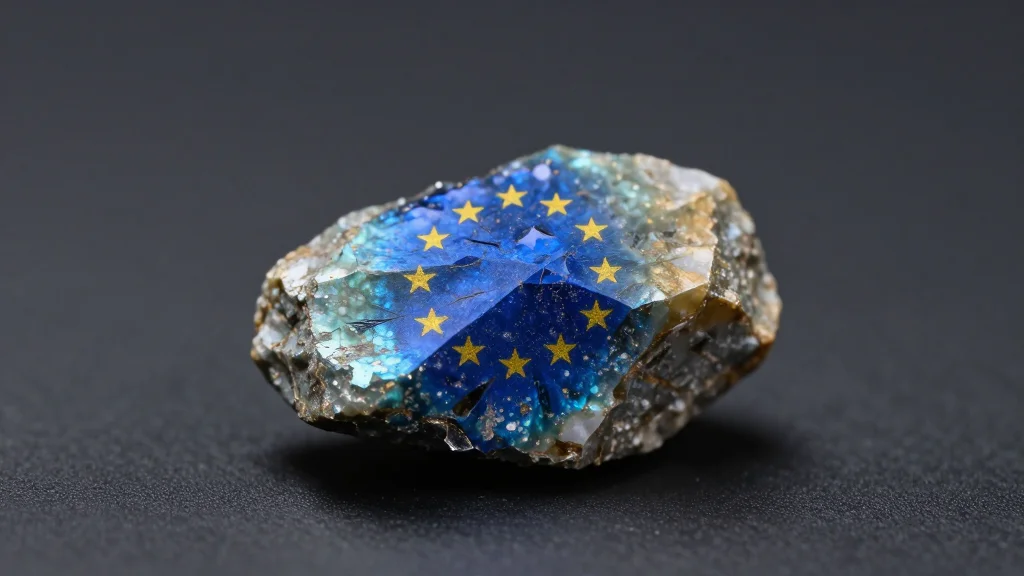
Europe’s Raw‑Materials Chief Calls for Independent Rare‑Earth Pricing to Diminish China’s Grip

Why It Matters
An independent European pricing mechanism would reduce the bloc’s exposure to geopolitical risk and price manipulation stemming from China’s near‑monopoly. By providing transparent price signals, the EU can unlock financing for domestic mining projects, fostering a more diversified and secure supply chain for technologies essential to the green transition and defense readiness. Moreover, a new pricing benchmark could reshape global market dynamics, prompting other regions to develop alternative pricing hubs and potentially lowering overall dependence on a single supplier. Beyond supply security, the initiative signals Europe’s broader ambition to assert strategic autonomy in critical minerals. It aligns with the EU’s Climate‑Fit agenda and its goal to double the share of critical minerals sourced within the bloc by 2030, reinforcing both economic competitiveness and geopolitical resilience.
Key Takeaways
- •EU raw‑materials chief urges creation of an independent rare‑earth pricing mechanism.
- •China currently controls about 90% of global rare‑earth output and pricing.
- •Transparent pricing aims to attract investment in European mining and processing projects.
- •Potential market shift could fragment China‑centric price discovery and spur new benchmarks.
- •EU Commission expected to launch stakeholder consultations and legislative proposal in H2 2026.
Pulse Analysis
Europe’s push for an autonomous rare‑earth pricing regime reflects a maturing strategic calculus that treats critical minerals as a security asset rather than a commodity. Historically, the EU has relied on China’s low‑cost supply chain, but recent supply disruptions and geopolitical tensions have exposed the fragility of that model. By institutionalizing a transparent price index, the EU not only mitigates price volatility but also creates a policy lever to direct subsidies and procurement toward domestically produced materials. This mirrors the EU’s broader industrial policy shift toward ‘mission‑oriented’ funding, where market mechanisms are deliberately shaped to achieve climate and security goals.
The proposal also carries significant competitive implications. If successful, Europe could become a credible alternative source of rare‑earths, encouraging multinational firms to diversify away from China. This would likely pressure Chinese producers to adjust export strategies, potentially leading to lower global prices in the short term but also to a more contested market environment. However, the effectiveness of the pricing mechanism will hinge on the EU’s ability to harmonize standards across member states and to deliver a liquid, transparent market that can attract both buyers and sellers.
Looking ahead, the key risk lies in implementation. Establishing a new pricing benchmark involves complex data collection, verification, and governance structures. Delays or bureaucratic hurdles could erode investor confidence, allowing China to maintain its dominance. Conversely, a well‑executed rollout could catalyze a wave of new mining projects, bolster recycling initiatives, and position Europe as a leader in sustainable critical‑mineral supply chains. The next six months will be decisive as the Commission translates the concept into concrete policy instruments.
Europe’s Raw‑Materials Chief Calls for Independent Rare‑Earth Pricing to Diminish China’s Grip
Comments
Want to join the conversation?
Loading comments...