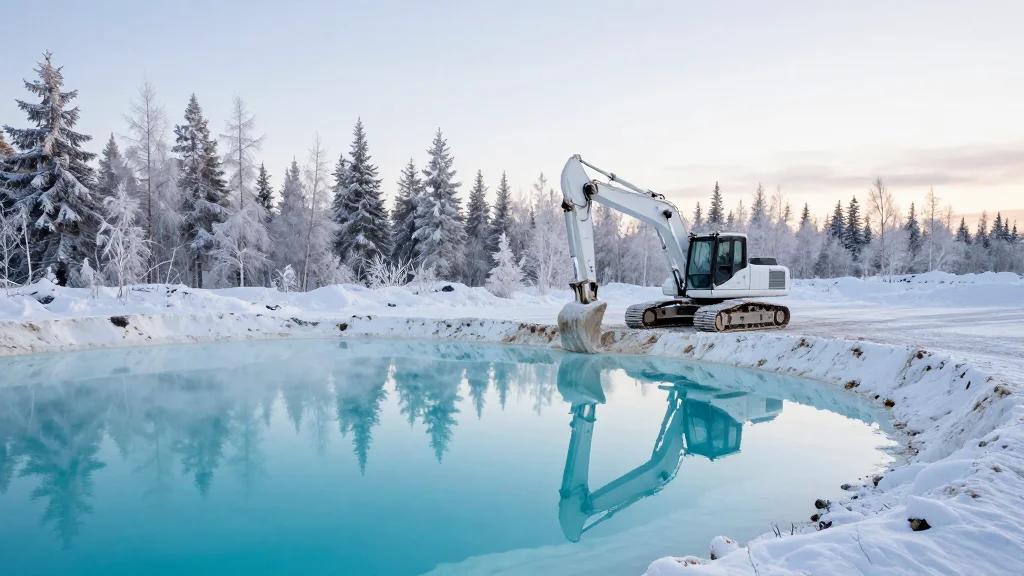
Finland Pledges $44 Million to Fast‑track Keliber Lithium Project

Companies Mentioned
Why It Matters
The Finnish funding underscores Europe’s determination to secure a domestic source of lithium, a metal essential for electric‑vehicle batteries and grid‑scale storage. By integrating mining, concentration, and refining in a single European footprint, Keliber reduces supply‑chain risk and lessens dependence on imports from China, Australia and the Americas. The project also serves as a test case for large‑scale, publicly backed financing of critical‑material projects, which could unlock further investments across the EU’s battery ecosystem. Moreover, the financing arrives at a time when lithium prices have been volatile, reflecting shifting demand and geopolitical tensions. A successful ramp‑up would demonstrate that strategic public capital can de‑risk projects enough to attract private partners, thereby accelerating the EU’s transition to a greener, more self‑reliant energy future.
Key Takeaways
- •Finland allocates €40 million (≈$44 million) to Keliber’s lithium project.
- •Keliber aims to produce ~15,000 tonnes of battery‑grade lithium hydroxide annually.
- •Total project investment reaches €783 million (≈$854 million).
- •Sibanye‑Stillwater holds a 79.82 % stake; Finnish Minerals Group owns 20 %.
- •Project designated strategic under EU raw‑materials legislation.
Pulse Analysis
Keliber’s financing surge arrives at a crossroads for European lithium. Historically, the continent has lagged behind in upstream battery‑material production, relying on imports that expose manufacturers to supply shocks. By injecting public capital, Finland is not only de‑risking a single project but also signaling to the broader market that strategic minerals are a public priority. This could catalyze similar state‑backed initiatives in neighboring countries, fostering a regional cluster of lithium value‑chain assets.
However, the project's success hinges on lithium price stability. The recent swing in spot prices—from a high of $22,000 per tonne in early 2025 to under $12,000 later that year—has made investors wary. Keliber’s reliance on a phased financing approach, with additional refinery funding tied to market conditions, reflects a pragmatic response to this volatility. If the refinery can achieve economies of scale quickly, it may lock in lower production costs, giving Europe a competitive edge against Asian producers.
In the longer term, Keliber could become a benchmark for integrated European mining projects, demonstrating that a full value chain—from ore to refined product—can be built domestically. Success would likely encourage the EU to allocate more funds under its Raw Materials Initiative, potentially reshaping global lithium supply dynamics and reducing the bloc’s exposure to geopolitical risks associated with overseas sources.
Finland pledges $44 million to fast‑track Keliber lithium project
Comments
Want to join the conversation?
Loading comments...