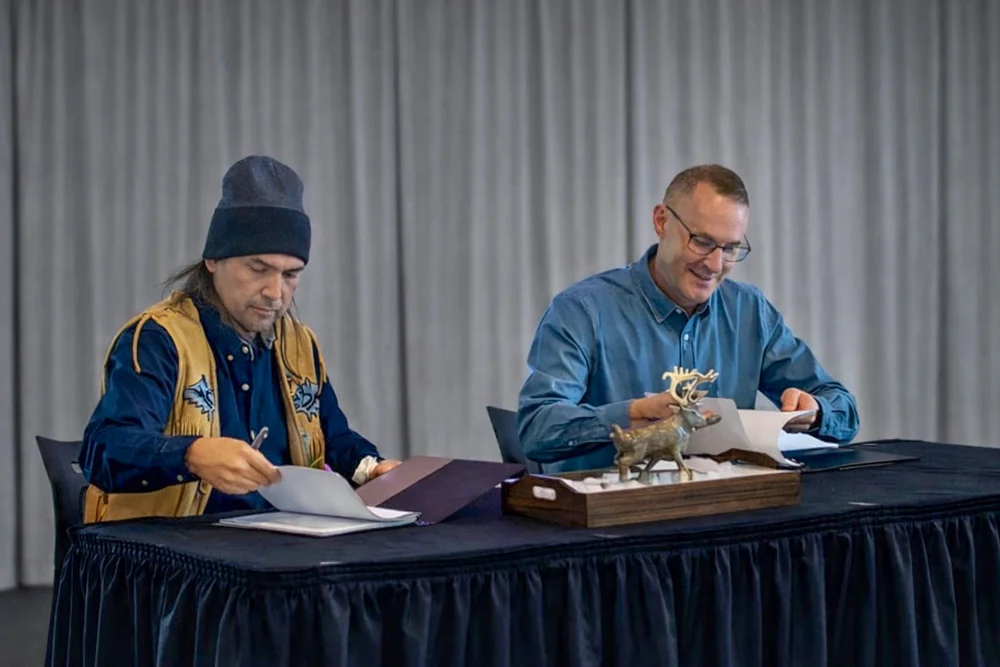
Fireweed, RRDC Sign Exploration Accord
Why It Matters
The agreement creates a clear, Indigenous‑led consent pathway that de‑risks critical‑metal development and aligns with Canada’s strategic push for secure supply chains.
Key Takeaways
- •FPIC required via RRDC’s Tū Łídlīni Assessment
- •Macpass: 56M t indicated zinc‑lead‑silver resources
- •Mactung: large high‑grade tungsten deposit outside China
- •US DPA and Canadian fund support Mactung feasibility
- •Agreement includes employment, training, and capacity funding for RRDC
Pulse Analysis
Canada’s critical‑minerals agenda is increasingly tied to Indigenous partnership models that respect UNDRIP principles. By securing a formal consent framework with the Ross River Dena Council, Fireweed demonstrates how mining firms can align project timelines with community governance, reducing regulatory uncertainty and fostering social licence. The Tū Łídlīni Assessment offers a community‑driven pathway to evaluate environmental and cultural impacts, setting a benchmark for future projects across the Yukon and broader North America.
Fireweed’s Macpass and Mactung projects illustrate the scale of opportunity in the region. Macpass’s 985‑square‑kilometre land package contains 56 million tonnes of indicated resources averaging 5.49% zinc, 1.58% lead and 24.2 g/t silver, while Mactung’s 38‑square‑kilometre zone holds 41.5 million tonnes of indicated tungsten at 0.73% WO₃, positioning it among the largest high‑grade deposits outside China. The feasibility study for Mactung, underwritten by the U.S. Defense Production Act Title III program and Canada’s Critical Minerals Infrastructure Fund, underscores government commitment to diversify supply chains for defense‑critical metals.
The partnership signals a shift toward economic reconciliation, where Indigenous communities receive direct benefits through employment, contracting and capacity‑building provisions. For the mining sector, the agreement reduces project risk by embedding consent into the development roadmap, potentially accelerating capital allocation and permitting. As other companies pursue critical‑metal assets, Fireweed’s model may become a template for balancing resource extraction with Indigenous rights, fostering sustainable growth while meeting global demand for zinc, lead, silver and tungsten.
Fireweed, RRDC sign exploration accord
Comments
Want to join the conversation?
Loading comments...