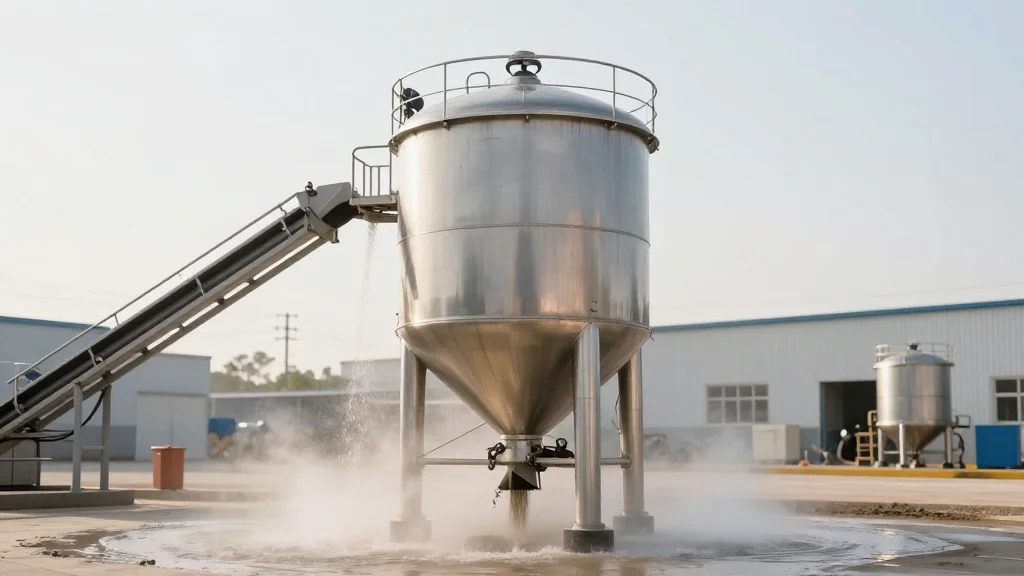
FSP Launches World’s First Wet Regeneration Plant, Cutting Fresh Sand Demand by up to 90%

Why It Matters
The commissioning of FSP’s wet regeneration plant tackles two persistent challenges in the mining‑related casting sector: resource depletion and carbon emissions. By reclaiming up to 90 % of spent sand, the technology reduces the need for virgin silica sand extraction, preserving natural habitats and lowering the energy intensity of sand mining. The plant’s near‑CO₂‑neutral operation, powered by an on‑site CHP system, demonstrates how industrial processes can decarbonize without sacrificing productivity. If adopted widely, this model could reshape supply chains, prompting mining companies to pivot from raw‑material extraction toward service‑based recycling solutions. Furthermore, the service‑oriented approach lowers entry barriers for smaller foundries, democratizing access to sustainable practices and potentially driving industry‑wide standards for waste management. The environmental and cost benefits also align with tightening EU regulations on waste and emissions, positioning FSP as a pioneer that could influence policy and investment decisions across Europe’s metal‑casting ecosystem.
Key Takeaways
- •FSP’s wet regeneration plant can process up to 60,000 t of spent sand annually.
- •The patented process recovers up to 90 % of sand for reuse in core production.
- •Current output supplies about 100 t of regenerated sand each week to a major automotive foundry.
- •On‑site combined heat and power system enables near‑CO₂‑neutral operation.
- •Planned mechanical‑thermal unit will handle the remaining 10 % of sand, completing a full‑cycle solution.
Pulse Analysis
FSP’s breakthrough arrives at a moment when the metal‑casting industry faces mounting pressure to decarbonize and reduce its reliance on virgin raw materials. Historically, foundries have depended on a linear model: extract sand, use it once, then dispose of it in landfills. The wet regeneration technology flips that paradigm, turning a waste stream into a reusable asset. This shift mirrors broader trends in mining where circular‑economy concepts—such as ore‑grade recycling and tailings re‑processing—are gaining traction.
From a competitive standpoint, FSP’s service model could force traditional sand suppliers to rethink their value proposition. Rather than selling raw sand, they may need to offer regeneration services or partner with firms like FSP to stay relevant. The plant’s ability to cut fresh‑sand demand by an estimated 54,000 t per year translates into measurable CO₂ reductions, a metric that investors increasingly scrutinize under ESG frameworks. Early adopters could leverage these emissions credits to improve their sustainability ratings, creating a financial incentive beyond direct cost savings.
Looking ahead, the scalability of the technology will be the litmus test. If the planned mechanical‑thermal unit delivers the promised additional capacity, the combined system could set a new industry benchmark for closed‑loop sand management. Success could spur replication in other high‑sand‑use sectors, such as glass manufacturing and oil‑well drilling, extending the environmental impact well beyond casting. Policymakers may also cite FSP’s model when drafting stricter waste‑handling regulations, potentially accelerating a regulatory shift that favors regenerative solutions over landfill disposal.
FSP launches world’s first wet regeneration plant, cutting fresh sand demand by up to 90%
Comments
Want to join the conversation?
Loading comments...