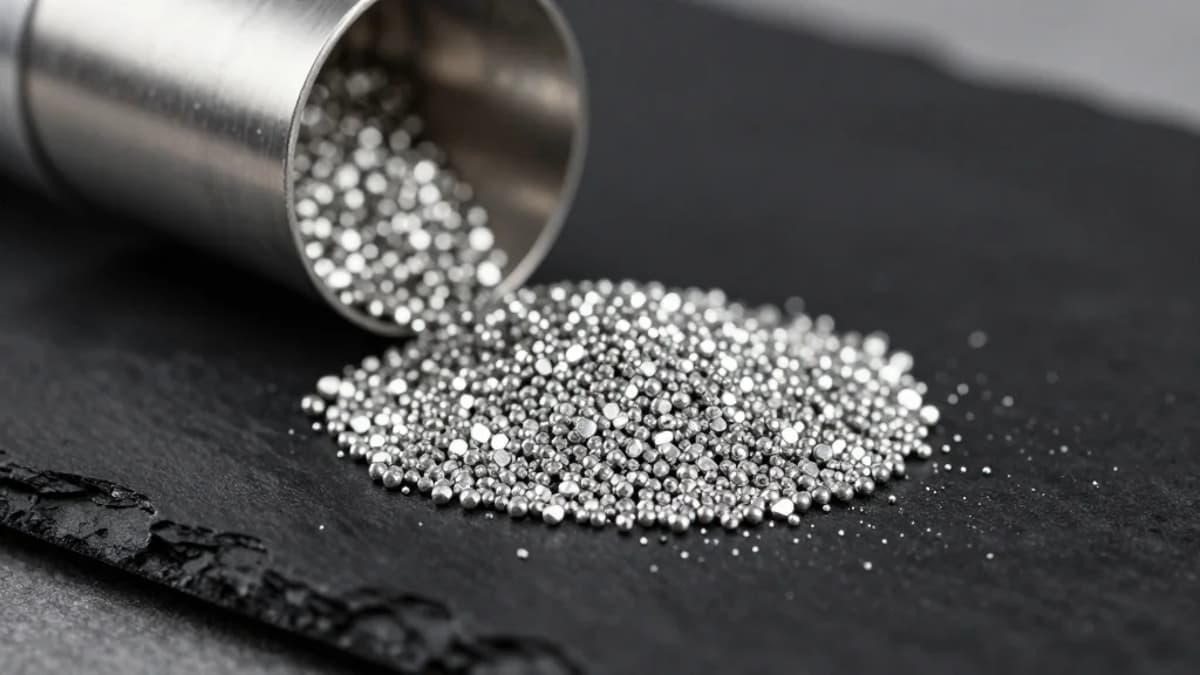
Gravity Testing Delivers 16-Fold Tungsten Grade Increase for Viking at Linka
•March 3, 2026
0
Why It Matters
The result proves a cost‑effective path to high‑grade tungsten, positioning Viking to meet rising US demand and benefit from premium market pricing.
Key Takeaways
- •16‑fold grade increase to 22.9% WO3
- •Simple gravity separation recovers 63.7% tungsten
- •Modular equipment aims for rapid start‑up
- •US tungsten demand drives critical‑mineral focus
- •Prices near record $1,850 per 10 kg
Pulse Analysis
Gravity separation has long been prized for its ability to exploit scheelite’s high density without the need for expensive reagents. In the case of Viking Mines’ Linka project, a single rougher pass lifted the concentrate grade from 1.4% to 22.9% WO3, delivering a 16‑times upgrade while capturing nearly two‑thirds of the metal. This outcome underscores how a straightforward mechanical process can generate substantial value, especially when the alternative—flotation—requires complex infrastructure and higher operating costs.
Building on that success, Viking is fast‑tracking a multi‑stage flowsheet that layers staged grinding, cleaner gravity upgrades and conventional flotation. Partnerships with specialists such as Mineral Technologies are focused on modular, low‑capital equipment that can be deployed quickly, reducing the time to market. By refining the grind size and tailings handling, the company expects both grade and recovery to improve further, creating a competitive edge in a market where production flexibility and cost efficiency are paramount.
The strategic timing could not be better. The United States classifies tungsten as a critical mineral, yet it imports roughly half of its supply. With prices flirting near historic highs—$1,850 per 10 kg of ammonium paratungstate—there is strong policy and commercial incentive to develop domestic sources. Viking’s accelerated path to production at Linka positions it to capture a share of this tightening market, potentially attracting investment and government support aimed at securing the supply chain for defence and high‑tech applications.
Gravity testing delivers 16-fold tungsten grade increase for Viking at Linka
0
Comments
Want to join the conversation?
Loading comments...