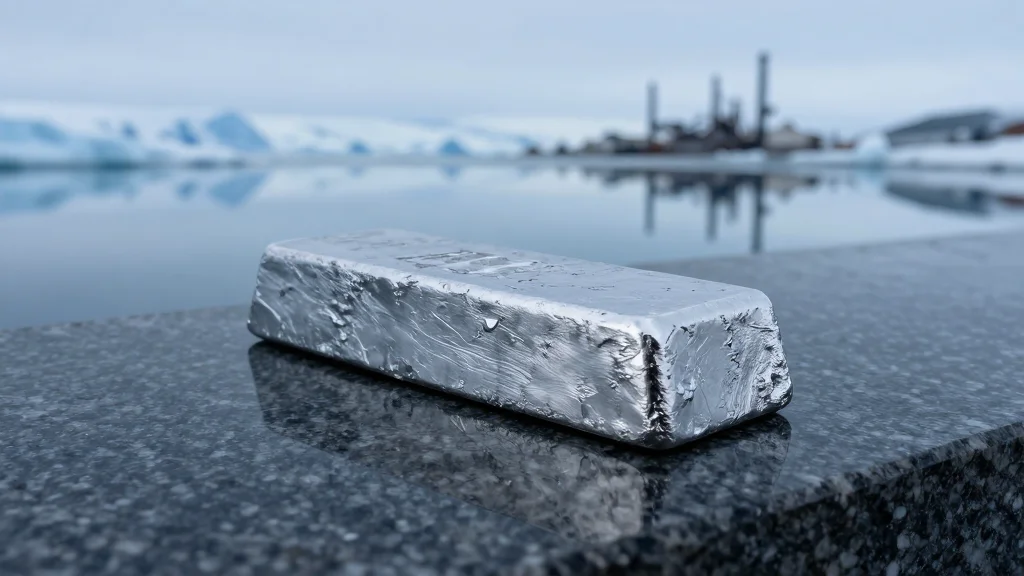
Greenland Resources Signs Molybdenum Supply Deal with ROGESA
Why It Matters
Securing a stable molybdenum supply reduces Europe’s import vulnerability and supports the steel industry’s transition to greener, high‑performance alloys. The partnership also aligns with EU initiatives to diversify critical mineral supply chains.
Key Takeaways
- •Greenland Resources to supply molybdenum to German steel JV
- •Products include ferro‑molybdenum, oxide, and briquettes
- •EU sees molybdenum as high‑risk, strategic resource
- •Supply aligns with EU RESourceEU and Germany‑Canada mineral pact
- •Refining will occur in Belgium to meet European standards
Pulse Analysis
Molybdenum, a high‑temperature alloying element, underpins modern steel performance, enabling stronger, lighter components for everything from wind‑turbine towers to defense equipment. Europe consumes roughly a quarter of global molybdenum but lacks domestic mines, making it heavily dependent on imports from China, Chile and the United States. This reliance has prompted policymakers to label the metal a "critical mineral," driving a wave of strategic sourcing initiatives aimed at safeguarding supply continuity and reducing geopolitical risk.
The new MoU between Greenland Resources and ROGESA marks a concrete step toward diversifying Europe’s molybdenum pipeline. By extracting ore in Greenland—a politically stable jurisdiction with robust environmental standards—and refining it in Belgium, the partnership delivers a vertically integrated supply chain that meets EU quality criteria. German steelmakers Dillinger and Saarstahl will receive ferro‑molybdenum, molybdenum‑oxide and briquettes, enabling them to produce high‑strength steel grades essential for offshore wind foundations, heavy‑plate oil‑and‑gas transport and next‑generation automotive chassis. The agreement dovetails with the European Commission’s RESourceEU programme, which earmarks the Malmbjerg project as a priority for strategic mineral security.
Beyond immediate commercial benefits, the deal signals a broader shift toward responsible mineral sourcing in the continent. It complements the 2025 Canada‑Germany declaration of intent on critical minerals, illustrating how bilateral cooperation can translate into on‑the‑ground contracts. As the EU tightens its sustainability criteria, Greenland Resources’ emphasis on low‑impact mining and local processing may set a benchmark for future projects, attracting investment and fostering a resilient supply chain that can support Europe’s green‑energy ambitions for decades to come.
Greenland Resources signs molybdenum supply deal with ROGESA
Comments
Want to join the conversation?
Loading comments...