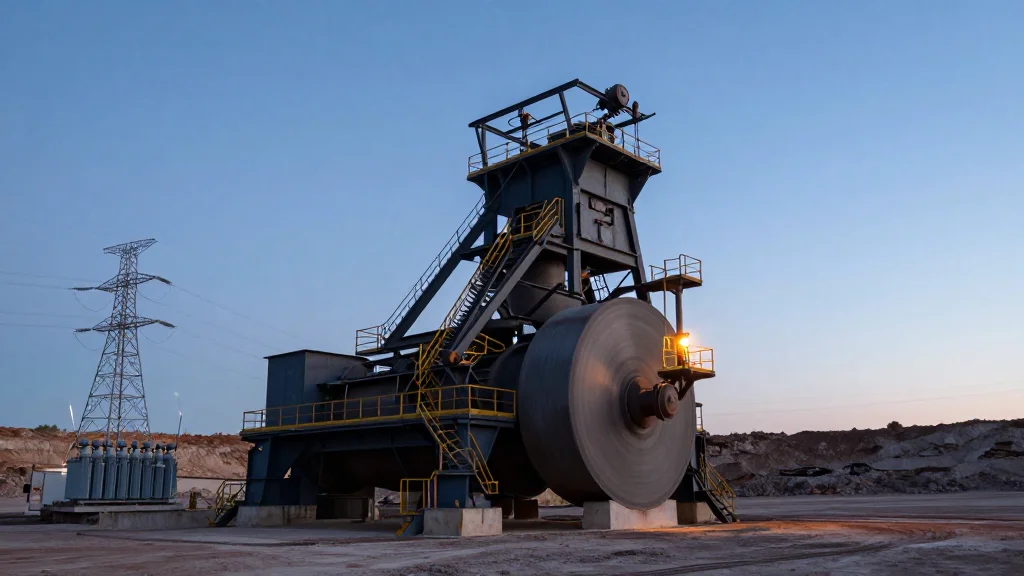
Grinding Efficiency at the Centre of the Energy Transition
Companies Mentioned
Why It Matters
Improving grind‑mill efficiency directly trims mining’s largest electricity load, boosting profitability while meeting tightening decarbonisation mandates.
Key Takeaways
- •Grinding circuits consume up to 40% of mine electricity.
- •ABB gearless mill drives achieve >95% efficiency versus ~90% for gear‑driven.
- •Higher efficiency reduces operating costs and carbon emissions.
- •GMDs now support 32–35 MW, enabling larger ore throughput.
- •Real‑time analytics enable prescriptive maintenance and extend asset life.
Pulse Analysis
The mineral‑processing sector faces a paradox: rising energy prices and stricter climate goals clash with the need to process ever‑lower‑grade ores. Grinding, which traditionally accounted for a sizable share of a mine’s power draw, has therefore shifted from a purely operational concern to a strategic lever. Companies are now evaluating comminution projects through the lens of total cost of ownership, where energy intensity, carbon accounting and long‑term reliability are weighted alongside capital outlay. This broader perspective forces senior executives to place grinding efficiency on the same agenda as exploration and logistics.
ABB’s gearless mill drive tackles the challenge by eliminating the bulky gearbox and embedding a high‑speed synchronous ring motor directly onto the mill. The result is a streamlined mechanical path that delivers over 95% electrical‑to‑mechanical conversion, a full five percentage points above legacy ring‑geared units. Beyond the efficiency gain, the simplified architecture reduces alignment issues, cuts maintenance cycles and supports power ratings up to 35 MW—enabling mines to upscale throughput without proportionally increasing energy consumption. The robust torque control inherent in the gearless design also stabilises production when ore hardness fluctuates, preserving both output and equipment lifespan.
The true differentiator, however, lies in ABB’s digital overlay. Continuous monitoring of voltage, current, vibration and throughput feeds advanced analytics that predict wear, optimise operating set‑points and trigger prescriptive maintenance actions before failures occur. By quantifying the emissions embedded in manufacturing and operation, the platform offers a full lifecycle view that aligns with corporate ESG reporting. As the industry moves toward fully electrified, data‑centric comminution, such integrated solutions will become the benchmark for sustainable mining, delivering cost savings, lower carbon intensity and a competitive edge in a tightening regulatory environment.
Grinding efficiency at the centre of the energy transition
Comments
Want to join the conversation?
Loading comments...