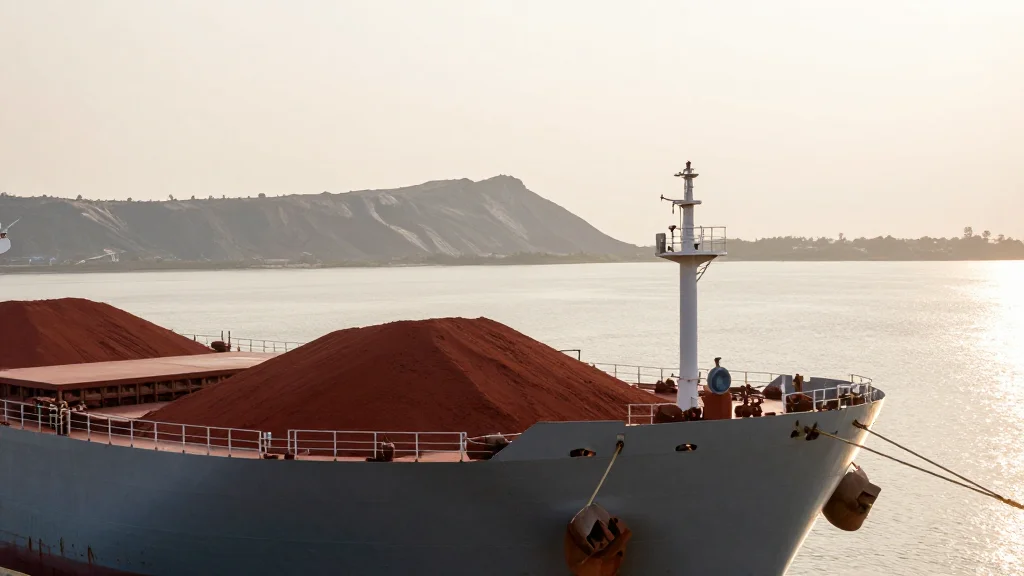
Guinea’s Simandou Iron Ore Shipment Highlights Mining Challenges

Why It Matters
The Simandou shipment is more than a logistical milestone; it is a litmus test for Guinea’s ability to translate vast mineral deposits into tangible economic benefits. Successful exports could attract further foreign investment, improve balance‑of‑payments, and fund public services. Conversely, the “perils of extractives” highlighted in the story—such as environmental degradation, community displacement, and governance challenges—remain unresolved, risking a repeat of the “resource curse” that has plagued many African mining economies. Reader engagement with the Simandou story indicates that global audiences are monitoring how Guinea navigates these trade‑offs. Heightened scrutiny may pressure the government and mining firms to adopt higher standards for environmental safeguards, revenue transparency, and local community participation, shaping the future trajectory of mining in West Africa.
Key Takeaways
- •Mongabay Africa’s most‑read 2026 story focuses on Guinea’s first Simandou iron‑ore shipment to China.
- •The article frames the export as a milestone amid Guinea’s ambition to become a leading iron‑ore producer.
- •High readership reflects growing global interest in the risks and opportunities of West African mining.
- •Other top stories cover wildlife‑farmer coexistence, DRC conservation, and Kenyan youth innovation.
- •The Simandou export spotlights broader concerns about governance, environmental impact, and community benefits.
Pulse Analysis
The Simandou export arrives at a pivotal moment for Guinea, a country that has long been touted as a future iron‑ore powerhouse but has struggled with project delays, financing gaps, and political instability. The shipment’s symbolic value may outweigh its immediate economic impact, serving as a proof‑of‑concept that the infrastructure—rail, port, and processing facilities—can function at scale. Investors will likely interpret this as a de‑risking signal, potentially unlocking new capital for expansion or for ancillary projects such as power generation and logistics.
However, the broader narrative in Mongabay’s most‑read roundup underscores that mining cannot be isolated from its social and environmental context. The same platform that celebrates the Simandou milestone also amplifies stories of elephant‑farmer conflict and community‑led conservation, reminding readers that extractive growth often coexists with biodiversity loss and livelihood disruption. For policymakers, the duality of these stories suggests a need for integrated strategies that align mineral development with sustainable land‑use planning and robust community engagement.
Looking ahead, the real test will be whether Guinea can sustain a pipeline of shipments, diversify its export markets, and ensure that mining revenues are channeled into public goods. If the Simandou project can demonstrate consistent delivery without sparking new social unrest or environmental damage, it could set a precedent for responsible mining in the region. Conversely, any misstep—price volatility, contract disputes, or community opposition—could quickly erode the goodwill generated by this first shipment and reinforce skepticism about the promises of Africa’s mineral boom.
Guinea’s Simandou Iron Ore Shipment Highlights Mining Challenges
Comments
Want to join the conversation?
Loading comments...