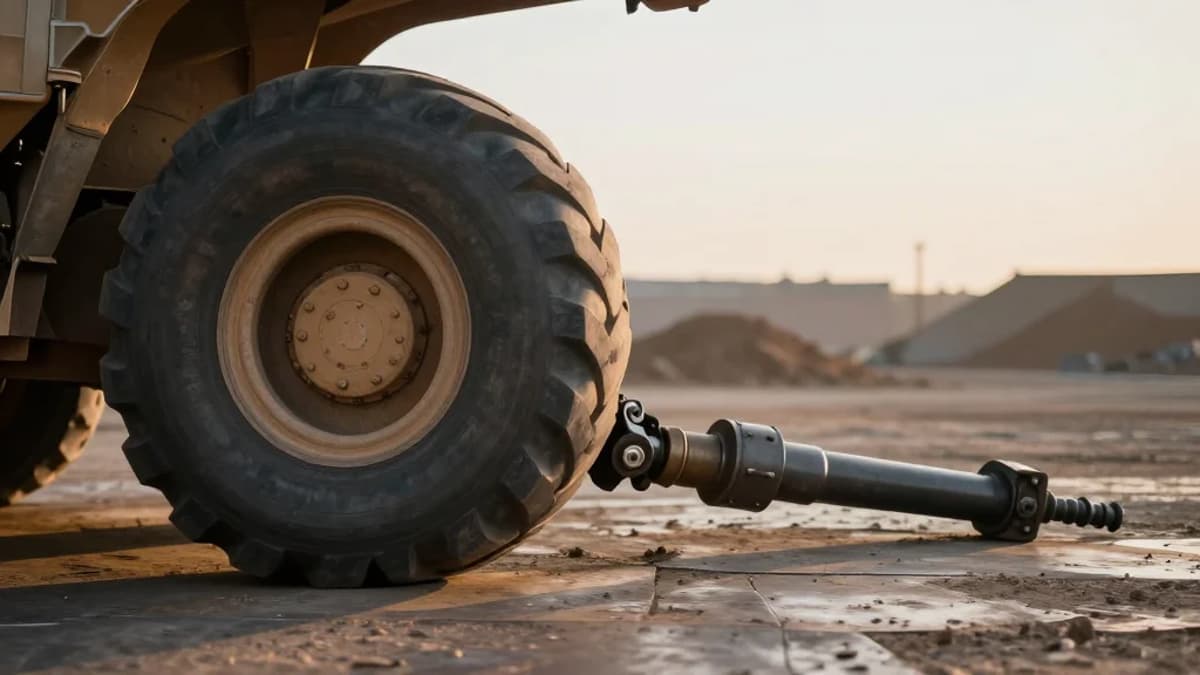
Haul Truck Dislodges From Jacks During Tyre Change
•February 20, 2026
0
Why It Matters
The near‑miss reveals gaps in mine‑site lifting protocols, prompting urgent reviews of safety standards to prevent potentially fatal accidents. It also pressures equipment manufacturers to improve jack stability for high‑energy loads.
Key Takeaways
- •Haul truck lifted by self‑propelling hydraulic jacks
- •Truck shifted right, dislodging from jacks during tyre rotation
- •One jack crushed; workers escaped injury narrowly
- •Incident highlights high energy stored in large truck tyres
- •Reinforces need for stricter safety procedures in mining
Pulse Analysis
In surface mining operations, haul trucks exceeding 400 tonnes rely on hydraulic jacks to perform routine tyre maintenance. These jacks must counteract not only the vehicle’s weight but also the kinetic energy stored in massive pneumatic tyres, which can exceed several megajoules. When a truck is lifted, even minor shifts in load distribution can generate forces that exceed the jack’s design limits, turning a routine task into a high‑risk scenario.
The recent dislodgement incident illustrates a convergence of mechanical and procedural failures. The truck’s rightward drift suggests inadequate securing of the chassis or uneven jack placement, while the crushing of one jack points to insufficient structural resilience under dynamic loads. Workers’ narrow escape underscores the importance of lock‑out/tag‑out practices, real‑time load monitoring, and clear communication among maintenance crews. Industry best practices now call for redundant support systems, such as secondary braces or spreader beams, to distribute forces more evenly across the vehicle’s frame.
Beyond the immediate safety concerns, the event signals broader implications for mining equipment manufacturers and regulators. Companies are likely to revisit design specifications for self‑propelling jacks, integrating sensors that detect load shifts and automatically halt operations. Regulatory bodies may tighten compliance requirements, mandating periodic safety audits and enhanced training for tyre‑change crews. Proactive adoption of these measures can mitigate the inherent hazards of handling high‑energy haul trucks, protecting both personnel and costly assets.
Haul truck dislodges from jacks during tyre change
0
Comments
Want to join the conversation?
Loading comments...