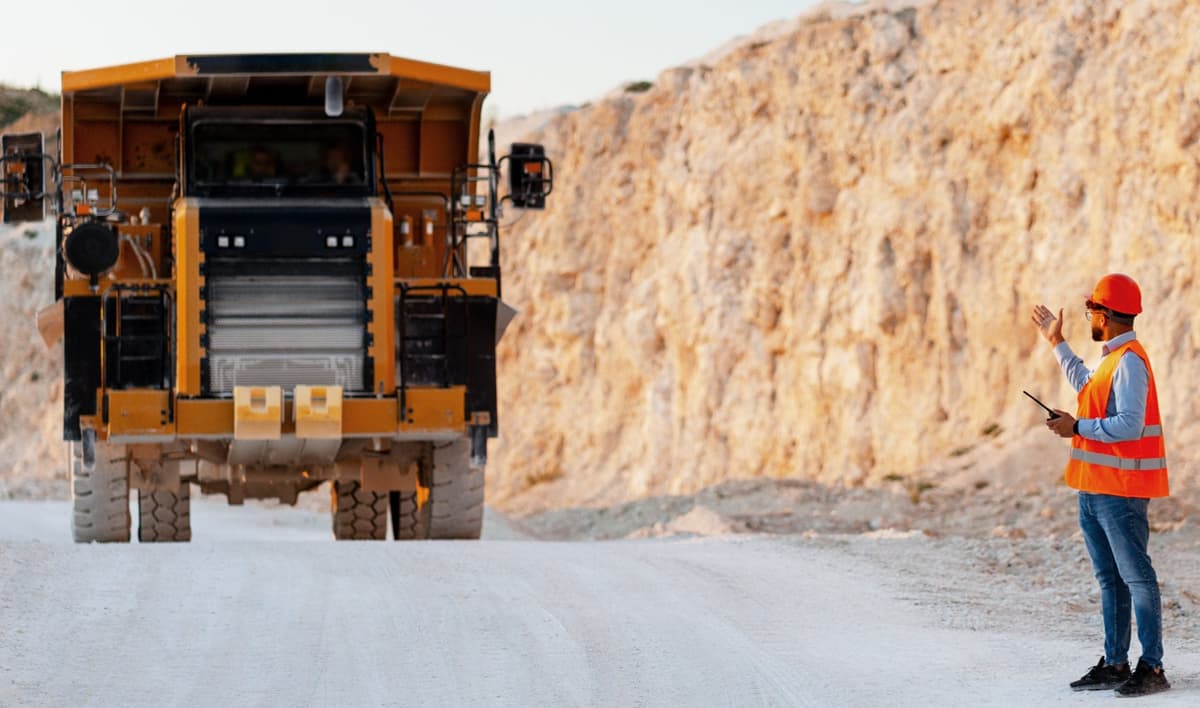
How to Bring Private 5G to Life in Mining: A Five-Step Path to Safer, Smarter Operations
•March 5, 2026
0
Companies Mentioned
Why It Matters
The technology enables mines to meet cost, ESG, and safety targets while supporting autonomous equipment, making private 5G a strategic differentiator in a competitive sector.
Key Takeaways
- •Private 5G provides ultra‑low latency for autonomous fleets
- •Ecosystem collaboration includes carriers, equipment makers, and integrators
- •Pilots must measure operational and business KPIs
- •Scalable rollout aligns with production face milestones
- •Ongoing monitoring ensures security and performance longevity
Pulse Analysis
The mining sector is under unprecedented pressure to cut costs, improve ESG metrics, and protect workers in environments where a single outage can cost millions. Traditional Wi‑Fi or leaky‑feeder systems struggle to deliver the bandwidth, reliability, and latency required for autonomous haul trucks, drone inspections, and real‑time safety alerts. Private 5G fills that gap by offering industrial‑grade spectrum, wide‑area coverage that penetrates both surface and underground tunnels, and sub‑millisecond latency that keeps control loops tight. This connectivity is no longer a luxury; it is the digital foundation for next‑generation mining operations.
The path from concept to full‑scale deployment follows a five‑step framework that starts with ecosystem collaboration. Mining firms must align carriers such as Ericsson, equipment manufacturers like Caterpillar, and system integrators to secure spectrum and design solutions that meet harsh‑environment specifications. A purpose‑driven pilot then selects high‑impact use cases—autonomous trucks, live video, or safety monitoring—and validates them through dry‑testing and KPI evaluation. Once the pilot proves value, intelligent scaling can be executed either as a site‑wide rollout or a phased approach tied to production faces, ensuring new applications can be added without re‑engineering the network.
Early adopters are already quantifying the upside: reduced unplanned downtime, enhanced worker safety, and productivity gains that translate into measurable cost savings. However, the technology’s success hinges on change management and continuous network stewardship. Leadership must communicate that private 5G augments jobs rather than replaces them, while IT and operations teams maintain cybersecurity hygiene and remote diagnostics. As more governments allocate industrial spectrum, the barrier to entry lowers, making the timing critical for miners that want to stay ahead of the automation curve. Embracing private 5G today positions a mine for sustainable, intelligent growth.
How to bring private 5G to life in mining: A five-step path to safer, smarter operations
0
Comments
Want to join the conversation?
Loading comments...