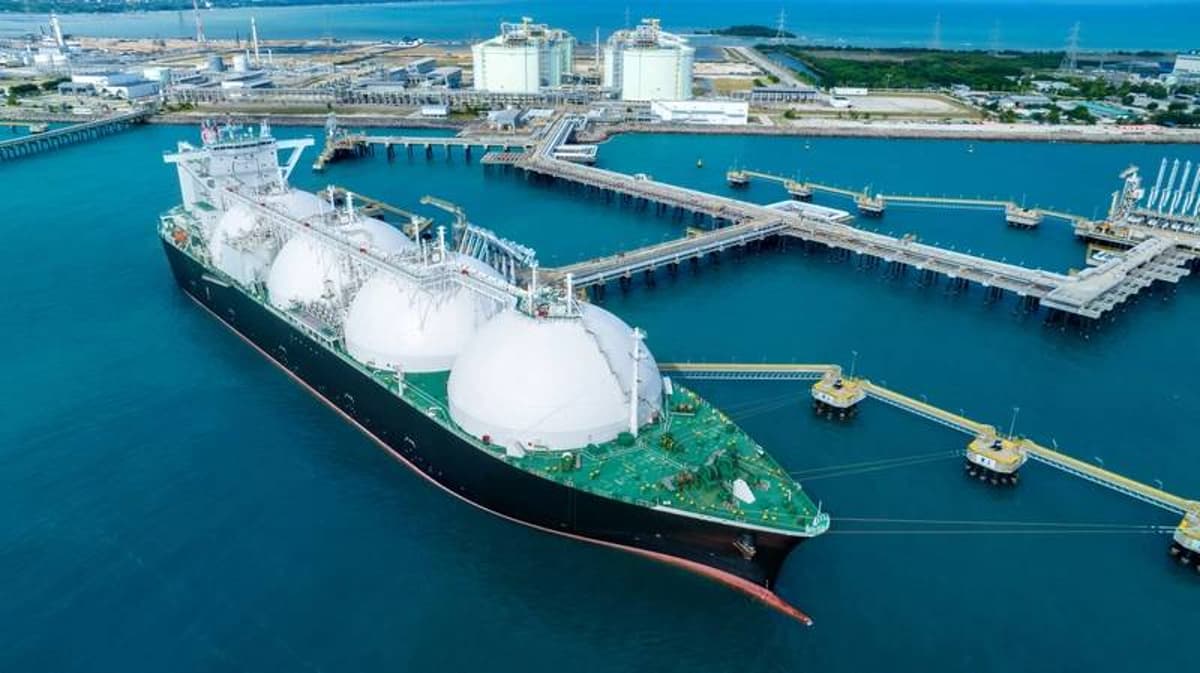
Ichthys LNG Strike Causes Delay to Taiwan-Bound Cargo
Why It Matters
The delay underscores labor‑related supply risks at a key Australian LNG hub, potentially tightening an already constrained Asian gas market and supporting elevated spot prices.
Key Takeaways
- •Ichichys strike caused a 24‑hour delay for Pacific Breeze tanker
- •Facility supplies ~10% of Australia’s 9.3 Mt LNG output
- •Asia spot LNG up 75% since Iran‑Israel war, now $18.20/mmBtu
- •Potential broader strike could tighten already constrained global LNG market
Pulse Analysis
The Ichichys LNG complex, a joint venture led by Japan’s Inpex, is a linchpin of Australia’s export capacity, delivering roughly one‑tenth of the nation’s annual output. Workers’ grievances over wages triggered a brief, two‑hour stoppage that rippled through the loading schedule, forcing the Pacific Breeze tanker to miss its May 31 loading slot. While the interruption was short‑lived, it highlights the fragility of supply chains that depend on a handful of high‑volume terminals, especially when labor negotiations falter.
Asia’s appetite for liquefied natural gas remains voracious, with Taiwan’s CPC Corporation among the primary recipients of Ichichys cargoes. The 24‑hour delay pushes the vessel’s arrival beyond the intended June 9 date, compressing the window for downstream processing and potentially prompting buyers to seek spot purchases at higher prices. Spot LNG in the region has already surged 75% since the Iran‑Israel conflict, trading at $18.20 per million British thermal units, a level driven by reduced Qatari output and heightened shipping risks through the Strait of Hormuz.
Looking ahead, the threat of an expanded strike looms large. Unions have signaled readiness for broader action, which could curtail production at a facility that feeds a significant share of Asian demand. Prolonged disruptions would exacerbate the current supply deficit, likely pushing spot prices higher and prompting utilities to diversify contracts or accelerate investments in alternative fuels such as renewables and hydrogen. Stakeholders are therefore monitoring labor developments closely, as any escalation could reshape the regional LNG pricing landscape for months to come.
Ichthys LNG Strike Causes Delay to Taiwan-Bound Cargo
Comments
Want to join the conversation?
Loading comments...