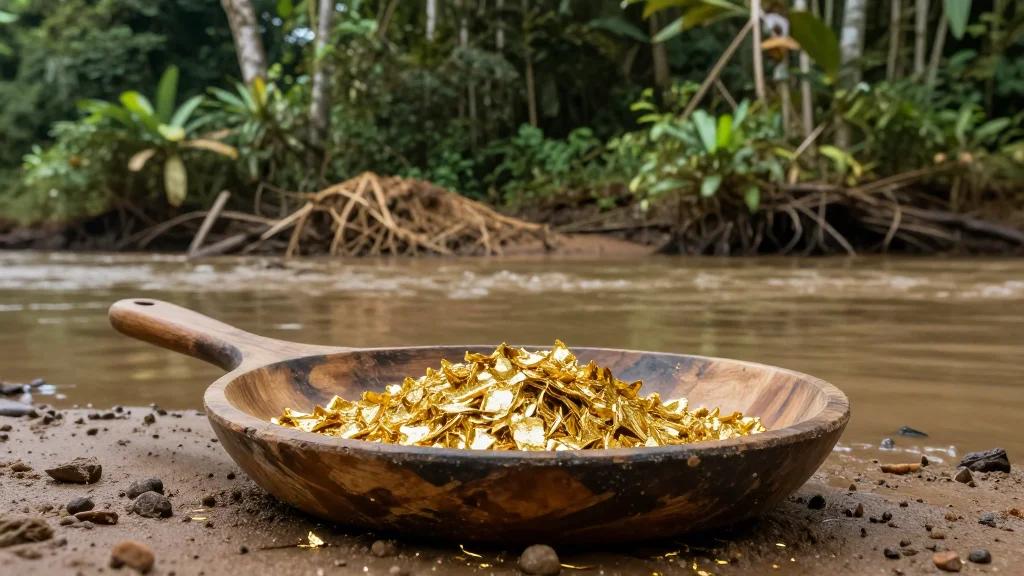
Illegal Gold Rush Drives Amazon Deforestation and Mercury Crisis in Brazil

Why It Matters
The Amazon rainforest is a linchpin of global climate regulation; even modest increases in deforestation can release vast amounts of carbon, undermining Brazil's climate pledges and international agreements. Mercury contamination adds a public‑health dimension, threatening food security for Indigenous peoples who rely on fish as a staple. The convergence of economic incentives, weak enforcement, and fragile ecosystems creates a feedback loop that could accelerate both environmental degradation and social instability. If unchecked, the mining‑driven deforestation could also set a precedent for other resource‑rich regions, emboldening illegal extractors to target protected lands worldwide. The situation highlights the need for coordinated satellite monitoring, rapid response teams, and sustainable development programs that provide viable alternatives to gold‑panning communities.
Key Takeaways
- •Gold price surge fuels illegal mining, adding ~17,000 hectares of deforestation in Brazil's Amazon in 2025.
- •Deforestation hotspots: 30 ha in Terra do Meio, 832 ha in Altamira National Forest, 26.8 ha in Nascentes da Serra do Cachimbo.
- •Mercury contamination from gold extraction reaches hazardous levels, threatening riverine food chains.
- •Since 2018, 496,000 ha of rainforest cleared for mining across the Amazon basin; 223,000 ha within Brazil.
- •Enforcement described as a "cat‑and‑mouse" game; 2023 crackdown in Yanomami territory reduced new mining but did not stop broader spread.
Pulse Analysis
The Amazon mining surge illustrates how commodity price spikes can quickly translate into environmental crises when regulatory capacity lags. Historically, Brazil's deforestation drivers have been dominated by agribusiness, but the current data shows mining now accounts for roughly 3% of total forest loss—a small share that punches above its weight because it concentrates in high‑value conservation units. This pattern mirrors past episodes in the Congo Basin, where artisanal gold mining sparked similar spikes in mercury pollution and forest clearance.
From a market perspective, the gold sector's resilience amid macroeconomic uncertainty fuels illicit activity in remote regions where state presence is thin. The profitability of small‑scale dredging—often yielding a few grams of gold per day—can outweigh the risk of legal repercussions, especially when miners exploit clandestine airstrips and river routes. The study's satellite‑based monitoring platform, Amazon Mining Watch, demonstrates the power of real‑time data to expose these fronts, yet the translation of data into decisive action remains uneven.
Looking ahead, Brazil faces a policy crossroads. Strengthening inter‑agency coordination, increasing penalties for illegal dredges, and investing in community‑led forest stewardship could blunt the mining tide. International donors and NGOs might also leverage the mercury risk to mobilize funding for clean‑up and health interventions. If the government can align enforcement with sustainable livelihood programs, the Amazon could avoid a scenario where short‑term gold gains lock in long‑term climate and health costs.
Illegal Gold Rush Drives Amazon Deforestation and Mercury Crisis in Brazil
Comments
Want to join the conversation?
Loading comments...