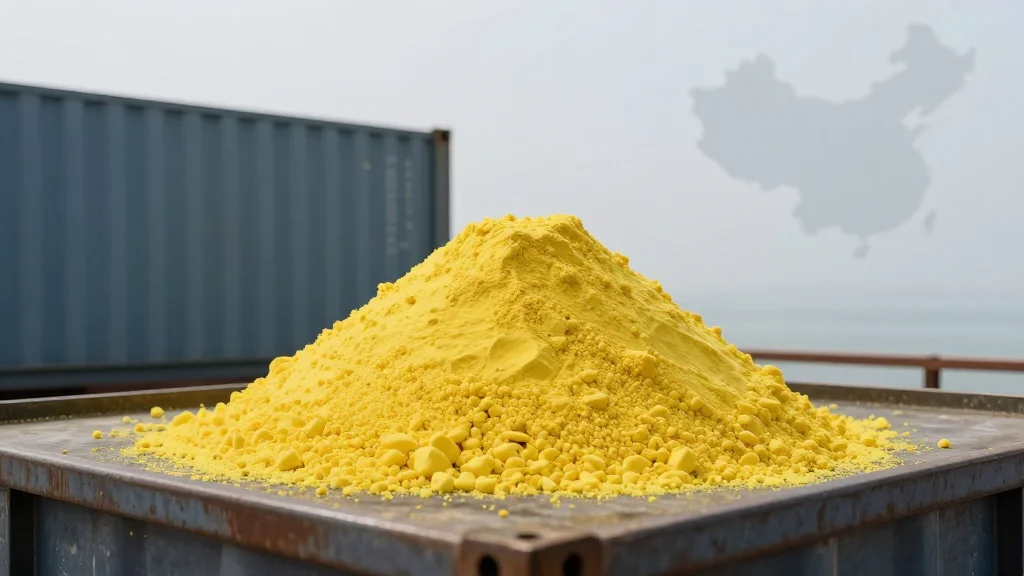
India Could Limit Sulphur Exports as Supplies Tighten, Sources Say
Why It Matters
Sulphur is essential for fertilizers and metal leaching; limiting exports could raise global prices, affecting food production and mining profitability worldwide.
Key Takeaways
- •India imports ~2 M tons sulphur annually, half from Middle East.
- •Exports ~800 k tons, >90% destined for China.
- •Export curbs could push global sulphur prices higher.
- •Fertilizer and mining industries face cost spikes from tighter supply.
- •Middle East disruptions and upcoming Chinese limits tighten worldwide market.
Pulse Analysis
India’s sulphur market sits at the intersection of geopolitics and commodity logistics. The nation relies on roughly 2 million metric tons of imported sulphur each year, with the Middle East supplying almost half of that volume. Recent hostilities in the Gulf have choked the Strait of Hormuz, a critical shipping lane, while China’s announced curtailment of sulphuric‑acid exports adds another layer of scarcity. Together, these factors have prompted Indian officials to contemplate export limits, a move that could reverberate through the global supply chain and tighten an already constrained market.
For India’s massive agricultural sector, sulphur is a linchpin in producing ammonium sulphate and single super phosphate fertilizers. A supply squeeze would likely drive up fertilizer costs, eroding profit margins for farmers and potentially inflating food prices domestically and abroad. International buyers, especially in China, could see price spikes that ripple through global grain and commodity markets, intensifying concerns about food security in regions already grappling with climate‑related yield pressures.
Beyond agriculture, the mining industry depends on sulphuric acid for leaching metals such as nickel, copper, and cobalt. Higher sulphur prices translate directly into increased operating costs for producers in Indonesia, Chile, and the Democratic Republic of Congo, potentially dampening investment in new projects and slowing the supply of critical minerals needed for electric‑vehicle batteries and renewable‑energy technologies. Policymakers will need to balance short‑term export restrictions against long‑term strategic considerations, including diversifying sulphur sources and bolstering domestic refinery output to mitigate future shocks.
India could limit sulphur exports as supplies tighten, sources say
Comments
Want to join the conversation?
Loading comments...