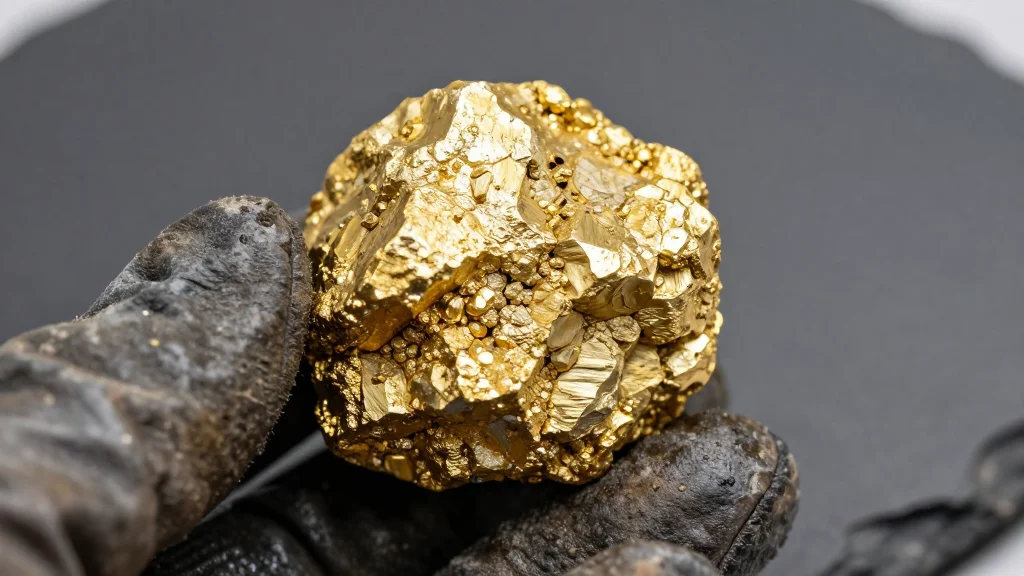
Is Grade King Again? As Costs Rise These Miners with Gold Rush Grades Have a Leg Up
Companies Mentioned
Why It Matters
Ultra‑high grades give smaller miners a cost‑advantage, preserving margins as energy expenses surge, and they could reshape capital allocation in the gold sector.
Key Takeaways
- •High-grade deposits offset rising energy and diesel costs
- •Carnavale’s Swiftsure zone yields 28 g/t, 55k oz resource
- •Vertex’s Reward mine averages 16.7 g/t, low‑energy processing
- •Ultra‑high grades enable >$6,500 revenue per tonne versus $220
- •Both projects target >$40 m pre‑tax cash flow at $1,980 gold
Pulse Analysis
The gold mining industry is confronting a new cost environment. Record crude oil prices and constrained diesel supplies have driven up trucking and milling expenses, eroding margins for low‑grade operations that rely on scale. High‑grade ore, however, delivers far more metal per tonne, allowing miners to spread fixed energy and labor costs over a larger revenue base. This dynamic is prompting investors to reassess projects that were previously dismissed as marginal, especially as gold prices hover near $2,000 per ounce, providing a robust price cushion.
Carnavale Resources' Kookynie project exemplifies the financial upside of ultra‑high grades. Its Swiftsure deposit contains 60,000 tonnes at 28 g/t, equivalent to roughly $6,500 of gold revenue per tonne, while processing and transport costs remain comparable to a 1 g/t mine—about $20 per tonne for a 180‑km haul. The resulting economics support a bankable feasibility study that projects pre‑tax free cash flow exceeding $40 million, even if gold trades at $1,980/oz. Such figures underscore why exploration teams are prioritising "bonanza" shoots that can quickly generate cash and fund further drilling within the tenement.
Vertex Minerals' Reward mine offers a complementary advantage through its low‑energy processing model. By forgoing a primary ball mill and relying on gravity recovery, the plant consumes minimal power—roughly a 300 kVA generator—and eliminates cyanide and large tailings facilities. This results in one of the lowest energy footprints per ounce in the sector and sustaining costs near $1,210/oz (A$1,833). The 2024 PFS forecasts nearly $41 million in pre‑tax cash flow and an internal rate of return above 100%, highlighting how high grades paired with innovative, low‑cost processing can deliver outsized returns. As both Carnavale and Vertex demonstrate, the resurgence of "grade is king" could steer future capital toward high‑grade, low‑energy gold projects worldwide.
Is grade king again? As costs rise these miners with gold rush grades have a leg up
Comments
Want to join the conversation?
Loading comments...