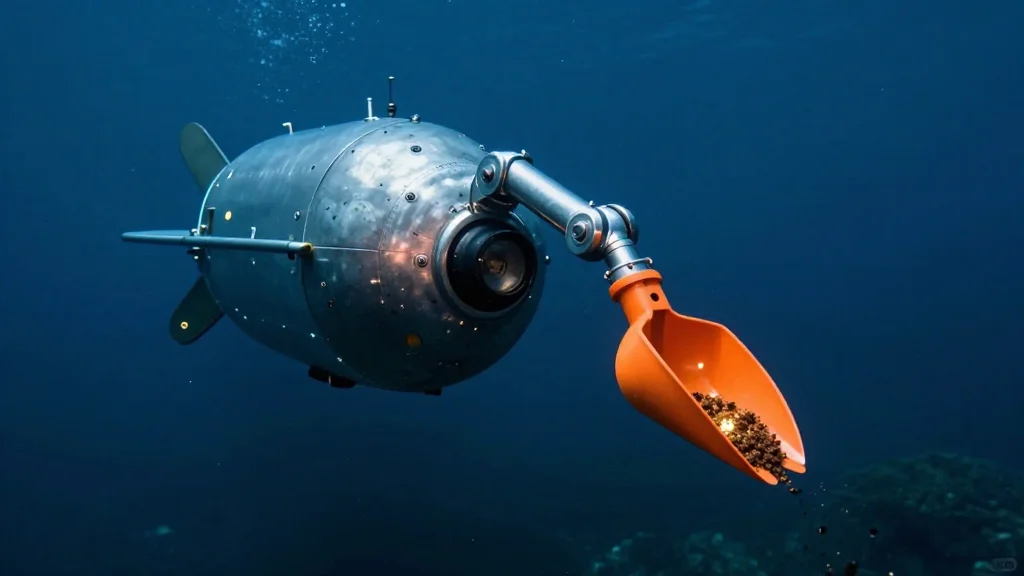
Japan Commissions Purpose-Built Ship to Launch Deep‑sea Rare‑earth Mining Program

Why It Matters
Japan’s deep‑sea rare‑earth venture addresses a strategic vulnerability: reliance on Chinese exports for minerals essential to defence, clean‑energy, and high‑tech sectors. By tapping its vast exclusive economic zone, Tokyo aims to diversify supply sources, reduce geopolitical risk, and foster a domestic rare‑earth industry that could spur job creation and technological innovation. The project also tests the commercial viability of deep‑sea mining, a technology that, if proven, could unlock untapped mineral wealth in oceanic regions worldwide. Beyond national security, the initiative could influence global market pricing. An additional supply stream from Japan may temper China’s pricing power, encouraging other nations to explore offshore extraction and prompting a re‑evaluation of trade policies surrounding critical minerals. The outcome will be closely watched by allies such as the United States and the European Union, which are also seeking to secure independent rare‑earth supplies.
Key Takeaways
- •Japan’s Liberal Democratic Party committee will draft funding for a purpose‑built deep‑sea mining vessel.
- •The ship will operate at 5,700 m depth near Minamitorishima, targeting 350 tonnes of seabed sediment per day.
- •Morinosuke Kawaguchi emphasized the project’s national‑security importance and need for government backing.
- •China currently controls ~80% of global rare‑earth production, prompting Japan’s diversification push.
- •Key challenges include eco‑friendly refining, cost‑effectiveness, and scaling private sector involvement.
Pulse Analysis
Japan’s decision to fund a deep‑sea rare‑earth vessel marks a rare instance of a major economy committing public capital to an unproven offshore mining technology. Historically, deep‑sea extraction has been hampered by high costs, technical risk, and environmental concerns. By shouldering the initial risk, Tokyo hopes to create a proof‑of‑concept that can attract private investors once commercial viability is demonstrated. This mirrors the early‑stage subsidies seen in the renewable‑energy sector, where government support de‑risked projects until market forces took over.
The geopolitical calculus is equally compelling. China’s strategic use of rare‑earth export controls has exposed the fragility of supply chains that underpin everything from fighter jets to electric‑vehicle motors. Japan’s move not only diversifies its own input sources but also signals to allies that alternative supply routes are being cultivated. If the pilot succeeds, it could catalyze a broader shift toward offshore mining, prompting other nations with large EEZs—such as the United States, Australia, and Canada—to evaluate similar programs.
However, the venture faces steep hurdles. Environmental NGOs have warned about the potential impact of disturbing deep‑sea ecosystems, and the lack of a clear regulatory framework could delay approvals. Moreover, the economics of extracting rare‑earths from dilute seabed sediments remain uncertain; even at 350 tonnes per day, the concentration of valuable elements may be low, requiring costly downstream processing. The next 12‑18 months will be critical: successful sample analysis and a transparent cost model could unlock private capital, while setbacks may relegate the project to a symbolic, yet costly, national‑security exercise.
Japan commissions purpose-built ship to launch deep‑sea rare‑earth mining program
Comments
Want to join the conversation?
Loading comments...