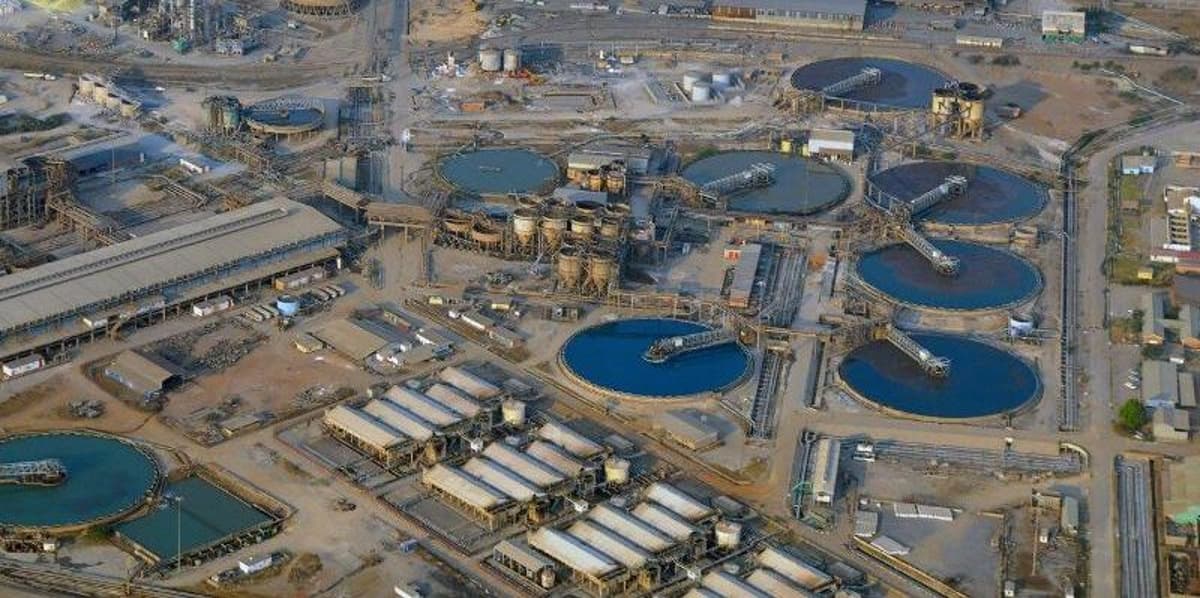
KCM Restarts Chingola “B” Mine After 18-Year Shutdown in Major Zambia Copper Expansion Push
Companies Mentioned
Why It Matters
The Chingola B restart supplies critical feedstock for Zambia’s aggressive copper‑expansion targets, helping the nation approach the 1 million‑tonne near‑term goal and enhancing its leverage in a market fueled by renewable‑energy demand.
Key Takeaways
- •Chingola B aims for 200,000 tonnes of ore monthly.
- •Mine was idle for 18 years before restart.
- •Zambia targets 3 million tonnes copper annually by 2031.
- •KCM owned 79.4% by Vedanta, 20.6% by ZCCM.
- •National output 890,000 tonnes, short of 1 million‑ton goal.
Pulse Analysis
The restart of Konkola Copper Mines’ Chingola B shaft marks a pivotal step in Zambia’s aggressive push to lift copper output to more than three million tonnes by 2031. After an 18‑year hiatus, the mine is slated to feed roughly 200,000 tonnes of ore each month, a threefold increase over its historic 60,000‑tonne pace. The move dovetails with government plans to close the gap between the 890,000 tonnes produced last year and the near‑term target of one million tonnes, reinforcing the country’s status as Africa’s second‑largest copper producer.
Chingola B sits within the larger Nchanga complex, feeding ore to KCM’s downstream concentrators in Chingola, Chililabombwe, Kitwe and Nampundwe. CEO Deshnee Naidoo expects the revived operation to stabilize quickly, delivering the projected monthly throughput that will boost feedstock for existing processing plants. Vedanta Resources holds a 79.4 % stake in KCM, while Zambia’s state investment arm ZCCM Investments Holdings retains 20.6 %, aligning private capital with national interests. The restart also reactivates a workforce and ancillary services that were dormant for nearly two decades, generating immediate employment and tax revenue.
Globally, copper demand is being driven by renewable‑energy infrastructure, electric‑vehicle batteries and digitalization, keeping prices elevated. Zambia’s capacity expansion, anchored by brownfield projects like Chingola B, offers investors a low‑cost, high‑grade source that can meet this demand without the long lead times of greenfield mines. The restart signals confidence in the country’s regulatory environment and may attract further foreign direct investment into exploration and processing upgrades. As output climbs, Zambia could tighten its bargaining position in the copper market, supporting fiscal stability and funding broader economic diversification.
KCM Restarts Chingola “B” Mine After 18-Year Shutdown in Major Zambia Copper Expansion Push
Comments
Want to join the conversation?
Loading comments...