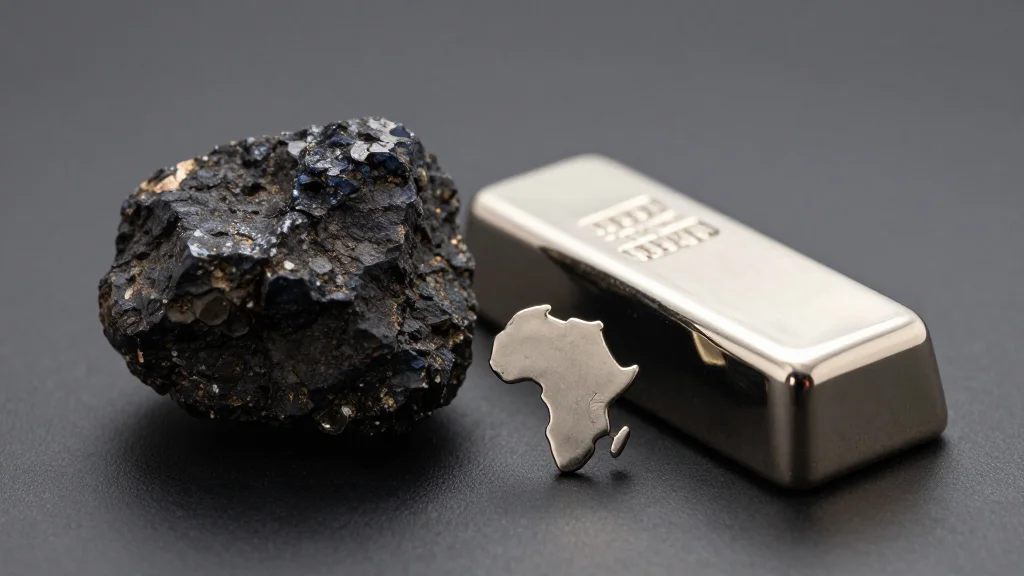
Kenya Leads African Push to Process Minerals Locally, Targeting $62 B Rare‑Earth Project

Why It Matters
Kenya’s policy could reshape Africa’s role in the global clean‑energy supply chain by moving the continent up the value ladder, potentially unlocking billions of dollars of downstream revenue and high‑skill jobs. If successful, the regional model may encourage other mineral‑rich nations to adopt similar strategies, accelerating industrialisation and reducing dependence on foreign processors. Conversely, the initiative also tests the limits of Africa’s infrastructure and policy coordination. Failure to deliver reliable power, transport and skilled labour could reinforce the perception that export bans are protectionist measures that deter investment, leaving the continent’s mineral wealth under‑exploited and its economies vulnerable to commodity price swings.
Key Takeaways
- •President William Ruto announced Kenya will halt exports of unprocessed mineral ore.
- •Kenya targets a $62 billion rare‑earth deposit to anchor its processing push.
- •More than 12 African nations have introduced raw‑material export bans or restrictions.
- •Africa holds ~30% of global critical mineral reserves but captures <1% of related value.
- •Success depends on infrastructure upgrades and effective implementation of AfCFTA.
Pulse Analysis
Kenya’s decision to ban raw‑ore exports is a bold gamble that mirrors the industrial policies of resource‑rich nations like Saudi Arabia and Brazil, which have used state‑driven value‑chain development to diversify economies. The timing aligns with a surge in demand for lithium, cobalt, copper and rare earths driven by the electrification of transport and the renewable‑energy transition. By positioning itself as a processing hub, Kenya hopes to capture a slice of the $1.5 trillion global clean‑energy materials market, a move that could attract multinational investors seeking to hedge supply‑chain risks.
However, the policy’s efficacy will be measured against Africa’s chronic infrastructure deficits. Power shortages alone can add 30‑40% to processing costs, eroding competitiveness against Asian smelters that benefit from subsidised electricity. Kenya’s pledge to fast‑track grid extensions and rail links is essential, but financing these projects will likely require a mix of sovereign bonds, development‑bank loans and private‑sector equity. The involvement of the Africa Minerals Strategy Group suggests a willingness to pool resources, yet coordination across divergent regulatory regimes remains a formidable obstacle.
If Kenya can demonstrate a viable, cost‑effective processing ecosystem, it could trigger a cascade of similar policies across the continent, reshaping global mineral supply dynamics. Conversely, a stalled rollout could reinforce the status quo, where African ores continue to be shipped abroad for refinement, perpetuating the current <1% value capture. The next six months—when legislation is drafted and financing pipelines are tested—will be the litmus test for whether Kenya’s vision translates into a new industrial era for Africa.
Kenya Leads African Push to Process Minerals Locally, Targeting $62 B Rare‑Earth Project
Comments
Want to join the conversation?
Loading comments...