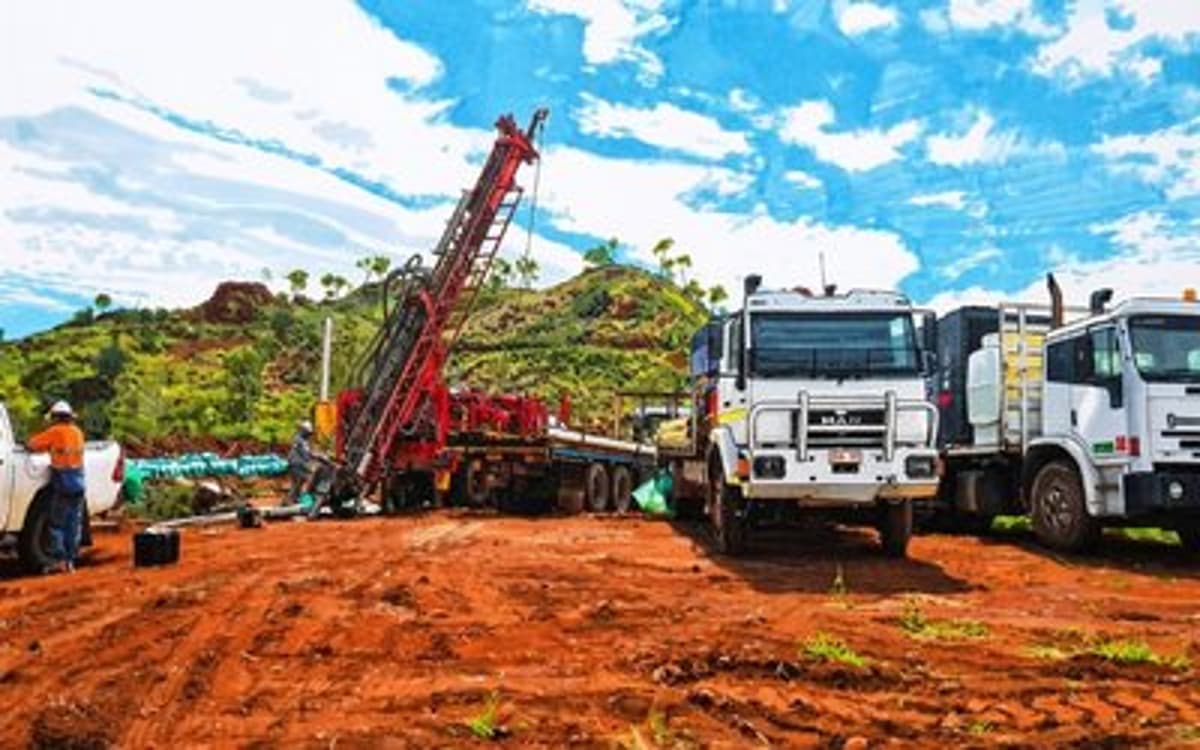
Litchfield Minerals Identifies Thick Copper-Zinc Zones in Phase 3 Drilling at Oonagalabi Project
Companies Mentioned
Why It Matters
The drill hits confirm Oonagalabi’s potential as a sizable base‑metal deposit, bolstering Litchfield’s growth prospects and attracting capital in a market hungry for new copper and zinc sources. Robust mineralisation and unresolved geophysical targets also de‑risk the project for downstream investors.
Key Takeaways
- •Phase 3 drilling intersected 68 m of 0.62% Cu, 1.44% Zn, 4.3 g/t Ag
- •Broad-to-narrow mineralisation shows lateral and vertical continuity at Main Zone
- •Minor copper sulphides at VT1 hint at a new mineralisation style
- •Magnetic anomalies remain untested, suggesting undiscovered intrusions
- •Drilling challenges improved geological model, guiding future exploration
Pulse Analysis
Litchfield Minerals’ Phase 3 results underscore the strategic importance of Australia’s Northern Territory as a frontier for base‑metal discovery. The 68‑metre intercept, with copper and zinc grades comparable to other emerging Australian projects, positions Oonagalabi as a potential contributor to the global supply chain at a time when demand for copper in renewable‑energy infrastructure and zinc for steel galvanisation is surging. Investors are closely watching the company’s ability to translate these early drill successes into a scalable resource estimate.
The drilling campaign also highlighted the complexity of Oonagalabi’s geology. Broad-to-narrow mineralisation patterns and the presence of minor copper sulphides at the VT1 target suggest multiple ore‑forming processes, which could broaden the project’s metal portfolio beyond copper and zinc to include silver. Magnetic anomalies that remain untested point to possible undiscovered intrusions, offering additional upside if future diamond drilling confirms their mineral potential. Such geological diversity can enhance the project’s resilience against commodity price volatility.
Operationally, Litchfield overcame significant logistical hurdles, from extreme weather to access constraints, demonstrating a robust execution capability. The data gathered has refined the company’s 3‑D geological model, enabling more precise targeting of future drill holes and reducing exploration risk. As the firm moves toward a maiden resource estimate, the combination of high‑grade intercepts, multiple mineralisation styles, and untapped geophysical targets makes Oonagalabi a compelling case study for investors seeking exposure to the next wave of Australian base‑metal discoveries.
Litchfield Minerals Identifies Thick Copper-Zinc Zones in Phase 3 Drilling at Oonagalabi Project
Comments
Want to join the conversation?
Loading comments...