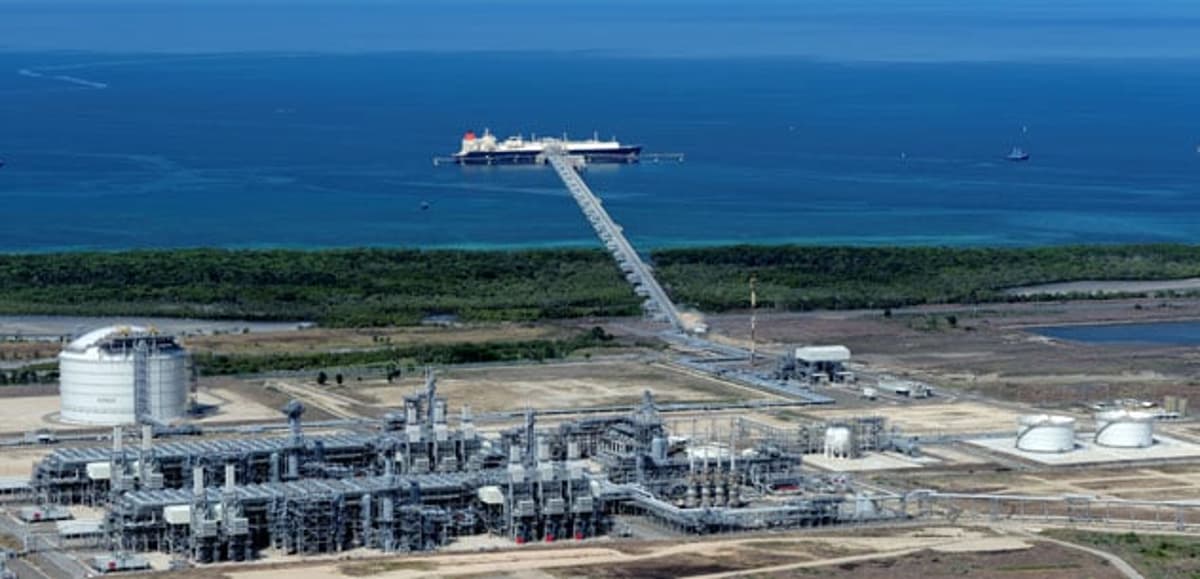
LNG Capacity Boost Emerging in Oceania as New Gas Project Gets the Green Light
Companies Mentioned
Why It Matters
The project converts a sizable portion of Santos’ undeveloped reserves into producing assets, bolstering LNG supply in Oceania while offering investors an unusually high return profile, thereby reshaping regional energy dynamics.
Key Takeaways
- •Santos' APF tie‑in adds ~54 mmscf/d incremental gas production.
- •Project IRR exceeds 50% with payback under four years.
- •$400 million capex, Santos contributes $160 million, starts 2028.
- •19‑km pipeline links new wells to PNG LNG network.
- •Extends PNG LNG plateau 12 years, potentially beyond 2050.
Pulse Analysis
Papua New Guinea has emerged as a pivotal node in the Asia‑Pacific LNG supply chain, and the approval of the Agogo Production Facility tie‑in underscores that momentum. By linking two new wells to the existing PNG LNG pipeline via a 19‑kilometre conduit, the project adds roughly 135 mmscf/d of gas capacity, reinforcing the region’s ability to meet growing demand from power‑intensive economies such as Japan, South Korea and China. The low emissions intensity of PNG LNG also aligns with the industry’s shift toward greener fuel sources, positioning the country as a credible long‑term supplier.
Financially, the APF tie‑in is a standout. Santos’ share of the $400 million total capex is $160 million, yet the venture promises an internal rate of return north of 50% and a payback horizon of less than four years from the final investment decision. These metrics are rare in capital‑intensive upstream projects and signal strong cash‑flow generation for the partners. Converting 66 mmboe of 2P undeveloped reserves into developed reserves not only strengthens Santos’ balance sheet but also provides a stable feed‑gas source for the PNG LNG train, enhancing its operational resilience.
Beyond the immediate economics, the project has broader strategic implications. Extending the PNG LNG production plateau by an estimated 12 years, with potential operation beyond 2050, offers continuity for downstream contracts and supports regional energy security. The investment also deepens community engagement through the Santos Foundation, fostering social license in the Highlands. As global investors increasingly prioritize ESG criteria, the combination of high returns, low‑carbon output, and community investment makes the APF tie‑in a benchmark for future LNG developments in emerging markets.
LNG capacity boost emerging in Oceania as new gas project gets the green light
Comments
Want to join the conversation?
Loading comments...