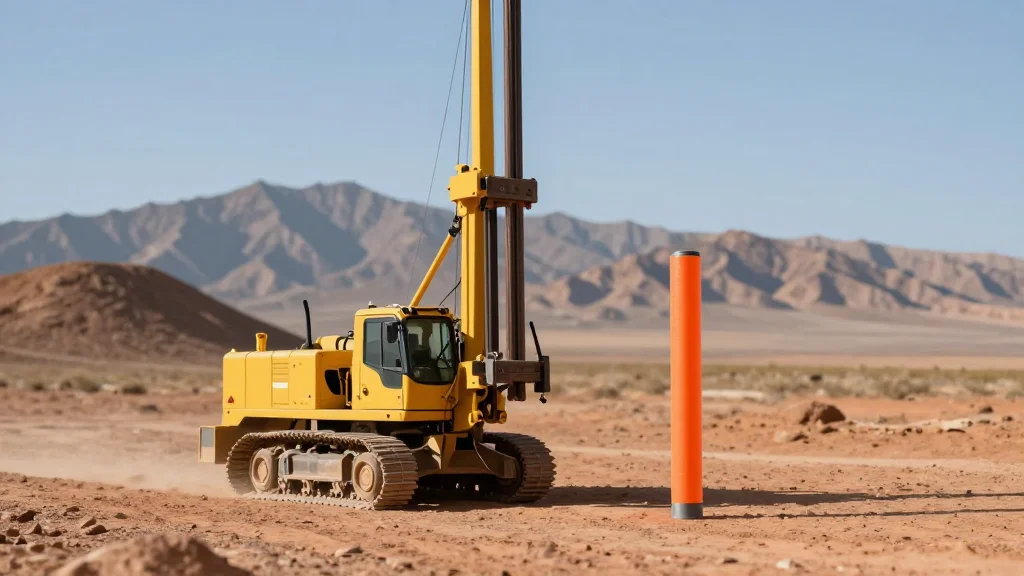
Locksley Fires up First Ever Drilling Beside Giant US Rare Earths Mine
Companies Mentioned
Why It Matters
Successful drilling could position Locksley as a key domestic supplier of rare earths, reducing U.S. reliance on foreign sources and bolstering national‑security supply chains. It also diversifies the company’s portfolio with high‑grade antimony, enhancing its strategic relevance.
Key Takeaways
- •Drilling 4 diamond holes over 900‑m strike at El Campo
- •Surface samples showed up to 12.1 % TREO grades
- •Program aims to map carbonatite‑hosted rare‑earth continuity
- •Locksley also pursues high‑grade antimony at Desert prospect
Pulse Analysis
The United States faces a strategic imperative to build a reliable domestic rare‑earth supply chain, a need underscored by the Department of Defense and the Inflation Reduction Act. Mountain Pass remains the only operating U.S. rare‑earth mine, and its proximity to Locksley’s El Campo prospect offers a unique opportunity to tap into the same carbonatite system that has powered the industry for decades. By situating its drill rig within sight of Mountain Pass, Locksley signals confidence that the geological model can be replicated, potentially adding a new source of neodymium, dysprosium and other critical elements essential for electric‑vehicle motors, wind‑turbine generators and advanced weaponry.
Locksley’s four‑hole, 900‑metre strike drilling campaign is designed to move beyond surface chip assays that reported up to 12.1 % total rare‑earth oxides. The core will be logged, assayed, and integrated into a three‑dimensional model to assess depth, lateral continuity and ore‑body geometry. If the subsurface data confirm the surface grades, the project could advance to metallurgical testing, a pivotal step toward a feasible mine plan. The rapid, back‑to‑back drilling approach—leveraging a single rig for both the El Campo and Desert Antimony targets—demonstrates cost‑effective exploration discipline, a factor investors watch closely in the capital‑intensive critical‑minerals sector.
Beyond rare earths, Locksley is cultivating a parallel antimony business, with surface assays showing up to 46 % antimony and a partnership with Rice University delivering a battery‑grade antimony‑graphite material. This dual‑commodity strategy aligns with U.S. policy incentives for domestic critical minerals, offering a hedge against market volatility and supply disruptions. As the U.S. government ramps up funding for strategic mineral projects, successful results from El Campo could attract federal grants, joint‑venture interest, and a premium valuation, positioning Locksley as a potential linchpin in the nation’s push for supply‑chain resilience and clean‑technology growth.
Locksley fires up first ever drilling beside giant US rare earths mine
Comments
Want to join the conversation?
Loading comments...