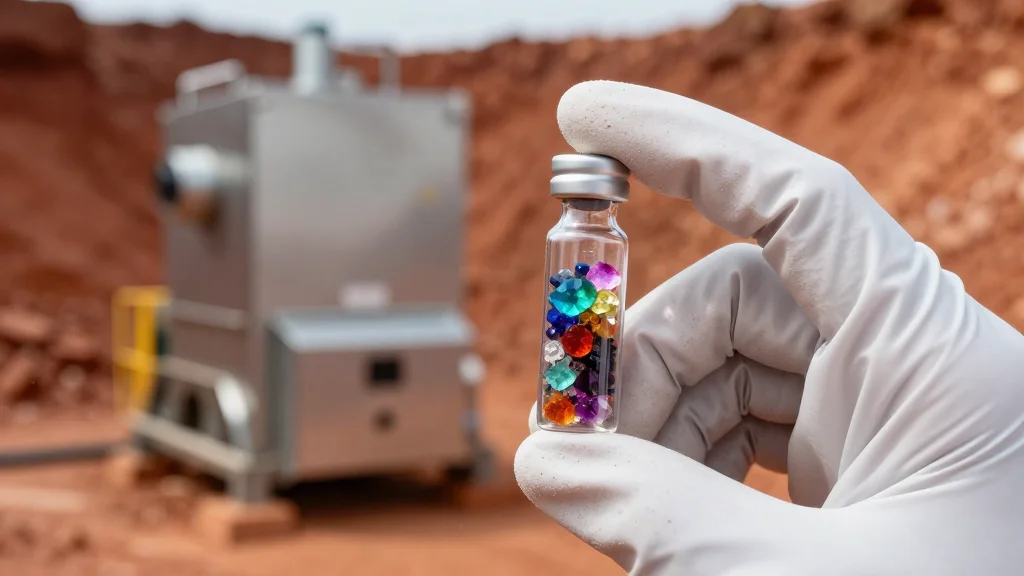
NLCIL and CSIR-CECRI Sign MoU for Critical Mineral Extraction
Why It Matters
The partnership advances India’s self‑reliance on critical minerals while creating economic value from waste, strengthening the national supply chain.
Key Takeaways
- •NLCIL partners with CSIR‑CECRI to extract REEs from mine waste
- •MoU focuses on Neyveli overburden and tailings assessment
- •Project aligns with India's National Critical Mineral Mission
- •Research may expand to other NLCIL sites if viable
- •Goal: develop sustainable, economically viable extraction technologies
Pulse Analysis
India’s National Critical Mineral Mission, launched in 2023, seeks to cut reliance on imported rare earth elements and other strategic minerals that power clean‑energy technologies, defense systems and electronics. With global supply chains increasingly volatile, the government is encouraging domestic extraction from both primary ores and secondary sources such as mine waste, overburden and tailings. Turning these low‑grade materials into a resource not only bolsters self‑sufficiency but also addresses environmental concerns by reducing the volume of abandoned waste. The mission therefore creates a fertile policy backdrop for industry‑research collaborations.
The memorandum of understanding signed on 10 June 2026 brings together NLC India Limited, a leading coal‑to‑power and mining conglomerate, with the CSIR‑Central Electrochemical Research Institute, a premier laboratory in advanced mineral processing. Their joint study will map the REE and trace‑metal content of overburden and tailings at the Neyveli lignite complex, evaluating hydrometallurgical and bio‑leaching routes that could recover valuable elements at commercial scale. By focusing on sustainable, low‑cost methods, the partnership aims to demonstrate a replicable model that can be rolled out to other NLCIL sites across the country.
If the pilot delivers economically viable recovery rates, it could reshape India’s critical mineral supply chain by turning waste streams into a domestic source of rare earths, reducing import bills and creating new revenue streams for mining operators. The initiative also dovetails with the broader “Make in India” agenda, encouraging indigenous technology development and job creation in high‑tech processing. Internationally, a successful Indian model would position the country as a competitor in the global REE market, potentially attracting foreign investment while strengthening strategic autonomy.
NLCIL and CSIR-CECRI sign MoU for critical mineral extraction
Comments
Want to join the conversation?
Loading comments...