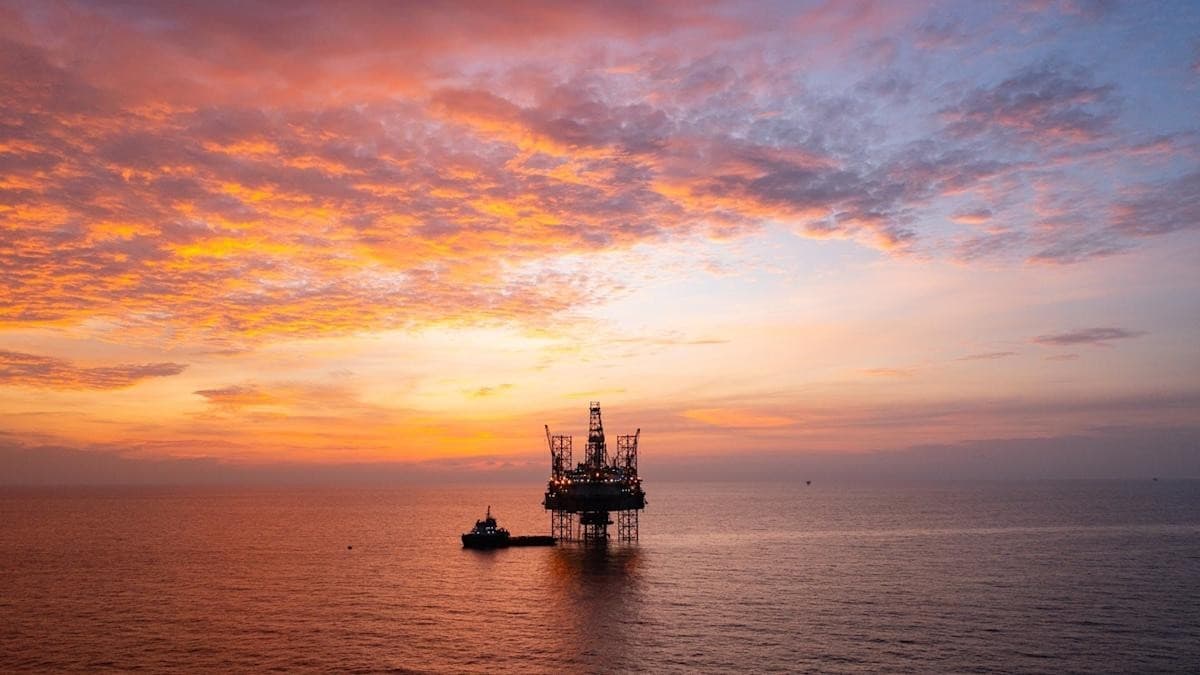
Norway Just Switched on Another Gas Lifeline for Europe
Why It Matters
Eirin provides immediate, low‑cost gas that bolsters Europe’s energy security while demonstrating a new, capital‑efficient model for offshore development. Its success signals that stranded fields can be rapidly re‑activated to meet geopolitical and climate‑driven market pressures.
Key Takeaways
- •Equinor fast‑tracked Eirin field, adding ~27.6 MMboe to supply
- •Investment ~NOK 4.5 bn (~$495 m) completed in three years
- •Gina Krog platform life extended to 2036, preserving jobs
- •Gas emits 3 kg CO₂/boe, meeting EU climate criteria
- •Industry pivots to fast, modular tie‑backs over megaprojects
Pulse Analysis
The Eirin field’s revival illustrates how geopolitical shocks can transform previously marginal assets into strategic resources. After Russia’s invasion of Ukraine, European policymakers prioritized supply security, prompting Equinor to reassess Eirin’s economics. By leveraging existing subsea infrastructure and a standardized tie‑back design, the company avoided the multi‑year timelines and billions of dollars typically associated with greenfield projects, delivering gas at a fraction of the cost and carbon intensity of new developments.
Beyond the immediate volume boost, Eirin’s integration into the Gina Krog platform extends that asset’s operational horizon by roughly seven years, safeguarding offshore jobs and maintaining a critical export conduit through the Sleipner hub. The low‑emission profile—about 3 kg CO₂ per barrel of oil equivalent—aligns with the European Union’s tightening climate standards, giving the project political cover while still feeding a market that remains structurally gas‑dependent. This dual benefit of economic efficiency and environmental compliance makes Eirin a template for future shelf‑field activations across the Norwegian continental shelf.
The broader industry implication is a pivot toward rapid, modular projects that capitalize on existing pipelines and processing facilities. Investors and operators are now weighing the speed‑to‑market and capital discipline of tie‑backs against the allure of megaprojects that can take a decade to materialize. As Europe continues to grapple with tight LNG markets, declining domestic output, and lingering geopolitical risk, the Eirin case study reinforces that agility, infrastructure reuse, and low‑carbon gas will dominate the offshore development playbook for the foreseeable future.
Norway Just Switched on Another Gas Lifeline for Europe
Comments
Want to join the conversation?
Loading comments...