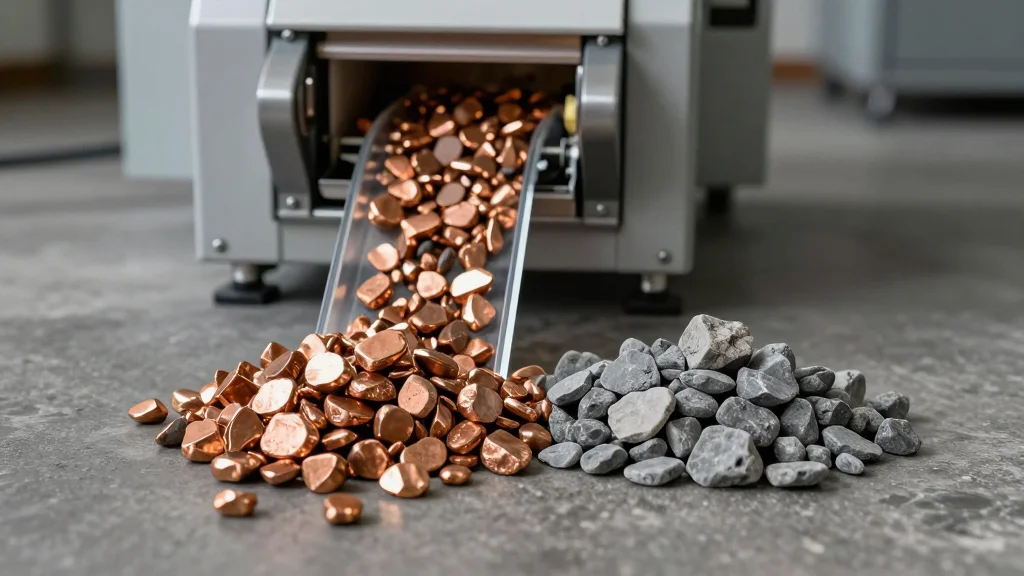
Pebble Sorting Gains Traction as Miners Target Grinding Circuit Inefficiencies
Why It Matters
Reducing pebble recirculation directly lowers grinding energy and wear while unlocking incremental capacity, a high‑impact lever for mines battling rising power costs and declining ore grades.
Key Takeaways
- •Pebble streams can displace up to 0.7 t fresh feed per tonne recirculated
- •XRT sorting distinguishes particles by internal density, not just size
- •Up to 80% of metal may reside in half of pebble mass
- •Selective pebble rejection can raise throughput by 6%, adding $21 M annually
- •Technology adds circuit complexity and requires stable feed characteristics
Pulse Analysis
The grinding circuit remains the most energy‑intensive segment of a mineral‑processing plant, often consuming over half of a concentrator’s power budget. As ore grades fall and electricity prices climb, operators are forced to examine every inefficiency, including the long‑overlooked pebble stream. These coarse, hard fragments resist breakage, occupy mill volume, and force the plant to grind the same low‑value material repeatedly, eroding overall productivity.
Sensor‑based sorting, particularly X‑ray Transmission (XRT) systems, offers a way to intervene inside the circuit rather than only upstream. By measuring atomic density, XRT can flag high‑grade pebbles for continued grinding while diverting barren rock before it re‑enters the mill. This approach leverages the already‑screened, washed nature of pebble streams, enabling rapid, mill‑scale separation that traditional screens cannot achieve. Early trials in Canadian and Peruvian copper operations suggest throughput gains of up to 6% and a measurable uplift in feed grade, though the technology adds equipment complexity and demands consistent feed presentation.
From a business perspective, the economics are compelling. Incremental capacity extracted from existing assets avoids the capital outlay and lead time of new mills, delivering near‑term revenue boosts—illustrated by the reported $21 million annual gain. However, miners must balance the risk of discarding valuable particles against energy savings, and the technology’s performance can vary with ore heterogeneity. As the industry pivots toward value‑per‑tonne metrics rather than sheer volume, pebble‑stream sorting is poised to become a standard optimisation tool, reshaping comminution strategies across copper, gold and polymetallic sites.
Pebble sorting gains traction as miners target grinding circuit inefficiencies
Comments
Want to join the conversation?
Loading comments...