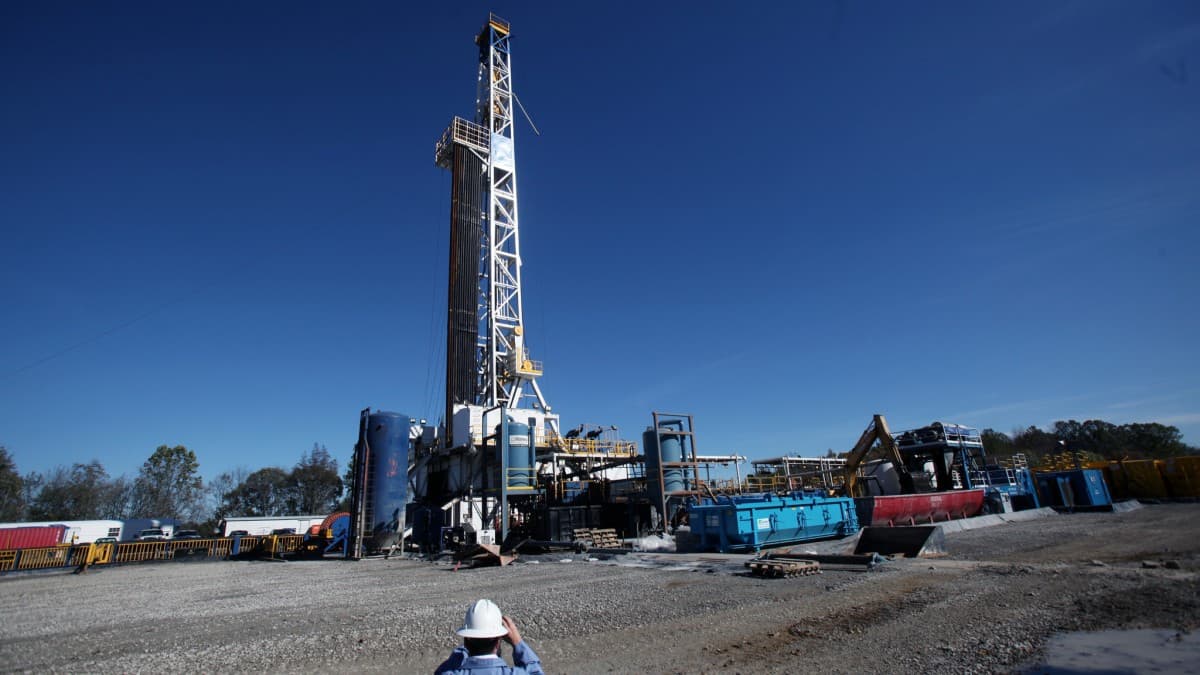
Permian Gas Glut Means Producers Are Paying Buyers to Haul It Away
Why It Matters
The divergence creates a competitive advantage for U.S. manufacturers and AI data‑center operators, while exposing shale producers to profit pressure. Persistent low gas costs could bolster U.S. economic resilience amid global energy shortages.
Key Takeaways
- •Permian gas prices hit -$9.60 per mmBtu, forcing producers to pay buyers.
- •Diamondback and EQT cut output as spot gas stays negative.
- •U.S. electricity prices fell 0.9% in March thanks to cheap gas.
- •New pipelines adding 11 bcf/d could turn Waha gas positive by October.
- •Analysts project U.S. natural‑gas average below $4 per MMBtu through 2027.
Pulse Analysis
The Permian Basin’s gas surplus stems from a combination of record‑high output and a chronic lack of midstream infrastructure. In 2026 the Energy Information Administration lifted its dry‑gas production estimate to 110.6 bcf/d, with the Permian alone slated to deliver about 29.2 bcf/d—roughly a 6 % increase over the prior year. Because pipeline construction has lagged behind drilling activity, inventories have ballooned to more than 7 % above the five‑year seasonal average, driving spot prices into negative territory, exemplified by the –$9.60 per MMBtu low recorded in late April. Meanwhile, Europe and Asia are grappling with soaring prices after the Iran conflict disrupted supply, widening the trans‑Atlantic price gap.
For shale operators, the price collapse translates into immediate earnings pressure. Diamondback Energy and EQT have already trimmed production and are shifting sales away from the Waha hub toward higher‑priced markets near population centers and export terminals. Conversely, downstream users reap the benefits: petrochemical giants such as Dow cite cheap natural gas as a cost‑effective feedstock, and the U.S. Bureau of Labor Statistics shows electricity rates dipped 0.9 % in March, partly due to abundant gas‑fired generation. The cheap fuel also underpins the rapid expansion of AI data centers, which rely on inexpensive power to keep operating costs competitive.
Looking ahead, the market’s tightness is expected to ease as new midstream projects come online. The Blackcomb Pipeline and five additional conduits will add roughly 11 bcf/d of capacity by 2028, enough to offset about 10 % of national production and likely push Waha prices back into positive territory by October. Nevertheless, analysts forecast that even with expanded infrastructure, U.S. natural‑gas prices will remain well under $4 per MMBtu through 2027, preserving the country’s cost advantage over import‑dependent regions. Policymakers and investors should monitor these developments, as sustained low‑cost gas could shape industrial investment decisions and reinforce the United States’ strategic energy position.
Permian Gas Glut Means Producers Are Paying Buyers to Haul It Away
Comments
Want to join the conversation?
Loading comments...