Q&A: Thunderstone’s CEO on Whether Mining Can Extract More Metal with Less Rock
Why It Matters
If scalable, the technology could dramatically lower mining’s environmental footprint while providing the rapid production elasticity needed to secure critical‑metal supplies for clean‑energy technologies.
Key Takeaways
- •Electrified fluid control boosts leach recovery in stagnant heap zones.
- •Lab tests on nickel laterite show PLS concentrations exceeding industry baselines.
- •In‑situ extraction could cut capital costs and eliminate tailings dams.
- •Technology offers rapid output elasticity for volatile critical‑metal demand.
Pulse Analysis
The mining sector faces mounting pressure to decarbonise as global demand for energy‑transition commodities such as nickel, copper and lithium soars. Traditional open‑pit and underground operations are energy‑intensive, generate massive waste, and are constrained by fixed infrastructure that cannot quickly adjust output. This rigidity hampers supply‑chain resilience, especially amid geopolitical tensions that can disrupt critical‑metal flows. Companies are therefore exploring innovative extraction methods that reduce carbon footprints, lower capital intensity, and improve operational flexibility.
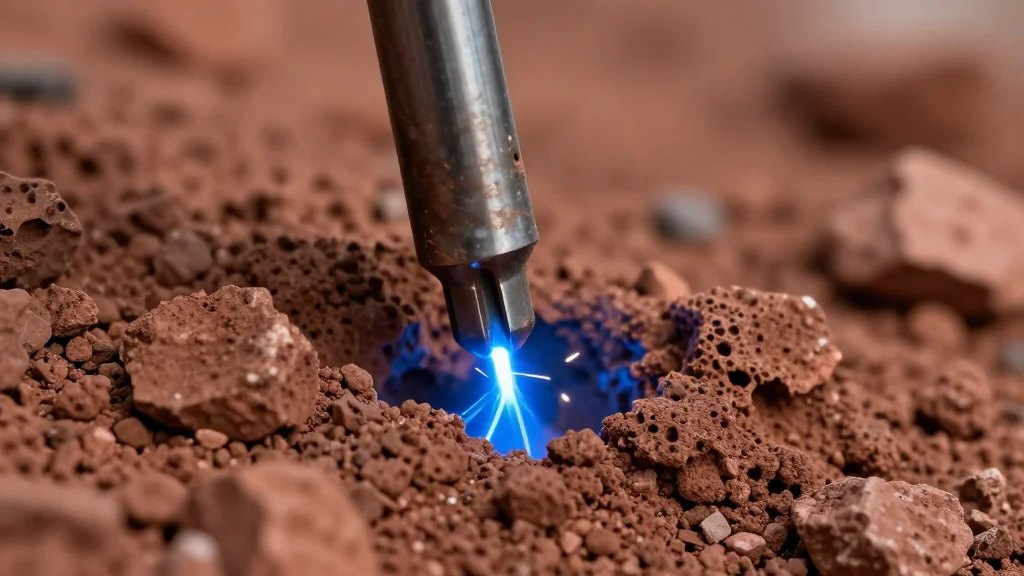
Thunderstone’s platform leverages high‑voltage electrical discharges to expand pore networks and direct ionic flow through ore without the need for hydraulic pressure or mechanical comminution. In laboratory columns mimicking nickel laterite deposits with over 10 % porosity, the system produced pregnant leach solutions of equal or higher concentration than industry standards, even in zones previously considered non‑productive. By creating controllable fluid pathways, the technology can unlock value from tailings piles and heap‑leach sections that are otherwise uneconomical, potentially trimming downstream refining steps and preserving margins.
If the concept advances beyond the lab, its implications are far‑reaching. An in‑situ, electrically driven extraction model could slash upfront capex, eliminate the need for large tailings dams, and simplify permitting by preserving surface ecosystems. Moreover, the ability to modulate production on demand mirrors the flexibility of oil wells, offering a strategic buffer against sudden spikes in critical‑metal demand. While scaling will require navigating subsurface stability, regulatory approval, and site‑specific geology, the promise of a low‑impact, elastic supply source aligns with ESG goals and national‑security priorities, positioning Thunderstone as a potential catalyst for a more resilient mineral supply chain.
Q&A: Thunderstone’s CEO on whether mining can extract more metal with less rock
Comments
Want to join the conversation?
Loading comments...