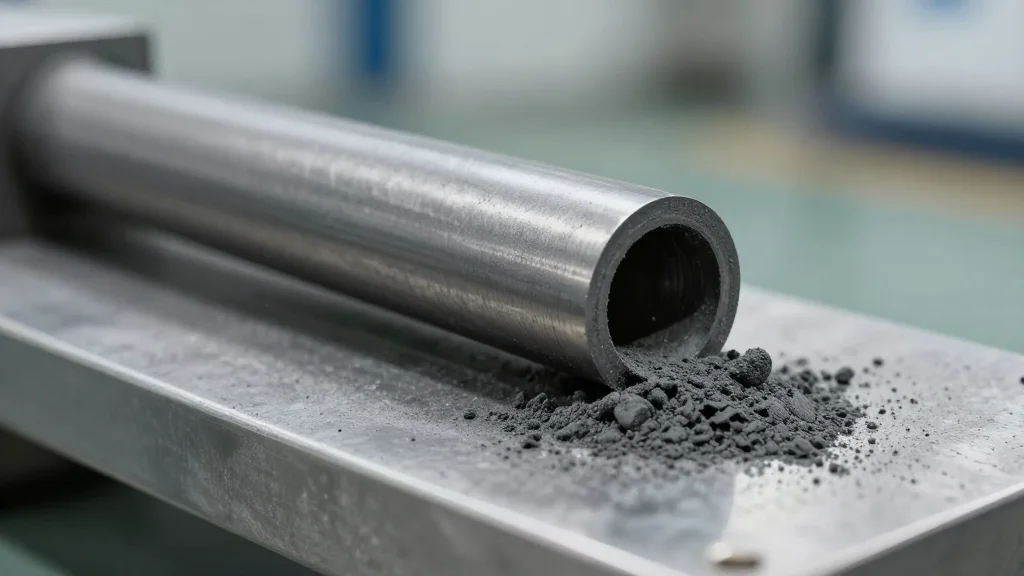
Queensland Launches Australia’s First Graphite‑to‑Anode Plant in Townsville

Why It Matters
Australia’s reliance on imported battery‑grade graphite has been a bottleneck for domestic EV and renewable‑energy projects. By establishing a home‑grown conversion capability, Queensland aims to secure a stable supply of a critical input, potentially lowering battery costs and enhancing the competitiveness of Australian manufacturers. The plant also signals to global investors that Australia is serious about moving up the battery value chain, which could attract further capital into mining, processing, and battery assembly. If the demonstration proves commercially viable, it could trigger a cascade of related investments—such as cell‑manufacturing plants and recycling facilities—creating jobs and diversifying regional economies. Moreover, a domestic source of high‑purity anode material could reduce the carbon footprint associated with shipping raw graphite overseas for processing, supporting Australia’s net‑zero emissions targets.
Key Takeaways
- •Queensland commissioned the first Australian graphite‑to‑anode demonstration plant in Townsville on April 27, 2026.
- •Graphinex will operate the vertically integrated facility, converting raw graphite into battery‑grade anode material.
- •The plant targets export markets for EV and energy‑storage batteries, aiming to capture downstream value.
- •Details on annual production capacity were not disclosed; the line is intended as a commercial‑scale proof of concept.
- •The project aligns with the Australian government’s $1.2 billion National Battery Industry Roadmap.
Pulse Analysis
The Townsville demonstration plant is more than a symbolic milestone; it addresses a structural weakness in Australia’s battery supply chain. Historically, the country has exported raw graphite at low margins while importing processed anodes at premium prices. By internalising the conversion step, Queensland can capture a larger share of the value chain, potentially improving trade balances and creating high‑skill jobs in a region traditionally dependent on commodity mining.
From a market perspective, the timing is critical. Global demand for lithium‑ion batteries is accelerating, driven by EV adoption and grid‑scale storage. Suppliers that can guarantee a reliable, low‑carbon source of anode material will command a premium. If Graphinex can meet the purity and cost benchmarks set by Chinese and European processors, Australian anodes could become a preferred choice for OEMs seeking supply‑chain diversification.
Looking forward, the plant’s success will likely hinge on three factors: scalability of the technology, alignment with government incentives, and the ability to secure long‑term off‑take agreements. A successful scale‑up could prompt the Queensland government to consider additional incentives, such as tax credits or infrastructure grants, to attract downstream battery manufacturers. Conversely, if the demonstration fails to meet cost targets, investors may remain cautious, slowing the broader ambition to build a full domestic battery ecosystem. The next 12‑18 months will be decisive in determining whether this pilot evolves into a cornerstone of Australia’s clean‑energy future.
Queensland Launches Australia’s First Graphite‑to‑Anode Plant in Townsville
Comments
Want to join the conversation?
Loading comments...