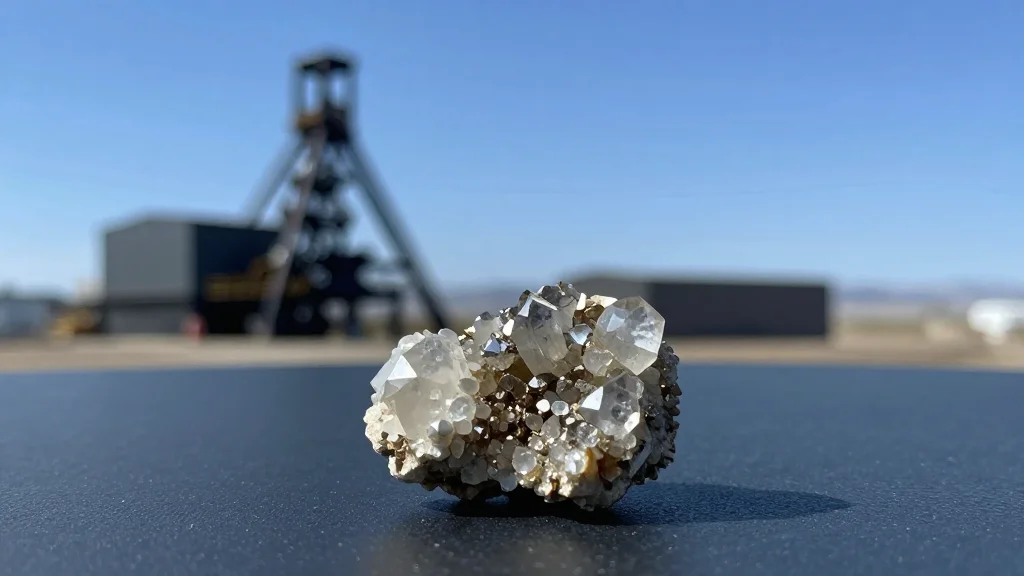
Ramaco Advances Wyoming Rare‑Earth Project to Strengthen U.S. Critical Mineral Supply

Why It Matters
The Wyoming rare‑earth project represents one of the few advanced-stage U.S. efforts to produce the high‑purity rare‑earth oxides needed for next‑generation technologies. By establishing a dedicated processing entity and a testing laboratory, Ramaco is addressing two historic bottlenecks: the lack of domestic refining capacity and the uncertainty around ore‑to‑metal conversion economics. Successful commercialization could lower the cost of U.S. supply, make the defense supply chain more resilient, and encourage other miners to invest in critical‑mineral projects. Beyond national security, the project could have regional economic impacts. The Wyoming site is expected to create construction jobs in the short term and permanent mining and processing positions once operational. Moreover, the development aligns with the Biden administration’s strategic‑minerals agenda, which includes tax credits and loan guarantees for projects that reduce reliance on foreign sources. If Ramaco meets its timeline, the project could become a benchmark for public‑private collaboration in the critical‑mineral sector.
Key Takeaways
- •Ramaco forms three new entities to separate royalties, production, and refining for its Wyoming rare‑earth project.
- •Wyoming laboratory fit‑out for geometallurgical testing is now underway.
- •Brook Mine pilot plant expected to be operational in late 2027 after equipment installation in fall 2026.
- •Company holds $490 million in liquidity, a 310% increase YoY, supporting the capital‑intensive development.
- •Project aims to cut U.S. rare‑earth import dependence, currently over 80% from China.
Pulse Analysis
Ramaco’s strategic reorganization mirrors a broader industry shift toward vertical integration in the critical‑mineral space. By carving out distinct entities for royalties, mining, and refining, the firm can attract specialized investors—royalty funds for low‑risk cash flow, mining‑focused capital for development, and technology partners for processing. This modular approach also insulates each segment from the operational volatility of the others, a lesson learned from past rare‑earth ventures that faltered when processing costs spiraled.
The timing is favorable. Recent policy moves, including the Inflation Reduction Act’s clean‑energy tax credits and the Department of Energy’s $2 billion loan‑guarantee program for critical‑mineral projects, create a financial cushion for high‑capex initiatives. Ramaco’s $490 million cash position, bolstered by a recent share‑repurchase program, suggests it can self‑fund early‑stage development while positioning itself for downstream financing once the pilot plant demonstrates viability.
However, the path is not without risk. The Carbochlorination process, while promising, is still under independent review, and any delay in permitting could push the 2027 pilot timeline further out. Competitors such as MP Materials and Lynas are also racing to scale U.S. and allied‑country production, which could compress margins if supply outpaces demand. Ramaco’s success will hinge on its ability to prove the economic case for its processing technology, secure long‑term off‑take agreements, and navigate the regulatory landscape in Wyoming—a state known for stringent environmental reviews. If it can do so, the project could become a cornerstone of a more secure, domestically sourced rare‑earth supply chain.
Ramaco Advances Wyoming Rare‑Earth Project to Strengthen U.S. Critical Mineral Supply
Comments
Want to join the conversation?
Loading comments...