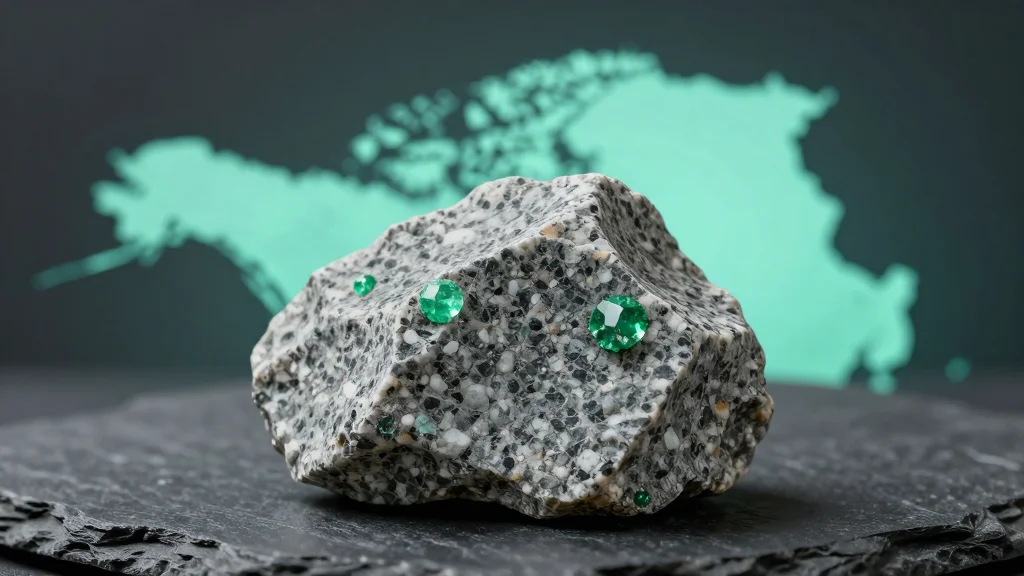
Rare‑Earth Maps Updated to Show Greenland, Shifting Global Supply Outlook

Companies Mentioned
Why It Matters
The inclusion of Greenland on rare‑earth maps expands the geographic footprint of critical mineral resources, reducing reliance on a single dominant supplier. For the mining sector, it opens a frontier for exploration investment and could stimulate infrastructure development in the Arctic. Strategically, diversified sources lower the risk of supply disruptions that could affect defense systems, renewable‑energy technologies and consumer electronics, thereby enhancing national security and economic resilience. Moreover, the updated map may influence policy debates in Washington and Brussels, where lawmakers are weighing subsidies, tax incentives and export controls to accelerate non‑Chinese supply chains. A broader resource base could also shift bargaining power in global trade negotiations, as countries with newly recognized deposits seek a larger voice in setting industry standards.
Key Takeaways
- •Rare‑earth maps now show Greenland’s identified deposits, adding a new potential source to the global inventory.
- •China retains about 85% of processing capacity, but new projects in Australia, Canada and Tanzania are expanding non‑Chinese supply.
- •Lynas Rare Earths operates the world’s largest non‑Chinese mine and is building a U.S. processing plant.
- •Western governments are urged to translate the map’s insights into concrete mining permits and funding.
- •Diversified sources could dampen price spikes and reduce strategic vulnerability for defense and clean‑energy sectors.
Pulse Analysis
The cartographic update is more than a visual tweak; it reflects a strategic pivot that could alter the economics of rare‑earth mining for years to come. Historically, China’s vertical integration—from mine to final product—has allowed it to dictate terms and price premiums. The emergence of a multi‑node supply chain, anchored by projects like Lynas’s Mount Weld and now potentially Greenland’s Arctic deposits, introduces competitive pressure that could force Chinese firms to lower processing fees or relax export controls to retain market share.
From an investment perspective, the Greenland inclusion may catalyze a wave of speculative financing, similar to the early‑stage rush seen in lithium after the 2022 price surge. However, the Arctic environment imposes higher capital expenditures and longer development timelines, meaning only well‑capitalized players with government backing are likely to succeed. The U.S. Inflation Reduction Act and Canada’s Critical Minerals Strategy could provide the policy scaffolding needed, but execution risk remains high.
In the broader geopolitical arena, a more distributed rare‑earth supply network strengthens the West’s bargaining position in trade talks and defense procurement. It also reduces the leverage that Beijing has used to influence technology supply chains. If the map’s promise materializes, we could see a gradual decoupling of critical mineral flows from China, reshaping global commodity markets and prompting a re‑evaluation of strategic stockpiles across NATO allies.
Rare‑Earth Maps Updated to Show Greenland, Shifting Global Supply Outlook
Comments
Want to join the conversation?
Loading comments...