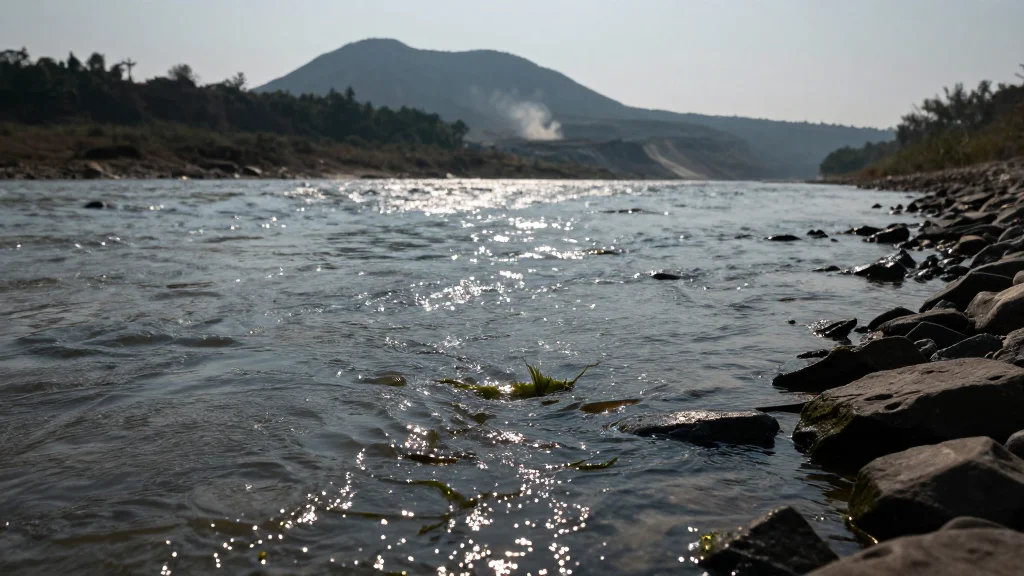
Rare‑Earth Mine Runoff Threatens Mekong Basin, Endangering $10 Billion Rice Export Industry

Why It Matters
The Mekong River underpins food security for millions across Southeast Asia, supplying protein from fish and staple crops like rice. Heavy‑metal contamination threatens not only public health—raising cancer and developmental risks—but also the economic stability of export‑driven agricultural economies. A collapse in Thai rice exports would reverberate through global commodity markets, potentially raising food prices worldwide. Beyond immediate health and trade concerns, the crisis illustrates the broader challenge of governing extractive industries in conflict‑affected border regions. Unregulated rare‑earth mining fuels the global tech supply chain, yet its externalities are borne by vulnerable river communities. Addressing the Mekong’s pollution will require coordinated diplomatic, regulatory and financial mechanisms that balance mineral demand with environmental stewardship.
Key Takeaways
- •Rare‑earth mines in Myanmar and Laos release arsenic, mercury, lead and cadmium into Mekong tributaries.
- •Heavy‑metal levels in water, fish and sediment exceed safety thresholds, according to Thai university studies.
- •70 million people depend on the Mekong for fisheries and agriculture; Thailand exported over $10 billion of rice and fruit in 2024.
- •Local officials cite limited government leverage and funding to confront cross‑border mining pollution.
- •Regional bodies focus on monitoring; no binding remediation framework exists yet.
Pulse Analysis
The Mekong crisis underscores a classic externality: a high‑value global commodity—rare earths—drives local environmental damage that ripples through food systems and trade. Historically, mining booms in the region have been managed with weak oversight, but the current scale of heavy‑metal contamination is unprecedented. The convergence of conflict in Myanmar, lax regulation in Laos and the transboundary nature of river systems creates a perfect storm where national policies alone cannot resolve the issue.
From a market perspective, the looming threat to Thailand’s $10 billion rice export sector could trigger a re‑pricing of Southeast Asian agricultural commodities. Import‑dependent markets may seek alternative suppliers, potentially shifting trade flows toward South America or Africa. Simultaneously, tech manufacturers that rely on rare‑earth inputs could face reputational pressure to source responsibly, accelerating demand for certified “clean” minerals.
Looking ahead, the most plausible path to mitigation lies in a multilateral framework that ties mining permits to strict effluent standards, backed by joint monitoring funded through a blend of ASEAN contributions and international development aid. Without such a mechanism, the Mekong’s degradation will likely intensify, eroding both regional food security and the economic foundations of the nations that depend on it.
Rare‑Earth Mine Runoff Threatens Mekong Basin, Endangering $10 Billion Rice Export Industry
Comments
Want to join the conversation?
Loading comments...