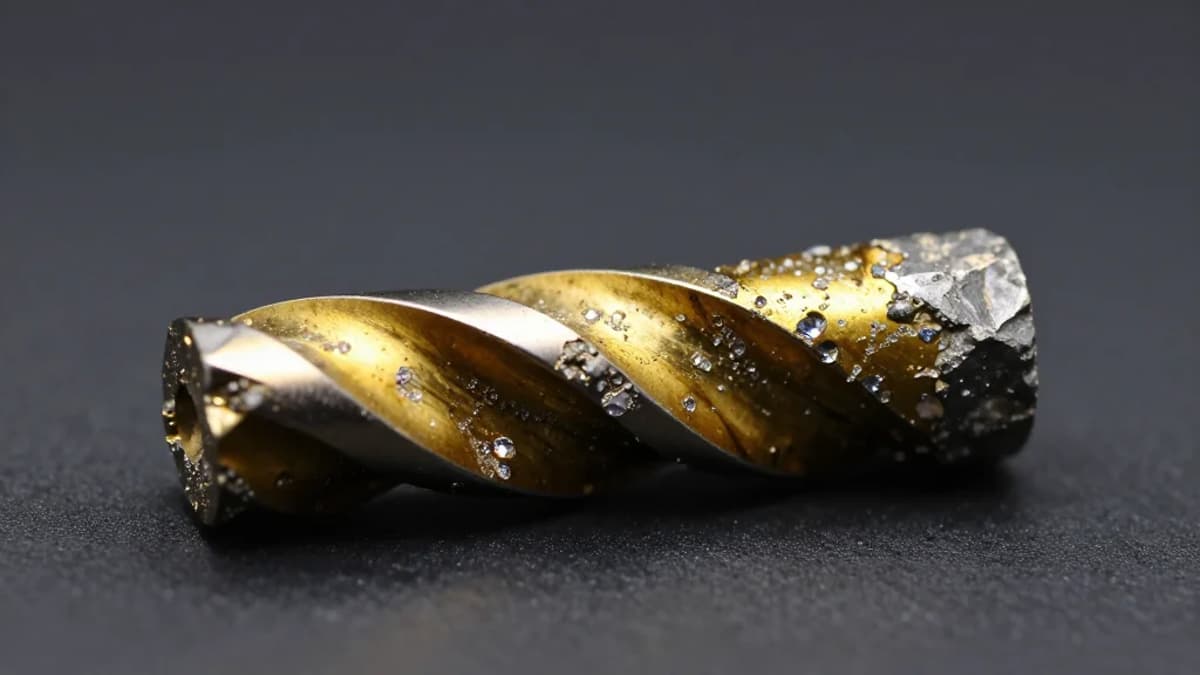
Redcastle Grade Control Drilling Delivers up to 397g/T Gold
•March 9, 2026
0
Why It Matters
The new high‑grade data boosts confidence in Redcastle’s resource model, potentially increasing the declared gold resource and improving project economics. This strengthens the company’s position for future mining approvals and investor interest.
Key Takeaways
- •Grade control drilling hit 397 g/t gold over 1m.
- •23 holes exceeded 20 g/t, showing wide nuggety gold.
- •327 RC holes drilled, 13,539m total.
- •Results will feed refreshed geological model for resource update.
- •High drill density confirms grade continuity across mining area.
Pulse Analysis
Grade‑control drilling is a critical step for any gold operation seeking to translate exploration success into mineable reserves. Redcastle Resources’ recent campaign at the Redcastle Reef deposit in Western Australia illustrates the power of dense, systematic drilling. By executing 327 reverse‑circulation holes on an 8‑by‑6 metre grid, the company amassed 13,539 metres of high‑resolution assay data. The standout result—a 1‑metre interval grading 397 g/t gold—highlights the presence of coarse, nuggety gold that can drive exceptional short‑term production. Moreover, 23 holes surpassed the 20 g/t threshold, confirming that these premium grades are not isolated anomalies but part of a broader mineralised system.
The influx of high‑grade assays will be folded into an updated geological model, a prerequisite for any resource estimate revision. A refreshed model that captures the newly demonstrated lode continuity can justify a material uplift in the measured and indicated resources, directly enhancing the project's net present value. Investors and lenders typically reward such upgrades with tighter financing terms and higher market caps. From an operational standpoint, the confirmed grade continuity reduces geological risk, allowing Redcastle to advance detailed mine‑planning, optimise pit designs, and schedule extraction of the richest zones early in the mine life.
Beyond the immediate project, Redcastle’s results underscore a broader trend of Australian gold producers leveraging high‑density drilling to unlock hidden value in existing deposits. The ability to identify and quantify nuggety gold pockets can differentiate a marginal operation from a world‑class asset. As the company proceeds with infill drilling at Queen Alexandra and waste‑rock targeting at M39/318, the cumulative data set will further de‑risk the broader Redcastle portfolio. Should the forthcoming resource update confirm a substantial increase, Redcastle could attract strategic partners or consider accelerated development, positioning itself favorably in a competitive gold market.
Redcastle grade control drilling delivers up to 397g/t gold
0
Comments
Want to join the conversation?
Loading comments...