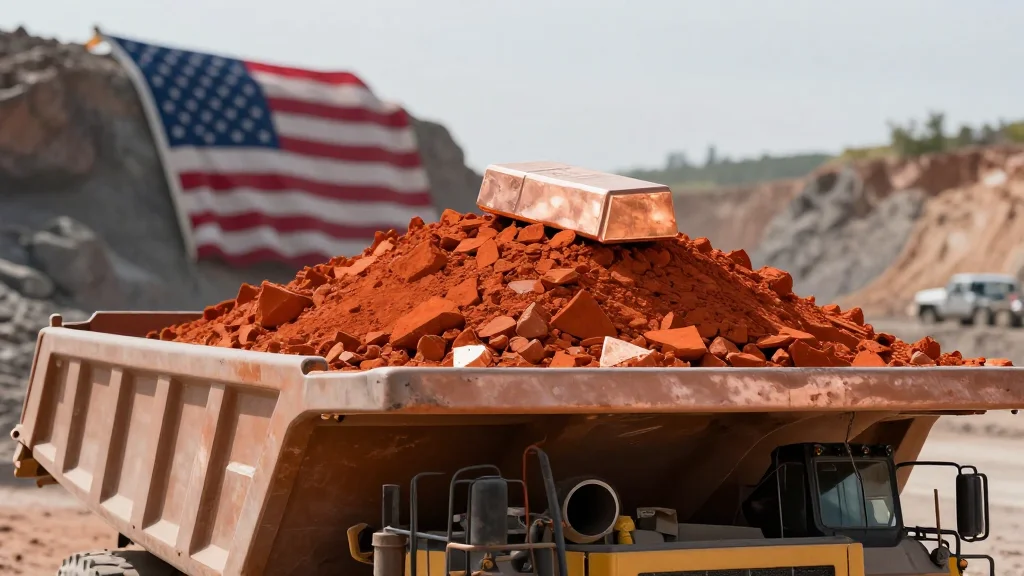
Securing Energy Supply Chains: One Critical Mineral Deal at a Time?
Why It Matters
Equity financing gives the U.S. a direct lever to secure supply chains vital for defense, clean energy and AI, while signaling long‑term market stability to private investors.
Key Takeaways
- •Seven equity stakes announced in U.S. critical mineral projects in 2025
- •Equity deals boosted stock prices and attracted private capital
- •MP Materials deal includes $110/kg price floor and 10‑year offtake
- •Department of Defense funds majority of the announced projects
- •China supplies 70‑77% of key minerals, driving U.S. diversification
Pulse Analysis
Critical minerals—copper, lithium, rare earths, gallium, and others—are the backbone of modern defense systems, electric vehicles, and AI hardware. Historically, the United States has depended on China for up to three‑quarters of these inputs, exposing supply chains to geopolitical risk and export controls. In response, the federal government has broadened its industrial policy toolkit, shifting from pure subsidies to direct equity participation. By taking ownership stakes, agencies can de‑risk capital‑intensive projects, accelerate construction timelines, and create a foothold for future strategic decisions, all while signaling confidence to the market.
The equity push gained momentum in 2025 with seven announced deals, most funded by the Department of Defense and coordinated across Commerce and Energy. Private‑sector reaction has been immediate: stock prices of target companies rose sharply, and additional venture and corporate capital followed. The MP Materials transaction illustrates the model’s potential—beyond a minority stake, the government secured a $110 per kilogram price floor for neodymium‑praseodymium and a ten‑year commitment to purchase all magnets produced. This hybrid of equity and offtake guarantees not only upfront funding but also a reliable revenue stream, reducing the financing gap that often stalls domestic mining projects.
Equity alone, however, cannot guarantee a sustainable industry. Without parallel demand‑side policies—such as tax credits, guaranteed procurement, and price‑stabilization mechanisms—new capacity may outpace market absorption, leading to stranded assets. A congressionally authorized program could institutionalize the equity framework, embed safeguards, and coordinate demand incentives across agencies. By aligning capital with long‑term purchase commitments, the United States can build a resilient critical‑mineral ecosystem that supports clean‑energy transitions, national‑security objectives, and economic competitiveness.
Securing Energy Supply Chains: One Critical Mineral Deal at a Time?
Comments
Want to join the conversation?
Loading comments...