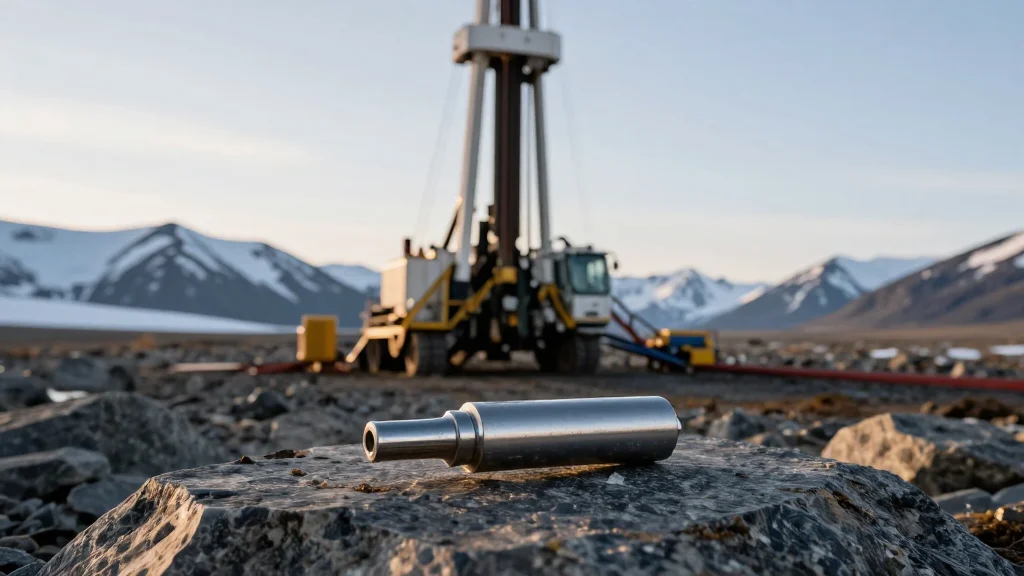
Silver47 Tests Red Mountain Potential
Why It Matters
If the drill results confirm the high‑grade zones, Red Mountain could become a flagship U.S. source of silver and critical base metals, attracting capital and supporting domestic supply chains for clean‑energy technologies.
Key Takeaways
- •2026 program will drill 10,000 meters across Red Mountain
- •Dry Creek holds 35.9 million oz inferred silver resource
- •Hunter target returned rock‑chip grades up to 616 g/t silver
- •WTF East may extend West Tundra Flats VMS system
- •Sheep Creek historic drill showed 1.3% zinc and 0.13% tin
Pulse Analysis
Alaska’s interior remains a hotbed for volcanogenic massive sulfide (VMS) deposits, and Silver47’s Red Mountain project sits at the heart of this trend. Spanning more than 35 miles, the district hosts a suite of polymetallic mineralization that includes silver, gold, zinc, lead, and copper. Prior operators logged just 37,378 meters of drilling, barely scratching the surface, yet already identified an inferred 15.6 million‑ton resource averaging 71.4 g/t silver. The region’s rugged geology, combined with strong electromagnetic anomalies, makes it a prime candidate for discovering new high‑grade zones that could feed the growing demand for critical minerals.
The 2026 drill campaign is designed to be both expansive and focused. About 3,000 meters will deepen and widen the Dry Creek deposit, which has delivered grades as high as 150 g/t silver and 6 % zinc in recent holes. The remaining 7,000 meters target five priority zones: Hunter, with rock‑chip assays up to 616 g/t silver; WTF East, a potential extension of the West Tundra Flats VMS system; Glacier Creek Suite, an untested electromagnetic anomaly; FOMO, a newly mapped sulfide cluster; and Sheep Creek, a historic massive sulfide occurrence. By systematically testing these targets, Silver47 hopes to delineate a contiguous, high‑grade silver‑rich VMS system that could rival other North American projects.
Success at Red Mountain would have ripple effects across the mining sector and broader economy. A domestic source of high‑grade silver and base metals would reduce reliance on imports, bolstering supply chains for electronics, renewable‑energy infrastructure, and battery production. Moreover, the project's scale could attract junior and major investors seeking exposure to critical‑minerals assets, potentially spurring further exploration in Alaska’s underexplored terrains. In a market where metal prices are buoyed by clean‑energy policies, Red Mountain’s development could position Silver47 as a key player in the next wave of U.S. mineral independence.
Silver47 tests Red Mountain potential
Comments
Want to join the conversation?
Loading comments...