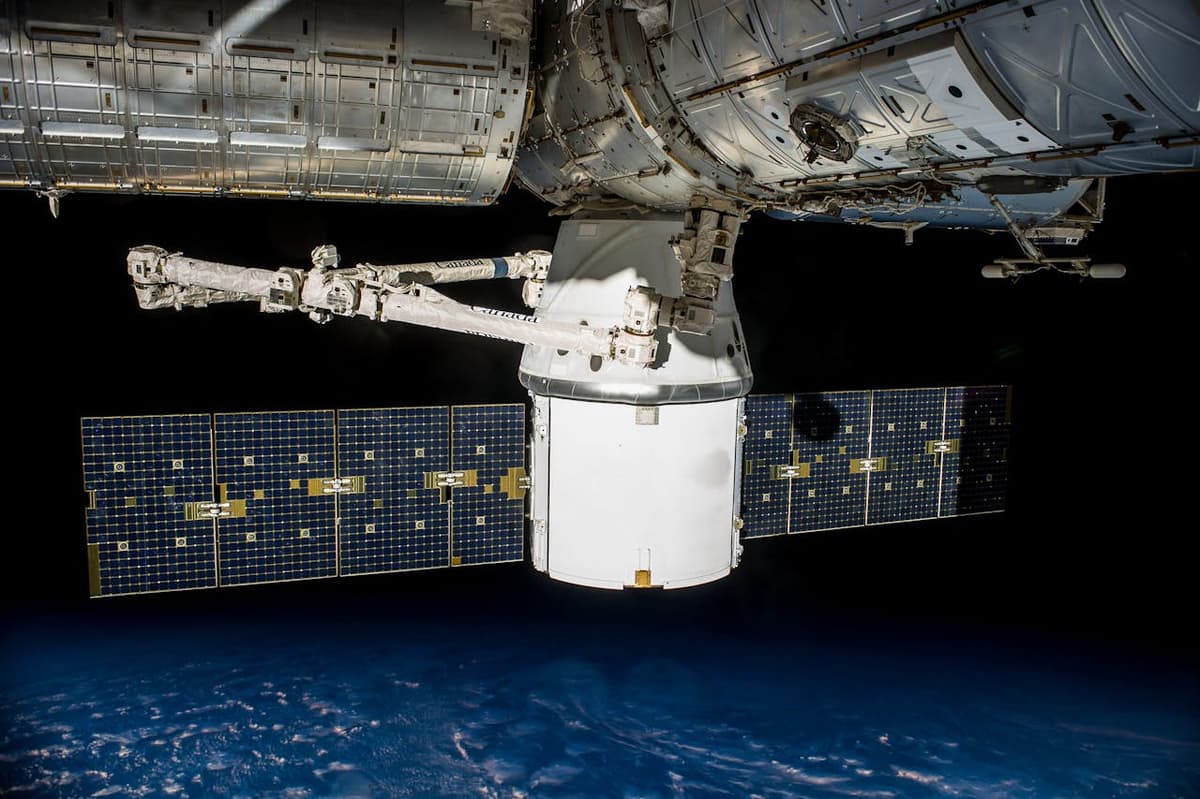
Space Station Experiment Shows Microbes Can Mine Valuable Metals In Orbit
•March 1, 2026
0
Why It Matters
The experiment proves that microbes can harvest critical metals in space, reducing reliance on Earth‑launched supplies and reshaping logistics for long‑duration exploration and commercial activities.
Key Takeaways
- •Fungus extracted measurable palladium from meteorite in orbit
- •Penicillium outperformed Sphingomonas under microgravity
- •18 of 44 elements leached with microbial assistance
- •Microgravity altered fungal metabolism, increasing organic acid production
- •Scaling biomining needs fluid control and metal recovery
Pulse Analysis
The International Space Station has become a testbed for a new class of space‑based manufacturing: biological mining. By inoculating powdered meteorite with Penicillium simplicissimum, scientists observed the fungus dissolve palladium and a suite of other metals without any added chemicals. This contrasts with traditional chemical leaching, which behaves unpredictably in microgravity due to the loss of convection. The experiment’s success builds on earlier orbital biomining trials, but it is the first to use authentic extraterrestrial material, confirming that microbial metabolism remains robust in near‑weightless environments.
Microgravity reshapes how fluids and ions move, forcing microbes to rely on chemical gradients rather than bulk mixing. The fungus responded by increasing secretion of carboxylic acids and other small molecules that chelate metal ions, a metabolic shift captured in post‑flight analyses. Compared with the bacterium Sphingomonas desiccabilis, the fungal strain achieved higher extraction rates, especially when growing directly on mineral grains. These results underscore the importance of organism selection and suggest that fungal systems may be inherently better suited for space‑based leaching processes, where contact with solid substrates is limited.
For the emerging space‑resource industry, the implications are profound. Demonstrating that microbes can liberate valuable metals in orbit opens pathways to produce feedstock for electronics, propulsion, and life‑support systems directly from asteroids or lunar regolith. However, scaling from sealed chambers to industrial‑scale bioreactors will demand sophisticated fluid‑handling, closed‑loop metal recovery, and precise growth‑control technologies. As private firms and space agencies pursue in‑situ resource utilization, integrating biomining into habitat and manufacturing architectures could dramatically lower launch costs and enable sustainable deep‑space exploration.
Space Station Experiment Shows Microbes Can Mine Valuable Metals In Orbit
0
Comments
Want to join the conversation?
Loading comments...