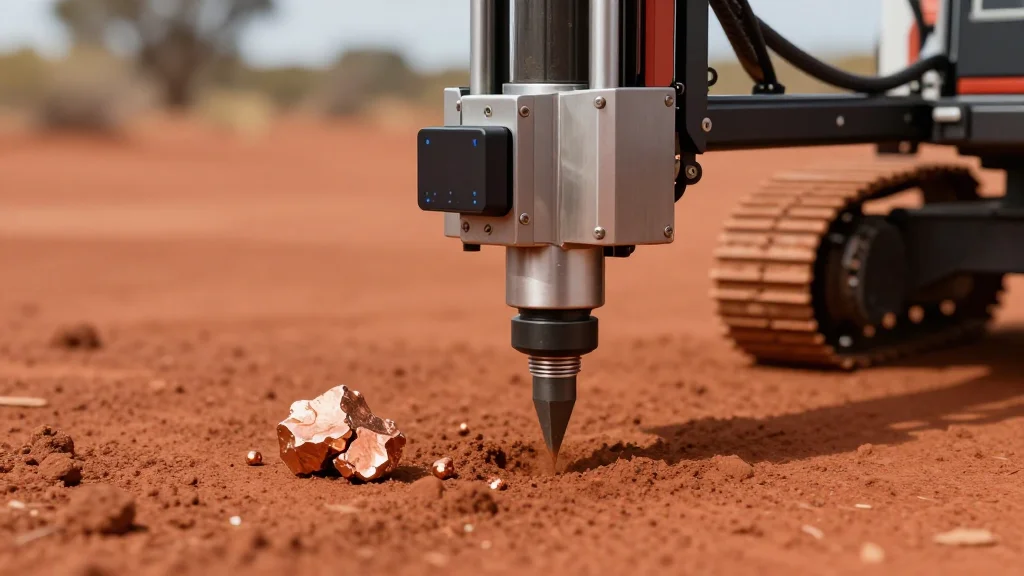
Startup Harnesses the Power of AI in the Ongoing Hunt for Minerals
Why It Matters
By dramatically improving discovery efficiency, Earth AI could alleviate looming supply‑chain shortages of minerals essential for clean‑energy technologies and AI hardware, reshaping the mining sector’s economics. Its model also offers investors a higher‑return pathway in a market where new deposits are increasingly scarce.
Key Takeaways
- •Earth AI’s AI model yields 75% discovery success, vs <1% industry average
- •Company identified new copper, cobalt, nickel, palladium, and indium deposits in Australia
- •Raised $20 million Series B to scale AI-driven exploration and in‑house lab
- •Built proprietary lab to cut sample turnaround from months to days
- •Vertical integration lets Earth AI sell verified rights, accelerating mining project pipelines
Pulse Analysis
The race to secure lithium, copper, nickel and rare‑earth elements has become a strategic priority for governments and corporations alike, as the clean‑energy transition accelerates. Traditional exploration, reliant on costly drilling and geological intuition, is yielding diminishing returns, prompting innovators to turn to data‑driven solutions. Earth AI leverages decades of mining records, satellite imagery and machine‑learning algorithms to pinpoint high‑potential greenfield sites, effectively turning mineral prospecting into a predictive science.
Earth AI’s reported 75% discovery success rate—an order of magnitude above the industry average—signals a potential paradigm shift. The startup’s recent $20 million Series B injection funds the expansion of its AI platform and the launch of an in‑house geochemical laboratory, slashing sample turnaround from five months to five days. This vertical integration not only speeds up the validation pipeline but also creates a proprietary data moat, giving the firm a competitive edge in selling verified mining rights to major operators.
If the company’s performance scales, it could reshape capital allocation in the mining sector, attracting more venture and private‑equity money to AI‑enabled exploration. Faster, cheaper discoveries would help meet the projected tripling of critical‑mineral trade by 2030, reducing supply bottlenecks that threaten EV production, renewable‑energy storage and AI hardware. However, the model’s reliance on high‑quality data and the need for regulatory approvals remain hurdles that will test its long‑term viability.
Startup harnesses the power of AI in the ongoing hunt for minerals
Comments
Want to join the conversation?
Loading comments...