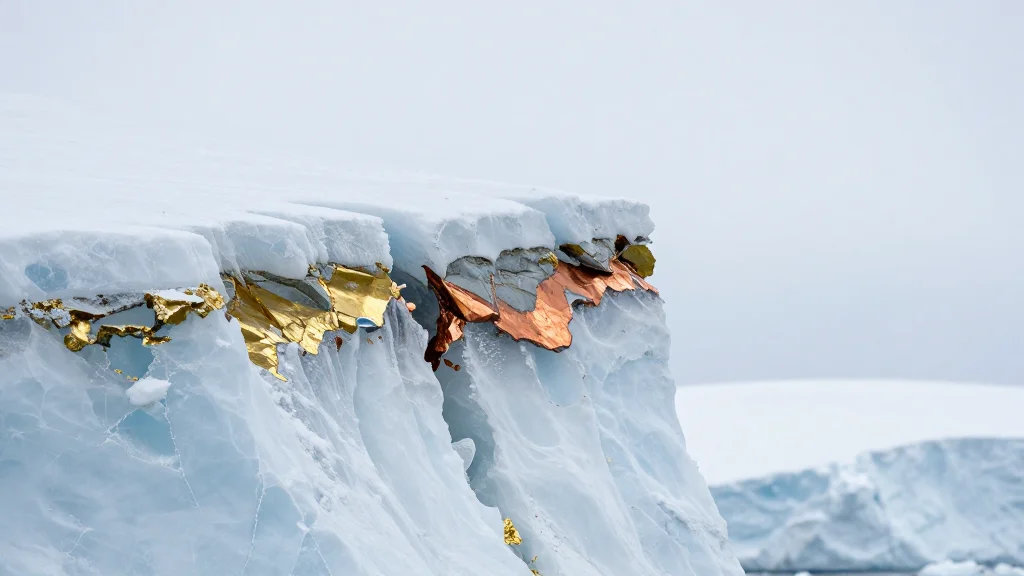
Study Predicts up to 120,000 Sq Km of Ice-Free Antarctica by 2300, Exposing Gold, Copper and Silver

Why It Matters
The projected exposure of hundreds of thousands of square kilometers of mineral‑rich land could alter the balance of global supply for strategic metals, potentially easing shortages of copper and rare metals needed for renewable‑energy technologies. At the same time, the prospect of mining in Antarctica threatens to undermine a unique international conservation regime, testing the resilience of the Antarctic Treaty and setting a precedent for resource claims in other protected regions. Beyond economics, the study highlights how climate change can reshape geopolitical landscapes by turning previously inaccessible territories into valuable assets. Nations with historic claims—Argentina, Chile, the United Kingdom, and others—may intensify diplomatic efforts to secure extraction rights, while environmental groups could push for stricter protections, creating a complex interplay of science, policy and commercial interest.
Key Takeaways
- •Study predicts up to 120,610 sq km (46,578 sq mi) of ice‑free Antarctica by 2300 under high‑melt scenarios.
- •Projected ice‑free zones contain known or suspected deposits of gold, copper, silver, iron and platinum.
- •Research incorporates glacial isostatic adjustment, a factor omitted from earlier models.
- •Antarctic Treaty currently bans commercial mining; next review window opens in 2048.
- •Territorial claims by Argentina, Chile and the United Kingdom overlap the largest projected ice‑free area.
Pulse Analysis
The study’s integration of land uplift into ice‑free projections marks a methodological leap that could reshape how policymakers assess climate‑driven resource opportunities. Historically, Antarctica has been viewed as a scientific preserve, insulated from commercial exploitation. By quantifying a potential mineral endowment comparable in size to a U.S. state, the research forces a re‑examination of that assumption.
From a market perspective, the mere possibility of new sources of copper and gold may temper price volatility, especially as the world pivots toward electrification and green technologies that demand large metal inputs. However, the logistical costs of operating in Antarctica—extreme weather, remote location, and stringent environmental regulations—mean that any commercial venture would likely be a long‑term, high‑capital undertaking. Early‑stage investors may therefore focus on securing exploration rights and influencing treaty negotiations rather than immediate extraction.
Geopolitically, the findings could catalyze a subtle but significant shift in Antarctic diplomacy. Nations with historic claims are likely to leverage scientific research as a soft power tool, positioning themselves as responsible stewards while quietly preparing for a future where mineral extraction becomes permissible. Conversely, environmental coalitions may use the study to argue for a strengthening of the treaty’s environmental protocol, potentially leading to a new era of multilateral governance that balances resource interests with climate stewardship. The outcome will hinge on how quickly the international community can reconcile these competing imperatives before the ice truly recedes.
Study predicts up to 120,000 sq km of ice-free Antarctica by 2300, exposing gold, copper and silver
Comments
Want to join the conversation?
Loading comments...