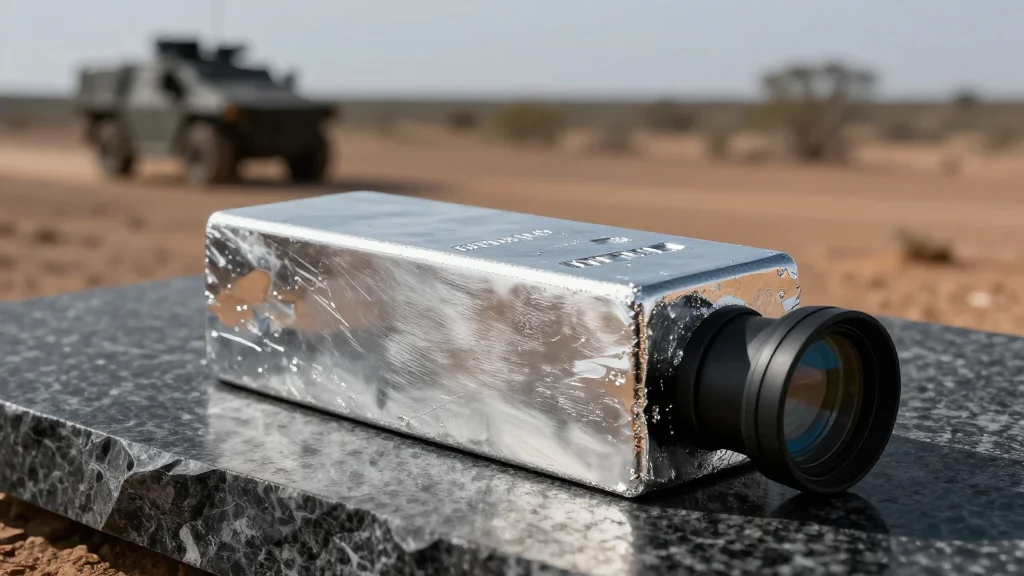
The $93 Billion Secret in the Australian Dust – by Mark Wembridge (Australian Financial Review – April 1, 2026)
Key Takeaways
- •Delta Lithium holds 60,000+ tonnes rubidium.
- •Rubidium prices around $1.5 million per tonne.
- •Pentagon seeks secure supply for defense tech.
- •Backed by Rinehart, Ellison, potential $60 billion USD value.
- •Rubidium critical for night‑vision, atomic clocks, quantum computing.
Pulse Analysis
Rubidium, though lesser‑known than lithium or cobalt, has become a linchpin for next‑generation defence and computing technologies. Its unique atomic properties enable high‑precision timing devices, night‑vision optics, and the emerging field of quantum processors. Global production is limited to a handful of mines, primarily in North America and Europe, leaving supply chains vulnerable to geopolitical shocks. Australia’s vast mineral endowment, long celebrated for iron ore and gold, now offers a rare opportunity to diversify the market with a high‑grade, low‑impurity resource.
Delta Lithium’s discovery stands out not only for its size but also for its grade, positioning the company as a potential monopoly supplier. Backed by mining magnates Gina Rinehart and Chris Ellison, the firm has the capital and political clout to accelerate development. The Pentagon’s outreach to managing director James Croser reflects a broader U.S. strategy to secure critical minerals outside of adversarial jurisdictions. By negotiating long‑term contracts, the United States aims to mitigate rubidium shortages that could hamper advanced weaponry and quantum research, while Australia stands to gain billions in export revenue and strategic partnership benefits.
The market implications are profound. At $1.5 million per tonne, the deposit could generate upwards of $90 billion USD in gross revenue over its lifespan, dwarfing many traditional mining projects. This influx of capital may spur further exploration across the Australian outback, prompting a new wave of investment in exotic metals. Moreover, the deal could set a precedent for public‑private collaborations on critical mineral security, influencing policy frameworks in both Canberra and Washington. Stakeholders—from investors to defence contractors—should monitor regulatory approvals, environmental assessments, and the evolving geopolitical landscape as the rubidium story unfolds.
The $93 billion secret in the Australian dust – by Mark Wembridge (Australian Financial Review – April 1, 2026)
Comments
Want to join the conversation?