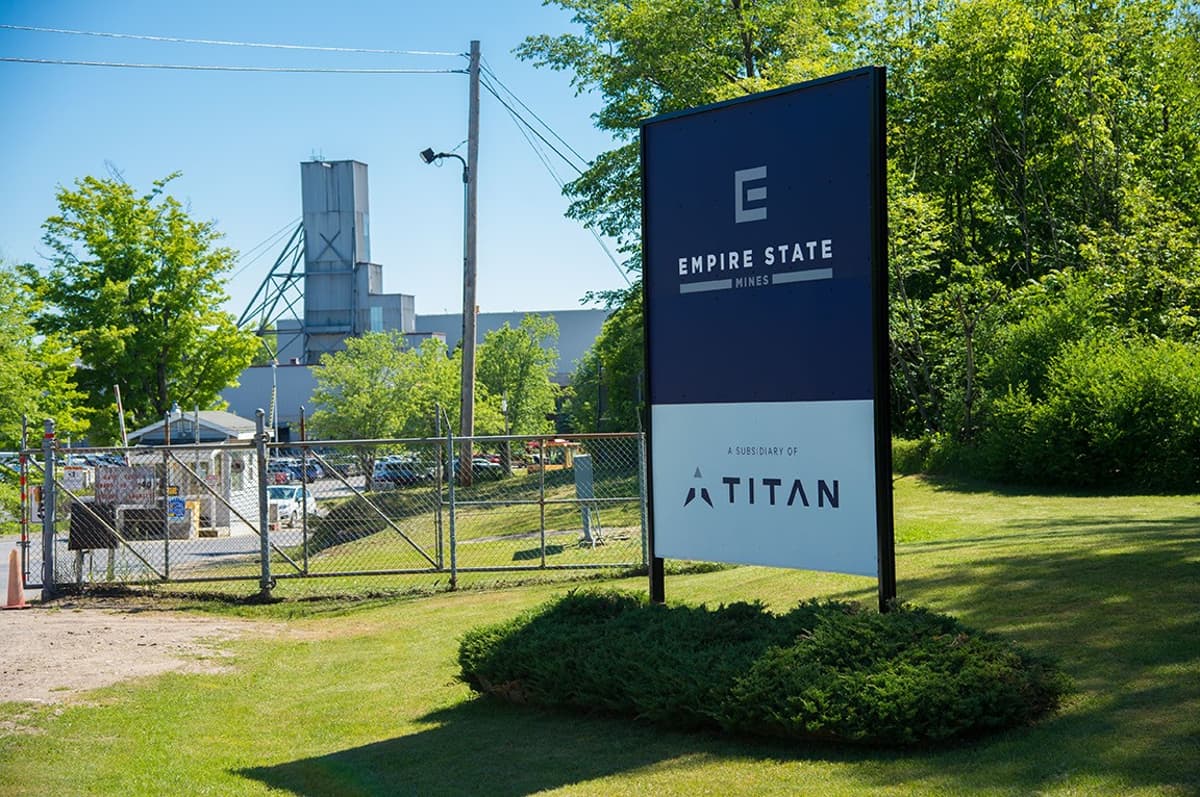
Titan Mining Starts Graphite Shipments, Feasibility Study
•March 11, 2026
0
Why It Matters
The project could reduce U.S. reliance on Chinese graphite imports and strengthen critical mineral supply chains, supporting electric‑vehicle and battery manufacturing. Successful scaling would also demonstrate the viability of domestic graphite mining.
Key Takeaways
- •Kilbourne demo plant ships 1,600 kg graphite concentrate
- •Feasibility study targets 40,000‑tpa integrated operation
- •EXIM Bank may provide up to $120 million financing
- •Resource: 22 Mt at 2.91% Cg, 653 kt graphite
- •Construction decision expected late 2026, start 2027
Pulse Analysis
Global demand for natural graphite has surged as electric‑vehicle batteries, renewable‑energy storage, and advanced electronics seek high‑purity carbon materials. Historically, the United States has depended almost entirely on imports, with China supplying over 70 percent of the market. Recent policy initiatives, such as the "Make More in America" program, aim to diversify supply chains and mitigate geopolitical risk, creating a favorable environment for domestic projects like Titan Mining's Kilbourne operation.
Titan’s Kilbourne demo plant, though modest at 1,200 tonnes annually, serves as a proof‑of‑concept for a much larger 40,000‑tonne‑per‑year integrated mine‑to‑process facility. The feasibility study, fully funded and already supported by a potential $120 million loan from the Export‑Import Bank, will refine mine design, upgrade the 22‑million‑tonne resource to reserve status, and optimize processing flows. With 82 % of infill drilling completed, the company is positioned to deliver robust cost estimates and environmental assessments, essential steps before a construction decision slated for late 2026.
If Titan proceeds, the project could reshape the U.S. graphite market by providing a reliable, low‑carbon domestic source, lowering exposure to supply disruptions and tariffs. Investors will watch the study’s outcomes closely, as the capital intensity of large‑scale graphite mining demands clear economics and permitting certainty. Successful execution may also spur ancillary infrastructure development in upstate New York, creating jobs and reinforcing the region’s mining sector, while offering battery manufacturers a more secure raw‑material pipeline.
Titan Mining starts graphite shipments, feasibility study
0
Comments
Want to join the conversation?
Loading comments...