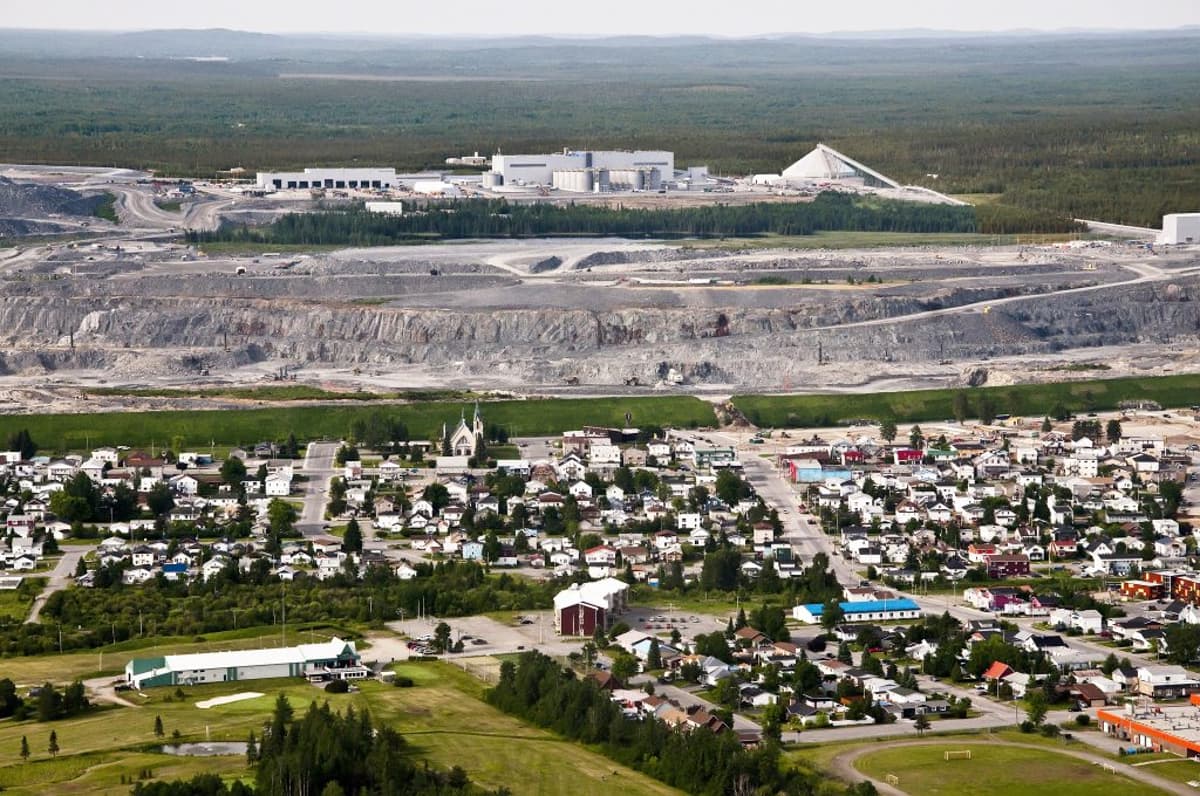
Treasure Hunt: Val-D’Or – Gold, Grit and the Road to the North
Companies Mentioned
Why It Matters
Val‑d’Or illustrates how a remote gold discovery can evolve into a lasting economic engine, shaping Canada’s mining finance hub and supplying a steady stream of ore for global markets. Its endurance also provides a training ground that fuels talent across the worldwide mining industry.
Key Takeaways
- •1931 Sullivan Consolidated Mine sparked Val‑d’Or gold rush.
- •Val‑d’Or transformed from wilderness to city by late 1930s.
- •Agnico Eagle’s Goldex, LaRonde, Canadian Malartic sustain district output.
- •Abitibi Greenstone Belt remains one of world’s richest gold regions.
- •Val‑d’Or’s legacy includes training generations of mining professionals.
Pulse Analysis
The story of Val‑d’Or begins in the early 1930s, when a wave of prospectors, led by Irish‑born miner Jack Sullivan, staked claims across the rugged Abitibi wilderness. Their persistence uncovered a series of high‑grade veins that quickly coalesced into the Sullivan Consolidated, Lamaque and Sigma mines. These early discoveries attracted capital from Toronto’s burgeoning mining finance sector, prompting the rapid construction of roads, rail spurs and basic services that turned a remote forest outpost into a bustling camp.
As the district matured, technological advances reshaped mining methods. Hand‑driven steel drills gave way to mechanised equipment, deeper shafts were sunk, and ore processing became more sophisticated. The influx of workers spurred the growth of permanent infrastructure—electric lighting, schools, hospitals—transforming Val‑d’Or into a fully fledged city by the late 1930s. Its position within the Abitibi Greenstone Belt, one of the world’s most prolific gold provinces, cemented the region’s reputation as a reliable source of high‑grade ore, attracting generations of engineers and geologists who would later lead projects worldwide.
Today, Val‑d’Or remains a cornerstone of Canadian gold production. Agnico Eagle Mines, though not an original pioneer, now operates flagship assets such as the Goldex, LaRonde and Canadian Malartic mines, extending the life of historic veins and driving ongoing investment. Revitalised projects at historic sites like Lamaque and Sigma illustrate how legacy geology continues to deliver value. The district’s resilience underscores a broader lesson: a well‑managed gold camp can evolve from a boom‑town flashpoint into a durable economic pillar, supporting both local communities and the global mining supply chain.
Treasure Hunt: Val-d’Or – Gold, Grit and the Road to the North
Comments
Want to join the conversation?
Loading comments...